
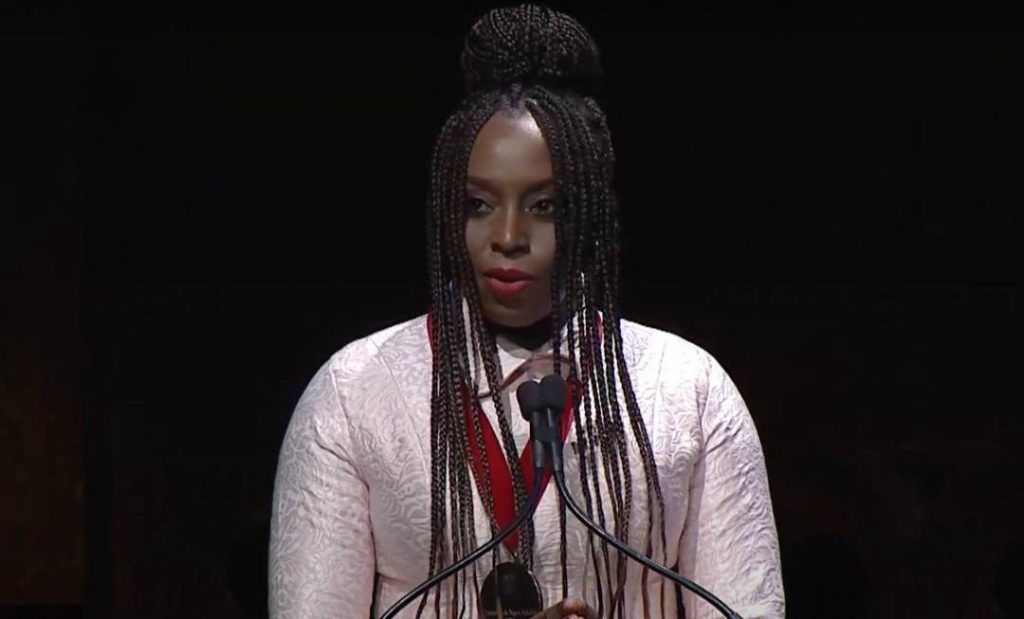
Co-editors of the literary anthology Camouflage: Best of Contemporary Writing from Nigeria, Professors Nduka Otiono and Odoh Diego Okenyodo, have expressed deep sorrow over the death of Chimamanda Ngozi Adichie’s 21-month-old son, Nnamdi, while calling for a transparent and thorough investigation into alleged medical negligence at a Lagos hospital.
In a statement issued on Sunday, the editors joined Nigerians at home and abroad in mourning with the award-winning author and her family, describing the loss as “profoundly shattering” and extending heartfelt condolences to Adichie and her husband, Dr Ivara Esege.
“Losing a child is a profoundly shattering experience, and no parent should ever endure such grief,” they said. “We offer Chimamanda our deepest condolences and stand with her in this dark hour.”
The statement followed Adichie’s public account in which she alleged that her son’s death on January 6 was avoidable and resulted from negligence during what she described as routine medical procedures at a Lagos-based hospital.
Quoting the author, the editors said: “My son would be alive today if not for an incident at Euracare Hospital on January 6th.”
They noted that the Lagos State Government had ordered an independent investigation into the incident, describing the death of a child as a profound tragedy and assuring the public that anyone found culpable would face justice.
“We urge that the probe be thorough, transparent and impartial,” the editors said, stressing that “every detail must be uncovered so that the truth emerges.”
Beyond the specific case, Otiono and Okenyodo said the tragedy exposes deeper systemic problems in Nigeria’s healthcare sector, including delays in access to care and weak accountability structures.
They cited findings from a corruption victimisation survey conducted by anti-corruption organisations, the TAP Initiative and Dataphyte, which identified the collection of informal financial tips from patients as a widespread problem in the health sector. While clarifying that they were not alleging such practices in Adichie’s case, the editors said the findings reflect a culture that can lead to delayed treatment and compromised patient safety.
“It is intolerable that any patient, whether child or adult, should be denied care or treated late because of failure or greed on the part of health workers,” the statement said.
The editors called for immediate accountability, demanding a comprehensive investigation into all medical and administrative actions linked to Nnamdi’s death, as well as reforms to strengthen hospital oversight and enforce sanctions against healthcare workers found guilty of negligence.
They also urged the media and civil society to closely monitor the investigation, noting the Lagos State Government’s pledge to make the findings public.
“The people of Lagos have the right to know what happened, and any wrongdoers – whether individuals or institutions – must be held fully responsible,” the statement said.
Calling for broader reforms, the editors said the case should serve as a catalyst for nationwide action to ensure hospitals remain “places of care and compassion, not sites of preventable tragedy.”