
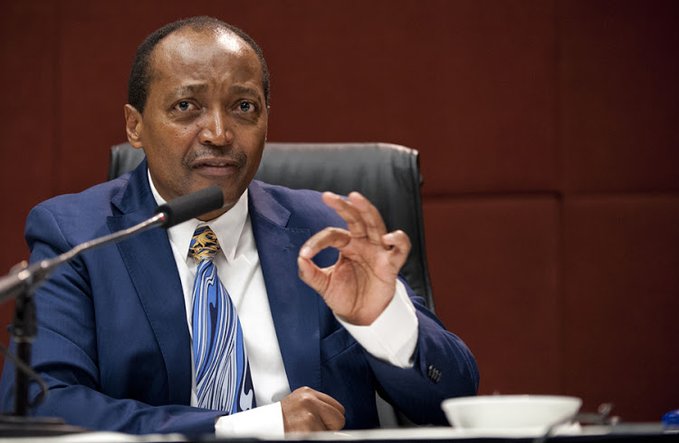
The Confederation of African Football (CAF) has announced a major overhaul of its competition calendar, confirming that the Africa Cup of Nations (AFCON) will be held every four years from 2028, bringing an end to the tournament’s decades-long biennial format.
CAF president Patrice Motsepe disclosed the decision on the eve of the 35th edition of AFCON, which kicks off on Sunday in Morocco, with the host nation set to face Comoros in the opening match.
Motsepe said the 2027 finals, to be jointly hosted by Kenya, Tanzania and Uganda, will proceed as scheduled. He added that another edition of the tournament will take place in 2028, after which AFCON will fully transition to a four-year cycle.
As part of the restructuring, CAF will introduce an annual African Nations League from 2029, designed to provide regular competitive football for national teams and ensure a steady stream of revenue for the organisation.
“The Nations Cup has historically been our main source of income, but this new structure allows us to generate financial resources every year,” Motsepe said. “It is an exciting development that supports sustainable financial independence and aligns African football more closely with the Fifa calendar.”
AFCON currently contributes an estimated 80 per cent of CAF’s total revenue, a reality that had previously made the body reluctant to scale back the frequency of the tournament. The shift to a four-year cycle had long been encouraged by Fifa president Gianni Infantino, but was resisted over fears of financial shortfalls.
The scheduling of AFCON has also been a persistent source of tension with European clubs, as the tournament has often been held during the European season, compelling clubs to release key African players. Although CAF resolved in 2019 to move the competition to mid-year, editions in Cameroon in 2022 and Côte d’Ivoire in 2024 were once again staged early in the year.
This year’s Morocco tournament was moved back by six months following Fifa’s introduction of its expanded Club World Cup, held in the United States in June and July.
CAF said the revised calendar is intended to reduce fixture congestion, minimise clashes with club competitions and place African football on a more stable and globally aligned footing.