
Nigeria has come under fresh international scrutiny as a joint session of the United States Congress Foreign Affairs Committee convenes on Wednesday to examine global threats to religious freedom, with the West African nation featuring prominently in discussions.
The hearing, titled Defending religious freedom around the world, is being held by the House Subcommittee on Africa and the Subcommittee on the Western Hemisphere amid growing concern among US lawmakers over recurring violence, mass displacement and insecurity in Nigeria.
Ahead of the session, written testimonies released by key witnesses warned that persistent attacks and weak state control in parts of Nigeria could deepen religious fault lines if not urgently addressed.
Among those scheduled to testify are former US Ambassador-at-Large for International Religious Freedom, Sam Brownback; Principal Advisor for Global Religious Freedom at the US State Department, Mark Walker; Grace Drexel, daughter of detained Chinese pastor Ezra Jin; and Dr Stephen Schneck, former chair of the US Commission on International Religious Freedom.
In his prepared remarks, Brownback described Nigeria as “the deadliest place on the planet to be a Christian,” arguing that extremist Islamist groups operating across Africa and the Middle East are increasingly active within the country.
He urged US policymakers to regard communities facing religious persecution as strategic allies and warned that failure to respond decisively could allow violence to spiral into wider conflict.
Brownback also expressed concern over the role of foreign powers in Nigeria’s security environment, citing China, Russia, Turkey and Saudi Arabia as countries whose involvement could further complicate efforts to stabilise the situation.
Schneck, in his submission, described freedom of religion or belief as facing a “historic crisis” globally due to authoritarianism, religious nationalism and governance failures. He listed Nigeria alongside Syria and Sudan as examples where insecurity has left faith communities exposed to violence.
He cautioned against reducing the conversation to the persecution of Christians alone, stressing that international religious freedom protections apply universally to all beliefs.
The congressional hearing comes at a time of heightened military and diplomatic engagement between Nigeria and the United States.
Last year, US President Donald Trump redesignated Nigeria as a Country of Particular Concern over alleged religious freedom violations, a decision that generated controversy in both Washington and Abuja.
On December 25, 2025, US forces carried out airstrikes on suspected extremist targets in Sokoto State as part of counter-terrorism operations against Islamic State-linked fighters.
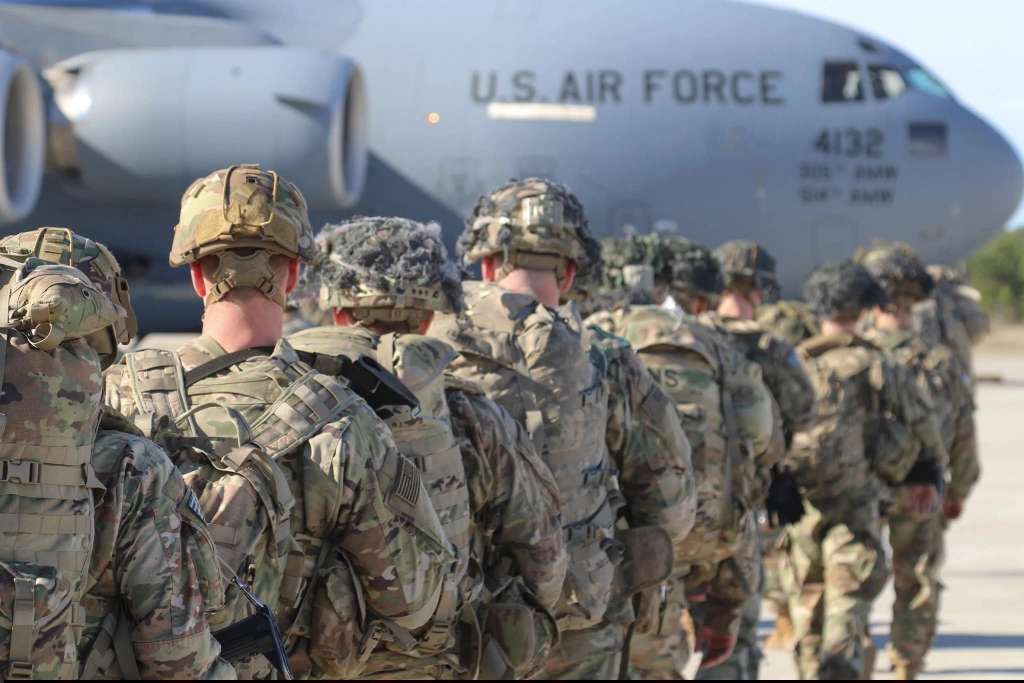
This week, the commander of US Africa Command, General Dagvin R.M. Anderson, confirmed that a small team of US military officers has been sent to Nigeria to enhance cooperation with Nigerian forces. He said the move followed discussions with President Bola Tinubu and is aimed at strengthening intelligence sharing and operational support.
According to Anderson, the American team brings specialised capabilities to support Nigeria’s long-running fight against insurgent groups, though details of their arrival and specific mission were not disclosed.
The deployment marks a new phase in security collaboration between the two countries, fuelled in part by repeated claims from President Trump that Nigeria has failed to adequately protect its Christian population.
The Nigerian government, however, has firmly rejected allegations of systemic Christian persecution. Officials maintain that the country’s security crisis is driven by terrorism, banditry and organised crime affecting citizens regardless of religion.
Authorities often cite the activities of Boko Haram, Islamic State West Africa Province and armed bandits as evidence that the violence is not targeted at a single faith group.
Nonetheless, recent attacks have intensified international concern. Last month, gunmen launched coordinated assaults on three churches in Kaduna State, abducting 168 worshippers, highlighting the scale of insecurity in parts of northern Nigeria.
In response to the growing diplomatic tension, Nigeria has stepped up engagement with US officials. National Security Adviser Nuhu Ribadu recently hosted a US congressional delegation in Abuja, where talks focused on counter-terrorism cooperation and regional stability.
There was also a plenary session of the Nigeria–US Joint Working Group reviewing Nigeria’s designation as a Country of Particular Concern and exploring ways to address US concerns.
As US lawmakers deliberate on religious freedom issues, Nigeria’s complex security challenges are likely to remain at the centre of discussions, with potential implications for future US policy, bilateral relations and international perceptions of the country’s fight against insurgency and communal violence.