
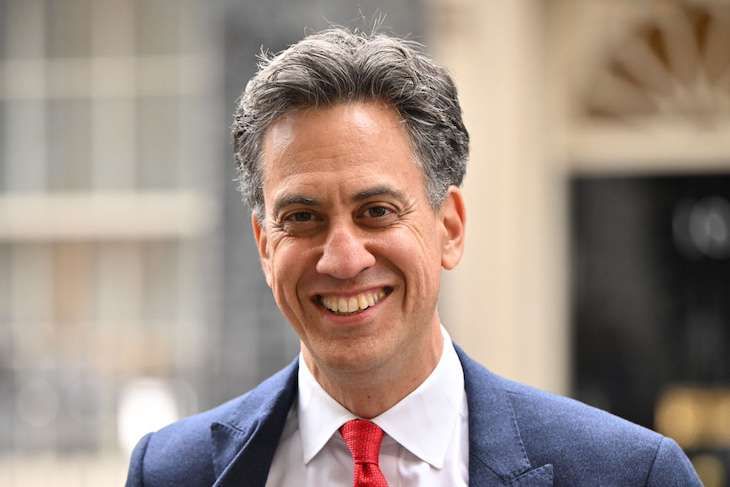
The United Kingdom has named Foreign Secretary Ed Miliband as its new Governor to the World Bank, reinforcing the government’s commitment to international development, climate action and global economic cooperation.
The appointment, announced on Monday by the Foreign, Commonwealth and Development Office (FCDO), gives Miliband responsibility for leading Britain’s engagement with the World Bank, one of the country’s key multilateral development partners.
As UK Governor to the institution, Miliband will represent Britain at the World Bank’s Annual and Spring Meetings, where finance ministers, central bank governors and development officials meet to discuss global economic and development issues. He is expected to participate in this year’s Annual Meetings in Bangkok in October.
The UK government said the appointment reflects its determination to strengthen international efforts to combat poverty, climate change, food insecurity and economic instability, while supporting sustainable growth in developing countries.
The announcement coincided with the appointment of Kirsty McNeill as Minister for Development. In her new role, McNeill will serve as the UK’s Governor to four Regional Development Banks and oversee the implementation of the government’s international development programme.
Reacting to his appointment, Miliband said development policy remained at the heart of Britain’s foreign policy objectives.
“International development is not an add-on to British foreign policy — it is central to it. By taking on the role of UK Governor to the World Bank, I want to send an unambiguous signal that this Government is serious about its global leadership on development and climate,” he said.
He added that working alongside McNeill would help Britain address major global challenges, including climate change and poverty.
The UK described the World Bank as its most important multilateral development institution, noting that the lender provides about $100 billion in financing annually and remains the largest source of funding for climate adaptation and environmental protection in low-income countries.
According to the government, Britain has consistently used its influence as a World Bank shareholder to advocate reforms aimed at making the institution more agile and effective in responding to the needs of developing nations.
McNeill welcomed her appointment, saying she looked forward to working with governments and development partners to advance the UK’s international development agenda.
She said her experience with humanitarian organisations and anti-poverty campaigns had prepared her for the role, adding that she was committed to helping countries build stronger institutions and achieve sustainable development.
World Bank President Ajay Banga congratulated Miliband on his appointment, describing the UK as a longstanding supporter of the institution’s mission.
“The United Kingdom is a valued partner of the World Bank Group and a longstanding champion of development. I look forward to working closely with the Foreign Secretary to help countries create jobs, mobilise more private capital, and deliver opportunity for people. Together, we can help turn ambition into results where they matter most,” Banga said.
The appointment follows a change in Britain’s political leadership after Andy Burnham succeeded Keir Starmer as Prime Minister and formed a new cabinet. As part of the reshuffle, Miliband replaced Yvette Cooper as Secretary of State for Foreign, Commonwealth and Development Affairs, a position that also confers the role of UK Governor to the World Bank.
The UK government said its development strategy is increasingly focused on building long-term partnerships rather than traditional aid, with greater emphasis on investment, technical expertise and support for international institutions such as the World Bank’s International Development Association, which it said helps multiply the impact of development funding.