
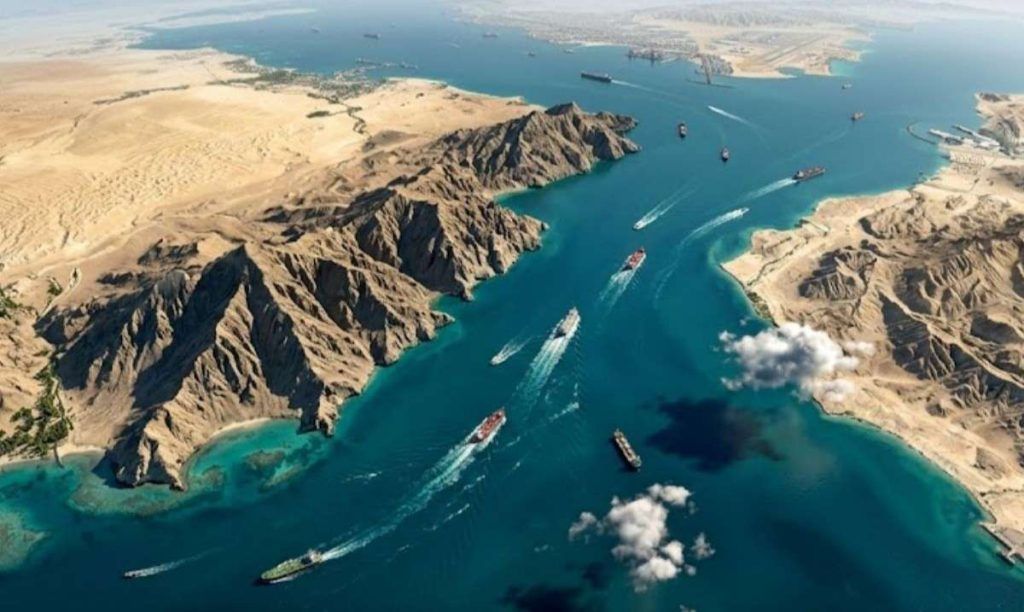
Global oil shipments through the Strait of Hormuz have once again come to a standstill after Iran reimposed a naval blockade, dramatically escalating tensions with the United States and raising fresh concerns over global energy supplies.
Marine tracking data indicates that no vessels are currently transiting the strategic waterway, with dozens of tankers anchored off the coasts of Oman and the United Arab Emirates. The paralysis follows Tehran’s announcement that the strait would remain closed until Washington lifts its blockade on Iranian ports.
The renewed shutdown effectively creates a “double blockade,” with Iran targeting ships attempting to pass through Hormuz while U.S. forces continue to intercept vessels heading to or from Iranian territory.
Iran’s parliamentary speaker, Mohammad Bagher Ghalibaf, described the U.S. naval restrictions as “foolish” but suggested that limited progress had been made in ongoing diplomatic exchanges. Despite that, both sides remain far from reaching a comprehensive agreement.
U.S. President Donald Trump struck a defiant tone, insisting that Washington would not yield to pressure. He said “very good conversations” were taking place but stressed that the blockade would continue until what he called a “100% complete” deal with Tehran is secured.
“I’m not going to let them blackmail us,” Trump said, underscoring his administration’s hardline stance.
Security incidents heighten fears
The standoff has been accompanied by a sharp rise in security incidents in and around the strait. Over the weekend, two Iranian gunboats reportedly opened fire on a tanker, while other vessels reported being struck by “unknown projectiles.”
Iranian state-linked media also reported that its forces turned back at least two oil tankers attempting to pass through the strait, forcing them to change course.
The escalation has rattled the global shipping community, which is already wary of Iran’s demand that vessels submit to inspections by the Islamic Revolutionary Guard Corps Navy and potentially pay transit tolls—conditions widely seen as unacceptable by international operators.
In normal circumstances, roughly 140 ships pass through the narrow corridor each day, transporting oil, gas and other critical commodities. Since the conflict intensified, however, traffic has dwindled to a trickle, and now appears to have stopped entirely.
Diplomatic stalemate persists
At the heart of the crisis is a widening gulf between Washington and Tehran over sanctions, maritime access and Iran’s nuclear programme.
Iran has made clear that reopening the strait is contingent on the U.S. lifting its blockade and easing economic restrictions that have crippled its export capacity. The United States, meanwhile, is using the blockade to pressure Tehran into concessions, particularly on nuclear enrichment.
Despite backchannel communications and mediation efforts, there is little sign of an imminent breakthrough.
“The only bit of light in this dark… mediators are still exchanging messages,” said international correspondent Lyse Doucet, reporting from Tehran.
A temporary ceasefire agreed earlier this month appears increasingly fragile, with both sides accusing each other of violating its terms. Iran has labelled the continued U.S. naval presence a breach of the agreement, while Washington maintains that its actions are necessary to enforce compliance.
Global implications grow
The shutdown of the Strait of Hormuz – one of the world’s most vital shipping transit routes – has immediate and far-reaching implications for global energy markets.
The waterway serves as a key export channel for major oil producers in the Gulf, and any prolonged disruption is likely to tighten supply and increase price volatility.
Shipping firms are already diverting vessels away from the region, rerouting cargoes along longer alternative paths, including around Africa’s Cape of Good Hope.
Meanwhile, uncertainty continues to ripple across broader geopolitical fault lines in the Middle East, with related tensions playing out in Lebanon and elsewhere in the region.