
Adebayo Obajemu
The Director-General of the Securities and Exchange Commission (SEC), Dr Emomotimi Agama, has urged Nigerian companies to strengthen sustainability disclosures, warning that gaps in disclosures could limit access to global capital.
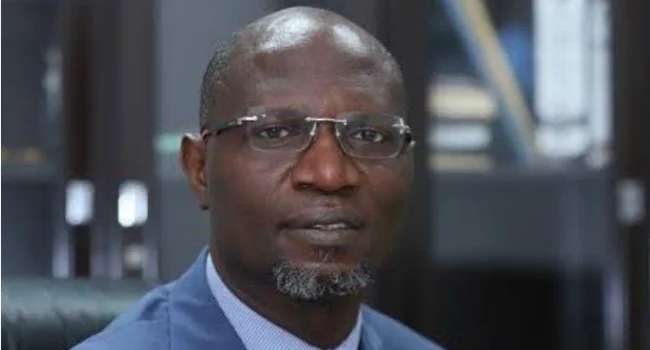
Dr Emomotimi Agama Speaking in Abuja on Tuesday, May 5, 2026, at the launch of the Nigerian Corporate Sustainability Report by Norrenberger Research, the analytical arm of Norrenberger Group, Agama said, “The fact that a meaningful number of listed companies still lack coherent sustainability disclosures or provide disclosures that are neither structured nor verifiable is a challenge we must confront collectively as a market.”
He noted that the report comes at a critical time in Nigeria’s capital market evolution, as global investors increasingly prioritize environmental, social and governance considerations in capital allocation decisions.
According to him, sustainability disclosures have moved beyond optional reporting standards to become central requirements for attracting long-term investment.
“Nigerian companies that wish to access the vast pool of patient, long-term capital must understand one unambiguous reality: the price of entry is disclosure. Credible, consistent, comparable, and verifiable disclosure,” he said.
Agama explained that global capital markets have shifted, with institutional investors now using ESG performance as a primary basis for investment decisions rather than a secondary filter.
“They are no longer treating ESG considerations as filters. They are the primary determinants of capital allocation decisions,” he added.
The SEC boss said Nigeria was aligning with global sustainability standards, referencing ongoing engagement with international bodies to integrate disclosure frameworks into the domestic capital market.
He noted that the International Sustainability Standards Board has established global baselines for sustainability-related disclosures, which Nigeria is working to adopt and adapt to local realities.
He disclosed that the commission would respond to the report’s findings by strengthening regulatory guidance and deepening engagement with listed companies.
“We intend to strengthen our guidance on sustainability reporting, deepen engagement with listed companies on disclosure obligations, and create regulatory incentives for early adopters of robust sustainability frameworks,” he said.
Agama added that the move is backed by the Investment and Securities Act 2025, which gives the commission wider powers to align Nigeria’s capital market with global best practices.
He stressed that improving sustainability reporting is critical to unlocking capital needed to address Nigeria’s infrastructure deficit and drive economic transformation.
The SEC DG also highlighted the growth of Nigeria’s capital market, noting that market capitalization has risen significantly in recent years to over N140tn.
He urged corporate organizations to use the sustainability report as a benchmark to improve their practices. “Sustainability is no longer a reputational accessory. It is a strategic imperative,” Agama said, warning that companies risk losing competitiveness if they fail to adapt to evolving global standards.
He added that the cost of ignoring sustainability requirements could outweigh compliance efforts in the long run.
The Minister of State for Industry, Mr John Enoh, said Nigeria faces a persistent gap in reliable sustainability data, warning that transparent and standardized ESG information is critical for policy making, investment decisions, and long-term economic planning.
The minister, who was represented by the Director of Industrial Development at the ministry, Mrs Muyiwa Ajayi-Ade, said the Nigerian Corporate Sustainability Report provides a credible benchmark for assessing ESG performance and promoting transparency and accountability across industries.
He added that global investors are increasingly prioritizing markets with strong sustainability credentials, noting that strengthening ESG practices among Nigerian firms would improve competitiveness and attract long-term foreign capital.