
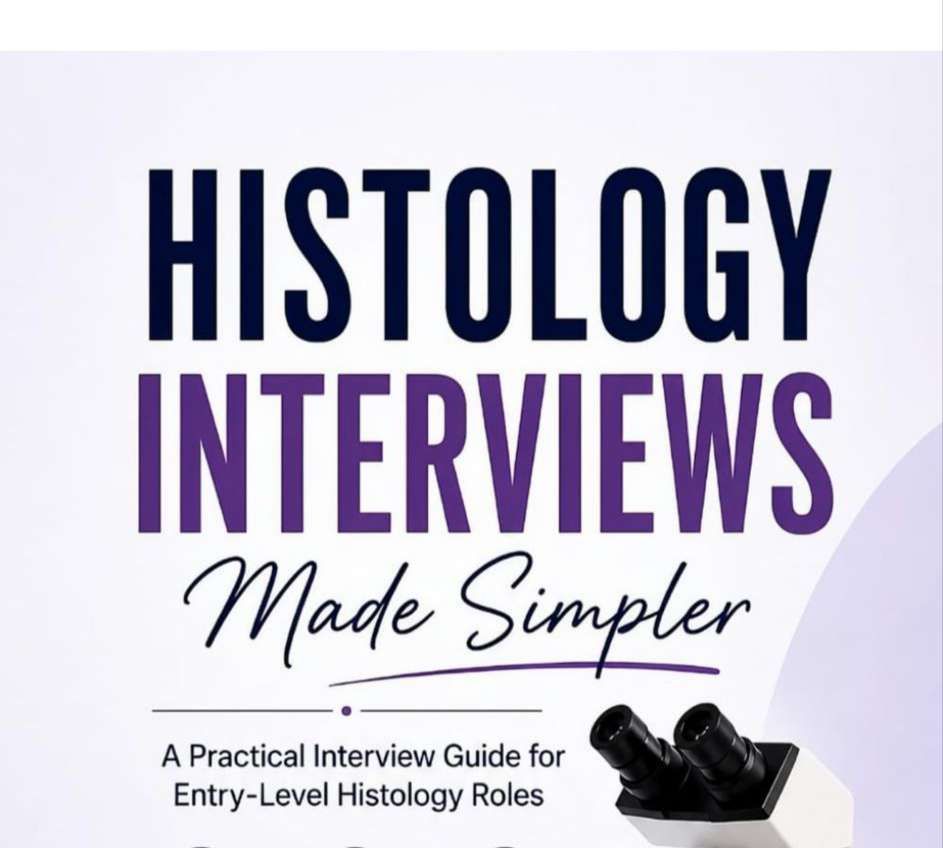
Book Review
Title : Histology Interviews Made Simpler: A Practical Interview Guide for Entry-Level Histology Roles
Author: Ruth Odetola
Reviewer : Adebayo Obajemu
Pagination: 71
Publisher: Rutola Publishing
Date of Publication: 10 May 2026
Price : NGN23,881.73
ISBN-13978-1066662005
Ruth Odetola’s Histology Interviews Made Simpler, which is on sale in Amazon, is a required reading for prospective biomedical laboratory scientists or students of biomedical laboratory scientce whether from Africa, Asia or Latin America or Caribbean seeking for a career in biomedical laboratory practice in the United Kingdom. It’s just not enough to qualify as biomedical laboratory scientist, as far as UK health and medical architecture is concerned, you will have to undergo certification interviews which is where the challenge lies; if you don’t know what to expect from the interviews panels.
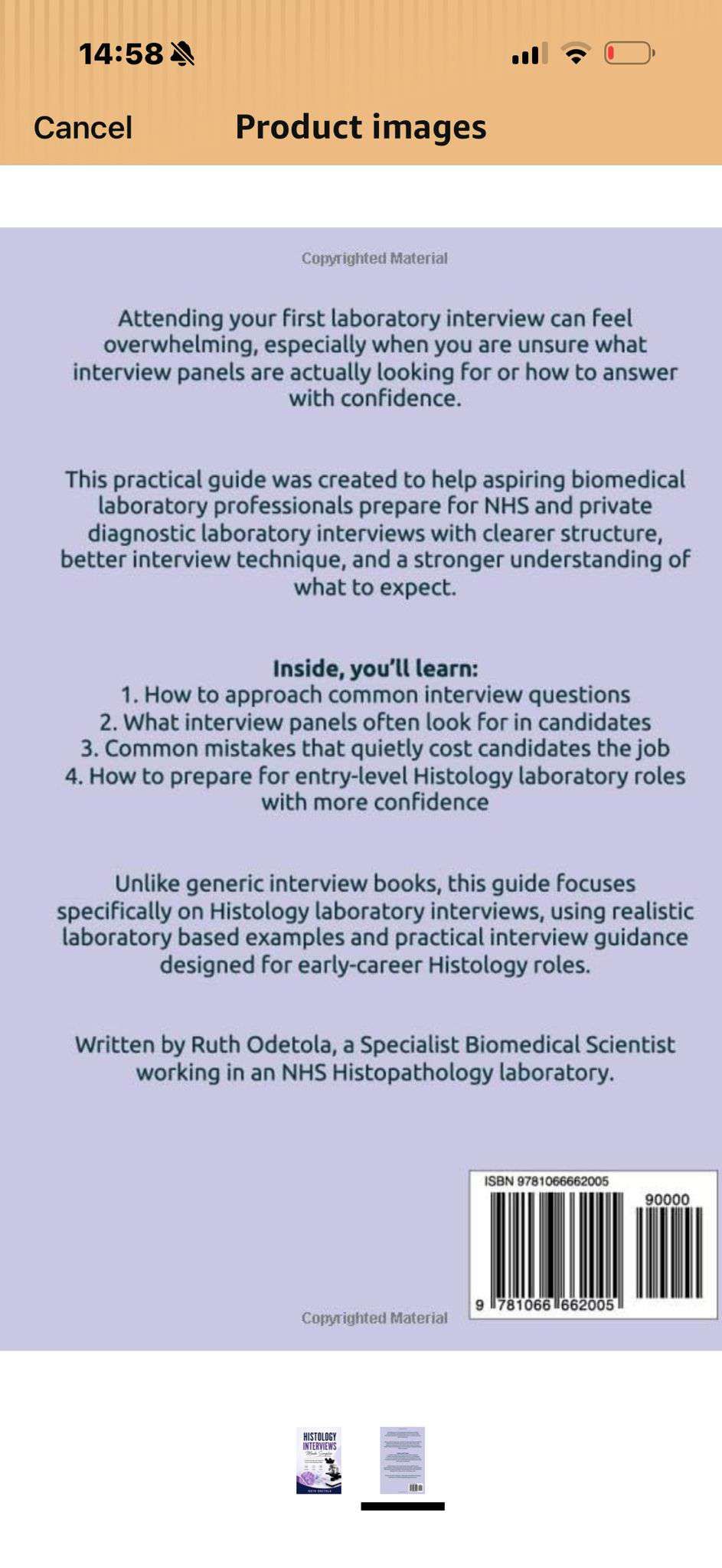
Which is why attending your first laboratory interview can turn out to be an overwhelming experience, unsure of what the panelists are looking for, and the kinds of questions you’re likely to be confronted with. This magnus opus practical guide was put together by a young and brilliant specialist to assist aspiring biomedical laboratory scientists prepare for NHS and private diagnostic laboratory interview with confidence and assured success.
This guide is designed to instill confidence by equipping aspiring biomedical laboratory scientists with necessary information and nuances of the interview process for entry-level histology roles, including Band 3 Medical Laboratory Assistant and Band 4 Associate Practitioner positions.
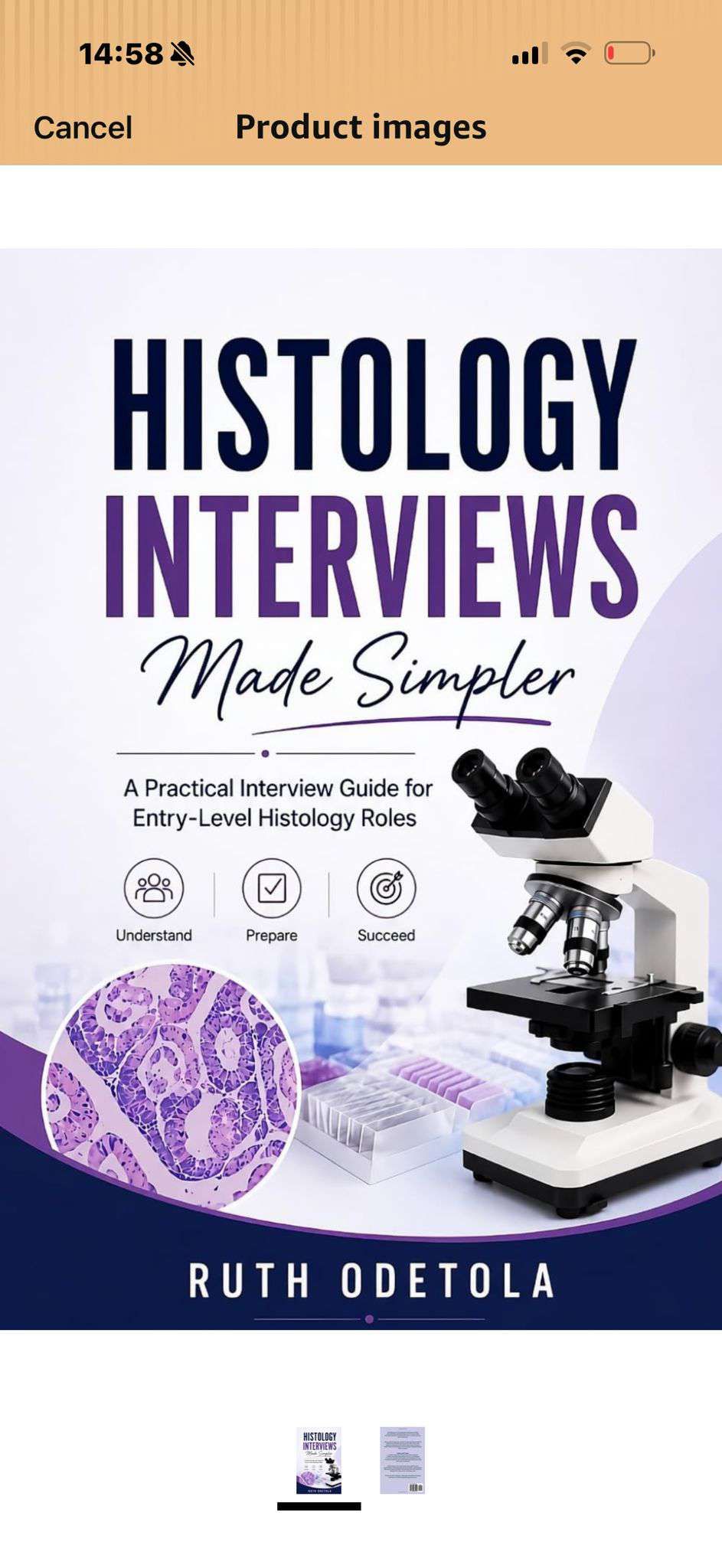
Whether you’re applying within the NHS or private laboratories, this book goes beyond generic advice. It shows you how interview panels think, what they assess, and how to answer in a way that sounds safe, structured, and within your role.
Intelligently drawn from real experience working within NHS histopathology, this guide combines real interview questions, practical frameworks, and the exact approach used to progress from entry-level roles to Specialist Biomedical Scientist.
Inside this manual, you’ll learn:
Common histology interview questions and how to approach them;
How to structure clear, confident answers using real examples;
The key technical, safety, and workflow knowledge panels expect;
How to demonstrate understanding even without lab experience;
What makes candidates stand out and what quietly costs them the job.
If you’ve ever walked into an interview unsure, under-prepared, or lacking confidence, this guide will help you understand what to expect and how to respond so you can walk in prepared and perform at your best.
The young author who is also an investments Coach Ruth Odetola is a UK based Specialist Biomedical Scientist in Histopathology with eight years of experience working within the National Health Service (NHS) in the United Kingdom.
A graduate of Queen Mary University of London, where she obtained a First Class degree in Biomedical Science, Ruth also holds a postgraduate diploma in Public Health from King’s College London.
However, her journey into biomedical science was far from straightforward.
Like many graduates, Ruth believed that completing a Biomedical Science degree would automatically qualify her to work as a Biomedical Scientist. After university, she discovered that the reality was far more complicated. She learned that obtaining professional registration and gaining laboratory experience were essential steps that many students were never properly informed about during university.
“I finished university thinking I was ready to become a Biomedical Scientist,” she explains. “But when I started applying for jobs, I realised I wasn’t actually eligible yet. It was frustrating and discouraging because I simply didn’t understand how the system worked.”
Determined not to give up, Ruth started from the very bottom of the laboratory pathway, taking a Band 2 Medical Laboratory Assistant (MLA) role within the NHS in 2018. Over the years, she progressively worked her way through the laboratory system from Band 2 to Band 3, trainee Band 5, trainee Band 6, and eventually becoming a Specialist Biomedical Scientist in Histology.
Her experience exposed her to a challenge many graduates and migrant healthcare workers face when trying to enter the UK healthcare system: a lack of clear guidance about applications, interviews, laboratory expectations, and career progression.
That experience ultimately inspired her to write her book, Histology Interview Made Simpler.
The book was created primarily for:
• Biomedical Science graduates
• Early career laboratory professionals
• International laboratory professionals relocating to the UK
• Individuals applying for entry level NHS laboratory roles
Written from the perspective of working in histology diagnostic laboratories, the guide explains how NHS laboratory interviews work, the types of questions candidates are commonly asked, mistakes that often cost applicants job opportunities, and practical ways candidates can prepare effectively.
While the book focuses on histology roles, many of the interview principles discussed, including communication, interview structure, preparation techniques, and understanding what interview panels are actually assessing, can apply across different biomedical disciplines.
Ruth says the goal was not simply to provide interview questions, but to reduce confusion and help candidates approach interviews with more confidence and clarity.
“There are so many intelligent graduates who struggle simply because nobody explained the pathway properly,” she says. “A lot of people are capable, but they feel lost, overwhelmed, or unprepared when applying for NHS roles.”
Alongside the book, Ruth also founded BiomedPathway, a platform designed to support aspiring biomedical and laboratory professionals navigating the UK healthcare job market.