
A new report has revealed that Nigeria’s poverty rate surged to about 63 per cent following the removal of petrol subsidy, highlighting the severe short-term welfare impact of the country’s ongoing economic reforms.
The findings were presented on Thursday at a stakeholders’ dialogue organised by Agora Policy in Abuja, where policymakers, economists and private sector leaders gathered to assess the implications of the Federal Government’s reform agenda.
The dialogue, themed “Sustaining and Deepening Economic Reforms in Nigeria,” examined the economic and social consequences of key policies introduced by the administration, including the removal of petrol subsidy and electricity tariff adjustments.
Presenting the study, Dr Mohammed Shuaibu, a Senior Lecturer in the Department of Economics at the University of Abuja, said the analysis showed that poverty levels rose significantly after the subsidy removal before moderating slightly following the introduction of social protection measures.
According to him, Nigeria’s national poverty headcount increased sharply from about 49.8 per cent before the reform to roughly 63 per cent after petrol subsidy was scrapped.
“After the subsidy removal, poverty increased from a baseline of about 50 per cent to 63 per cent,” Shuaibu said.
He explained that government intervention programmes, including cash transfers and other social support initiatives, helped reduce the impact but were insufficient to restore welfare levels to what they were before the policy change.
“When social protection measures were introduced, the poverty rate moderated to around 56.2 per cent,” he added.
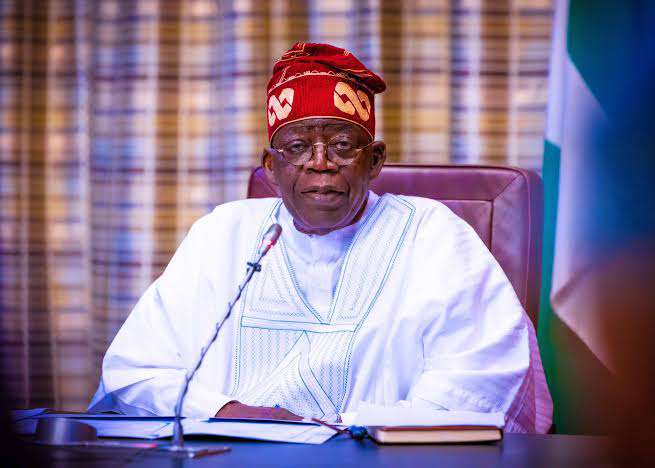
President Bola Tinubu had announced the removal of petrol subsidy during his inaugural address on May 29, 2023, describing the policy as necessary to address fiscal pressures and longstanding distortions in the Nigerian economy.
However, the report indicated that the policy triggered widespread price increases across the economy, which significantly reduced household purchasing power.
The study found that the impact of the reforms was uneven across different income groups. High-income households were largely able to absorb the shock, while low-income households experienced the most severe decline in living standards.
According to the findings, poverty among low-income households rose from around 50 per cent before the subsidy removal to about 63 per cent afterwards.
The national poverty gap – which measures the depth of deprivation among poor households – also widened considerably.
The report showed that the poverty gap increased from 31.6 per cent to more than 45 per cent following the policy change, indicating that poor households sank deeper into poverty.
Although social protection measures helped narrow the gap slightly, the improvement remained limited due to delays in implementing intervention programmes and the relatively small scale of assistance.
The study also examined how the reforms affected household consumption patterns across the country.
It found that consumption declined across most income groups following the removal of petrol subsidy and the adjustment of electricity tariffs.
Shuaibu noted that rising energy and transportation costs significantly reduced the spending capacity of many households, particularly those in rural communities and low-income urban areas.
“Across the board, household consumption declined after both the subsidy removal and electricity tariff adjustments,” he said, adding that social transfers provided some relief for the poorest households.
The analysis also assessed the broader macroeconomic implications of electricity tariff reforms.
It found that electricity tariff adjustments resulted in a modest increase in consumer prices, initially raising inflation by about 0.26 per cent and later to approximately 0.52 per cent after accounting for social protection measures.
Despite the inflationary pressure, the electricity reforms also produced a small positive impact on economic output.
According to the study, real Gross Domestic Product increased by about 0.42 per cent under the reform scenario, although this figure moderated to around 0.21 per cent when the cost of social protection programmes was factored in.
Firm-level investment also recorded slight improvements following the electricity tariff adjustments, though these gains were partly offset by the cost of implementing welfare interventions.
In contrast, the removal of petrol subsidy had a contractionary effect on economic activity.
The report noted that rising fuel prices and transportation costs triggered inflationary pressures that weighed heavily on business operations and investment.
To complement the statistical modelling, the study incorporated feedback from focus group discussions conducted across Nigeria’s six geopolitical zones.
Participants generally acknowledged the need for economic reforms but criticised the speed at which the policies were implemented.
Many households said the reforms had severely eroded their purchasing power and forced them to adopt survival strategies such as reducing consumption, limiting travel, rationing electricity and borrowing money to meet basic needs.
“Households adjusted to the shocks not through recovery but through sacrifice,” Shuaibu said.
Businesses also reported significant challenges, citing rising fuel and electricity costs as major factors increasing their operating expenses.
Some firms said they had been forced to increase prices, reduce staff strength or shut down operations, while others switched to alternative energy sources to remain operational.
However, many business owners complained that government support programmes had either not reached them or were insufficient to offset rising costs.
Despite these challenges, economic officials at the dialogue argued that the reforms were necessary to address long-standing structural weaknesses in the Nigerian economy.
The Deputy Governor of the Central Bank of Nigeria for Economic Policy, Dr Muhammad Abdullahi, said the reforms became unavoidable due to deep macroeconomic imbalances and declining government revenues.
According to him, Nigeria’s crude oil earnings dropped sharply from about $92bn in 2012 to less than $2bn in 2023, contributing to severe fiscal pressures.
He also noted that the economy had been weighed down by distortions in the foreign exchange market, including multiple exchange rate windows that encouraged arbitrage.
Abdullahi said the subsidy regime and exchange rate distortions together were estimated to have cost Nigeria about six per cent of its Gross Domestic Product.
He added that the Central Bank inherited about $7bn in foreign exchange obligations owed to businesses and investors, of which about $4.5bn had already been cleared to restore confidence in the financial system.
While acknowledging the hardship caused by the reforms, he said some macroeconomic indicators were beginning to improve, including declining inflation, stronger foreign reserves and rising non-oil exports.
Also speaking at the event, the Director-General of the Lagos Chamber of Commerce and Industry, Dr Chinyere Almona, said the reforms had corrected several long-standing distortions but had placed heavy pressure on businesses.
She noted that the removal of petrol subsidy alone could save the government about $7.5bn annually and urged authorities to invest the savings in infrastructure and human capital development.
However, she stressed that many Nigerians were yet to feel the benefits of the reforms.
“The economy is improving at the macro level, but that improvement has not yet translated into relief for the average Nigerian or small businesses,” Almona said.
World Bank economist Dr Samer Matta also called for stronger social protection systems, urging the government to expand its National Social Register to ensure that support reaches vulnerable households more quickly.
He said stronger safety nets and sustained public engagement would be essential for maintaining public support for Nigeria’s reform agenda and ensuring more inclusive economic growth.