
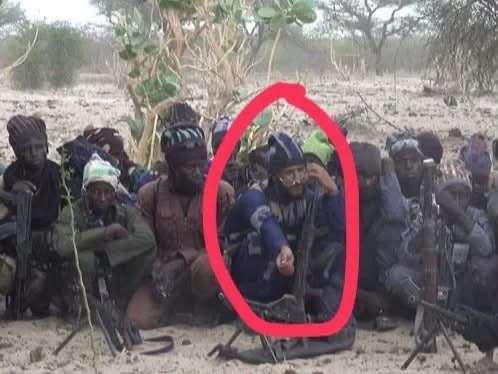
A trove of video recordings recovered from a slain ISWAP operative has provided a rare glimpse into the evolving structure of the terrorist group, revealing the alleged involvement of foreign nationals in key operational roles and raising fresh concerns about the transnational dimensions of the insurgency in Nigeria’s North-East.
The footage, obtained from a Sony camcorder recovered during a failed attack on a military position in Borno State, is being described by military authorities as a significant intelligence breakthrough in the ongoing fight against terrorism.
According to the Nigerian Army, preliminary analysis of the recordings points to the presence of at least three foreign facilitators embedded within the Islamic State West Africa Province (ISWAP), including a Palestinian believed to be the group’s chief trainer and a Moroccan serving as a medical doctor.
The revelations emerged after troops of Operation Hadin Kai successfully repelled an attempted infiltration of Cross Kauwa in Kukawa Local Government Area of Borno State on Saturday night.
Military authorities said the terrorists had sought to exploit darkness to breach the military position and make away with cholera-related medical supplies, but were detected and engaged by troops before they could achieve their objective.
While the attack itself was foiled, the recovery of the camcorder from an insurgent cameraman killed during the operation has attracted even greater attention within security circles.
Acting Military Information Officer of Joint Task Force North-East, Operation Hadin Kai, Capt. Muhammed Goni, said the recordings contained operational footage, propaganda materials and details that could help security agencies better understand the group’s leadership structure and support network.
Among those identified in the footage was a Palestinian known as Abu Ishaq, whom the military believes oversees training activities within ISWAP. Also featured was a Moroccan identified as Abu Thaiba, reportedly responsible for providing medical services to members of the insurgent group.
A third foreign operative of Arab origin was also captured in the recordings, although his identity has yet to be established.
For security analysts, the discovery reinforces longstanding concerns that extremist groups operating in the Lake Chad region continue to benefit from expertise, logistics and ideological support that extend beyond Nigeria’s borders.
The latest findings come amid renewed military offensives aimed at degrading terrorist capabilities across the North-East. In recent months, troops have intensified operations targeting insurgent camps, supply routes and leadership structures, forcing many fighters to retreat deeper into remote enclaves around the Lake Chad Basin.
The attempted raid on Cross Kauwa may also offer insight into the challenges currently facing the insurgents.
Military officials noted that the attackers appeared intent on looting medical supplies, a development they said aligns with intelligence reports suggesting that cholera has spread within some terrorist camps.
The reports indicate that the disease may be affecting a significant number of fighters, creating additional pressure on the group at a time when it is already contending with sustained military operations.
According to the Army, some infected members of the group may even have been executed by fellow insurgents, reflecting fears of a wider outbreak within the camps.
Following the encounter, troops launched exploitation operations around the area and recovered ammunition, uniforms and other combat equipment abandoned by the fleeing insurgents.
Military authorities also relied on satellite imagery and human intelligence sources to assess the outcome of the battle. Both sources reportedly confirmed that the terrorists suffered heavy casualties and were forced to evacuate the bodies of some of their dead fighters during their withdrawal.
Although two soldiers sustained gunshot wounds during the clash, the Army said they were evacuated for treatment and remain in stable condition.
Beyond the immediate tactical victory, security observers believe the intelligence value of the recovered footage could prove even more significant.
The identification of foreign operatives occupying specialised positions within ISWAP suggests that the insurgency remains connected to wider extremist networks despite years of military pressure.
For the armed forces, the discovery provides fresh leads that could aid future operations against the group’s leadership and support structures.
As troops continue their campaign across the North-East, the recovered recordings serve as a reminder that while the insurgency has been weakened, it remains a complex security challenge sustained not only by local recruits but also by external actors whose influence stretches far beyond Nigeria’s borders.
Military authorities insist, however, that the momentum remains with government forces.
“Operation Hadin Kai remains resolute in sustaining offensive operations, protecting vulnerable communities and dismantling terrorist networks until lasting peace and security are fully restored across the North-East,” Goni said.