
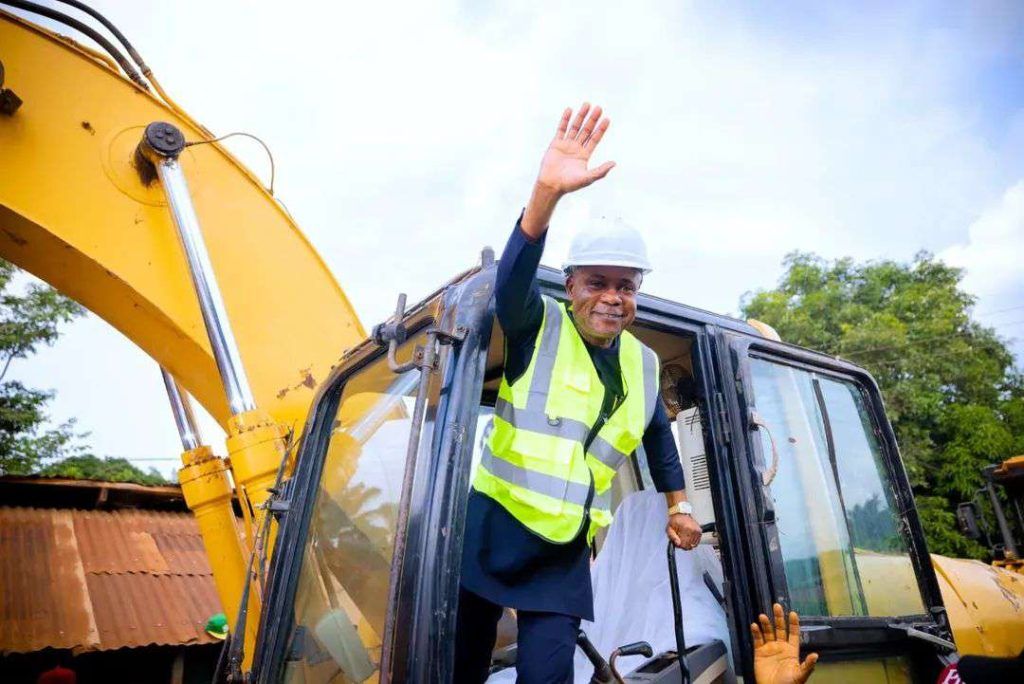
When the clock inched towards May 29, 2026, the mood in Enugu was ceremonial. Across the Coal City, project sites hum with activity, and giant billboards bearing the image of Governor Peter Mbah proclaim the mantra that has come to define his administration: Tomorrow is Here.
For a state long accused of punching below its weight despite its rich history as the administrative heart of Eastern Nigeria, Mbah’s first three years in office have represented an audacious attempt to rewrite the narrative. His government has pursued development with a speed and aggression that supporters describe as visionary and critics consider overbearing. Yet, regardless of where one stands, there is little disagreement that Enugu under Mbah has become a theatre of bold ideas.
From sprawling road projects to smart schools, from healthcare infrastructure to transport terminals, from digital economy initiatives to tourism dreams, the administration has sought to place Enugu at the centre of a new economic conversation in Nigeria’s South East.
Mbah himself makes no pretence about the scale of his ambition.
“My generation has a responsibility to work tirelessly today so that the next generation can inherit greater opportunities, meaningful work, and a better quality of life,” the governor declared recently while speaking on the state’s agricultural and industrial drive, which has seen the purchase of hundreds of tractors and the setting up manufacturing facility in Enugu.
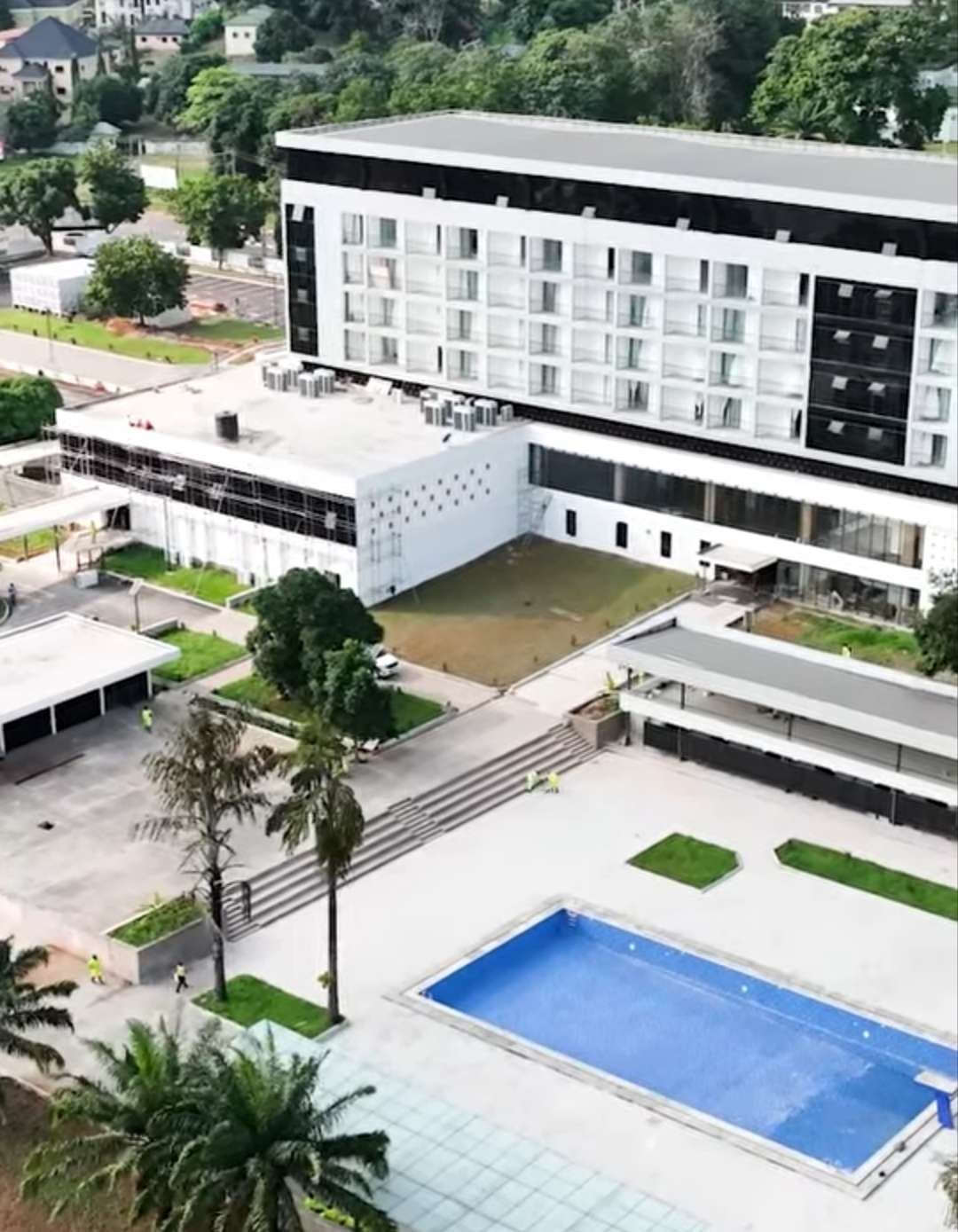
Presidential Hotel, Enugu
“That is why we are investing in mechanised agriculture, empowering farmers with modern equipment, and supporting local tractor assembly through partnerships like NORTRA. These are not just projects, they are long-term investments in productivity, food security, jobs, and economic growth.
“We are building a future where our young people can thrive in a modern economy powered by innovation and industry.”
Those words capture the governing philosophy of a man many supporters now compare – cautiously but increasingly – to the late Dr. Michael Okpara, the legendary premier of the old Eastern Region whose industrial revolution still occupies mythical status in Igbo political memory.
Unlike the easy populism that has characterised governance in many Nigerian states, Mbah arrived in office with the temperament of a corporate executive. From the outset, he signalled that his administration would be driven less by patronage politics and more by measurable outcomes.
That shift was immediately felt within the political establishment.
Party loyalists, who expected the usual endless consultations, solidarity meetings, and ceremonial politics found themselves confronting a governor who appeared impatient with theatrics. Government officials suddenly had timelines. Contractors were expected to deliver. Meetings became shorter. Performance indicators became the new language of governance.
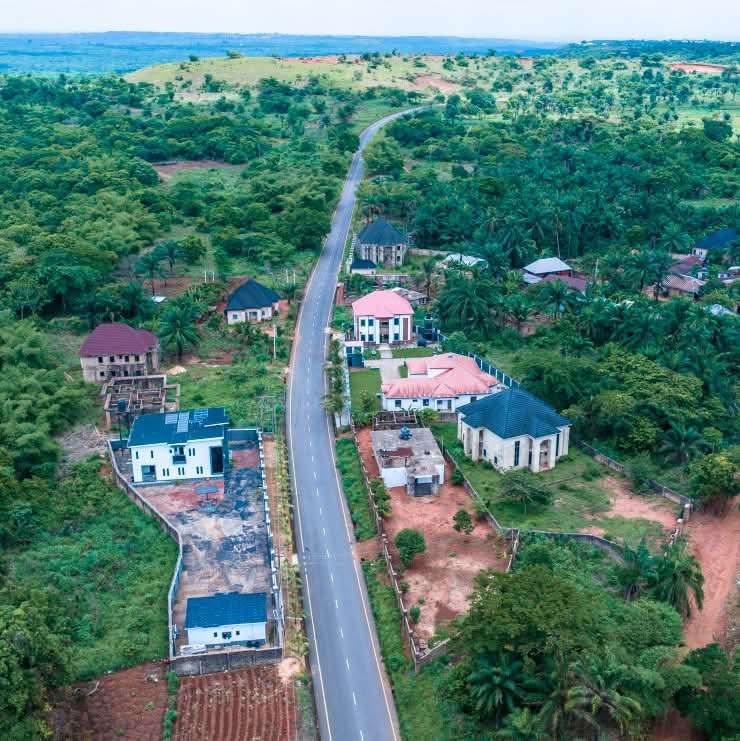
Rural roads
To many ordinary residents weary of years of political complacency, the change was refreshing.
“One thing you can’t take away from Mbah is that he came prepared,” said Okeke Anthony, a resident of Emene. “You can see the difference in terms of infrastructure. He has finished roads he started here last year. Things are moving.”
Indeed, nowhere is the administration’s activism more visible than in infrastructure development.
In recent weeks, ahead of his third anniversary, the governor embarked on inspection tours of several completed and ongoing projects across the state. Among them were the 40-kilometre Owo-Ubahu-Amankanu-Umualor-Neke-Ikem dual carriageway, the Amechi Idodo-Oruku-Amagunze Road, the New Enugu Smart City, and the Enugu International Hospital on Rangers Avenue.
Speaking during one of the inspections, Mbah described the projects as part of a deliberate strategy to transform Enugu from a civil service economy into a major investment destination.
“We are just about 600 metres away from the major road leading to Obollo Afor. This effectively creates a new gateway to the North,” he said while inspecting the Owo-Ubahu-Amankanu-Umualor-Neke-Ikem Road.
“Our people can now travel to the North Central region without passing through 9th Mile or Opi Nsukka, and within a few hours, they will be in Abuja.”
But to Mbah, the roads are not just about transportation.
“This road connects communities to farmlands and markets. What we see around us are economic opportunities because farmers can now transport their produce without difficulty,” he added.
That economic logic underpins much of the administration’s expansive road revolution. Across the state, urban and rural roads alike have become construction corridors. The ongoing dualisation of the Enugu-Ugwogo Nike-Opi Nsukka Road, the Ama-Eke-Oghe-Iwolo-Olo-Umulokpa Road, and the Lejja-Aku-Ukehe-Akpakume Nze-Egede-Affa-Eke corridor all reflect an attempt to reconnect neglected rural economies to urban markets.
Within Enugu metropolis itself, the transformation has been even more dramatic. Roads once notorious for potholes and flooding have been rebuilt, while entire neighbourhoods have undergone extensive reconstruction.
The projects have changed the visual psychology of the city. In recent years, Enugu carried itself like a nostalgic relic of past glory, a once-beautiful capital city trapped in slow decline. Under Mbah, however, there is an unmistakable attempt to restore grandeur.
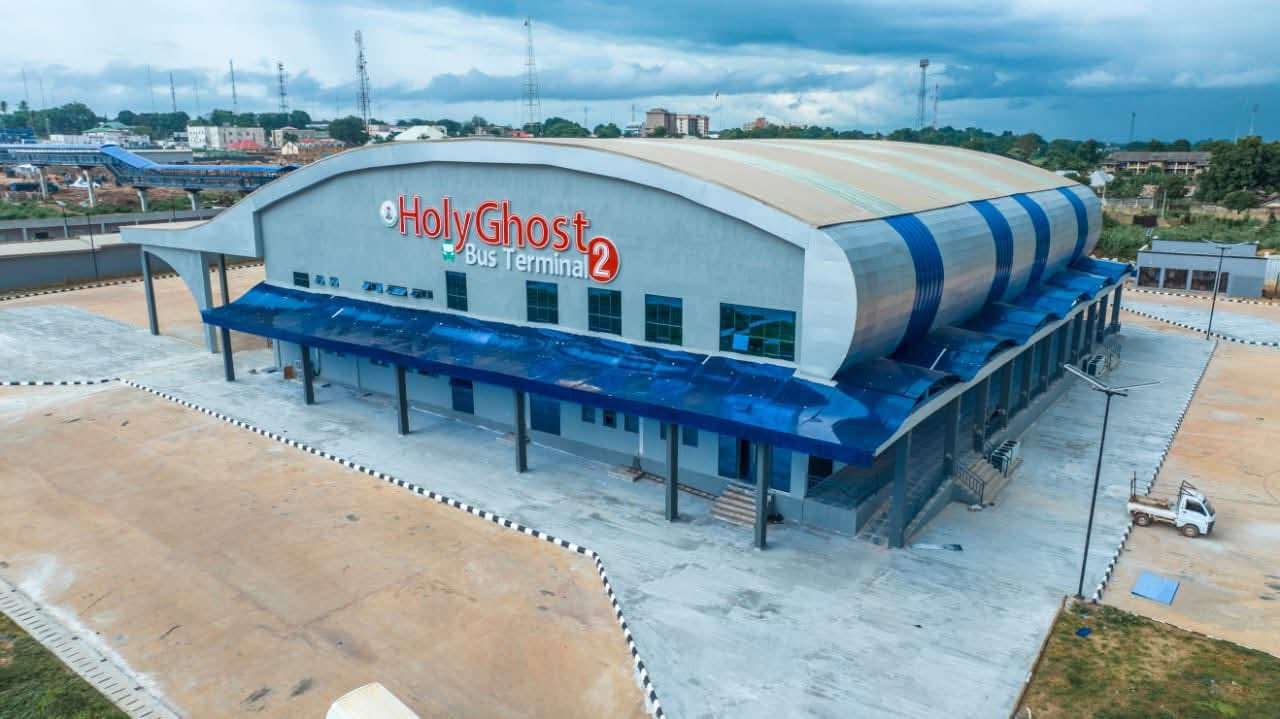
Bus Terminal
Perhaps no project symbolises that ambition more than the new Enugu International Conference Centre rising prominently within the city. Massive in scale and futuristic in design, the facility is intended to reposition Enugu as a destination for international conferences, exhibitions, and business tourism.
Nearby, construction continues on a five-star hotel meant to complement the conference centre and support the administration’s broader tourism agenda.
“Our mission has never been limited to making Enugu the number one destination for investment,” Mbah said. “We are building a state the world will come to experience.
“From the coming Zipline adventure to the Water Park, the breathtaking Ngwo Park, and the Canopy Walkway, we are opening up a new face of tourism that reflects the beauty, energy, and possibilities of Enugu.
“We are creating more than infrastructure. We are creating destinations, experiences, and memories that will position Enugu as a leading hub for both business and leisure.”
It is an ambitious tourism vision, one that seeks to transform Enugu from a transit city into a leisure destination.
Already, the government has announced plans for Nigeria’s longest canopy walkway at Nsude Pyramid and a major zipline attraction at Ngwo Pine Forest. Long-abandoned tourist assets are being revived, while projects such as the Cross of Hope monument at Okpatu Hills aim to create iconic landmarks capable of attracting visitors from across the country and beyond.
Supporters insist such thinking reflects a government finally daring to think beyond monthly federal allocations.
Critics, however, say the administration’s appetite for mega projects occasionally creates the impression of a government moving faster than the realities on the ground.
One of the recurring criticisms surrounds the smart school initiative, arguably the administration’s flagship education programme.
The idea itself is revolutionary: 260 smart primary schools across the 260 electoral wards in the state, equipped with digital learning technology, internet-enabled teaching tools, and modern classrooms designed to prepare children for a technology-driven future.
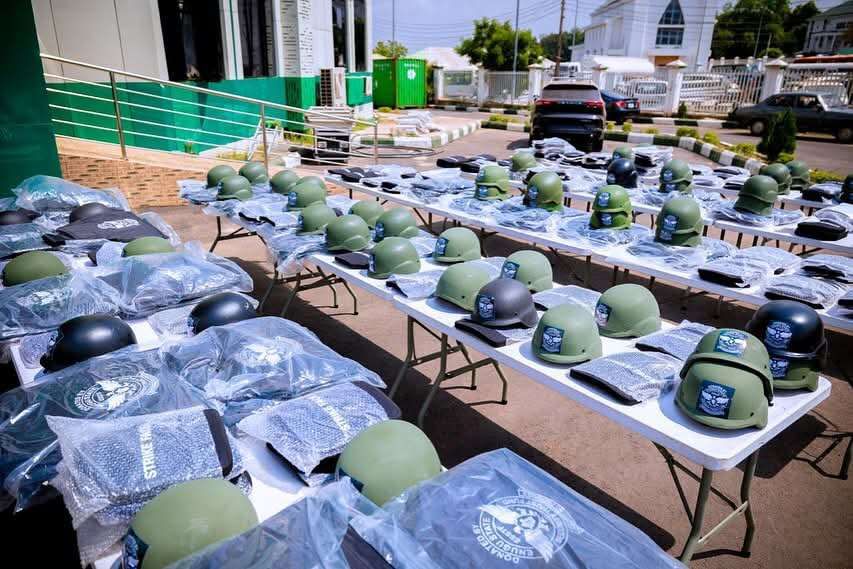
Security equipment
For a region whose educational heritage once ranked among the strongest in Africa, the symbolism is powerful.
Yet implementation has exposed weaknesses. In several communities, reports emerged of poorly executed school buildings, some with leaking roofs and structural defects. Videos circulating online showed classrooms damaged by heavy rainfall, triggering public outrage and raising questions about quality control.
Dan Nwomeh, the governor’s media aide, in an earlier interview with Business Hallmark, blamed some of the setbacks on incompetent contractors, who were later disengaged. But the controversy has nonetheless provided critics with ammunition against a government otherwise celebrated for ambitious execution.
“There are smart school projects that people now describe as traps waiting to happen,” one resident remarked. “The vision is good, but execution matters.”
Still, the government maintains that the larger educational transformation remains on course.
Beyond the smart schools, the administration is rebuilding technical colleges, constructing science and vocational institutions, and attempting a wholesale overhaul of public education infrastructure.
The emphasis on education reflects Mbah’s repeated insistence that economic growth without human capital development would be meaningless. That same logic also explains the enormous investments in healthcare.
Towering over Rangers Avenue, the Enugu International Hospital has become one of the administration’s most symbolic projects. Conceived as a world-class medical facility capable of attracting patients from across Africa, the hospital reflects an attempt to position Enugu within the lucrative medical tourism industry.
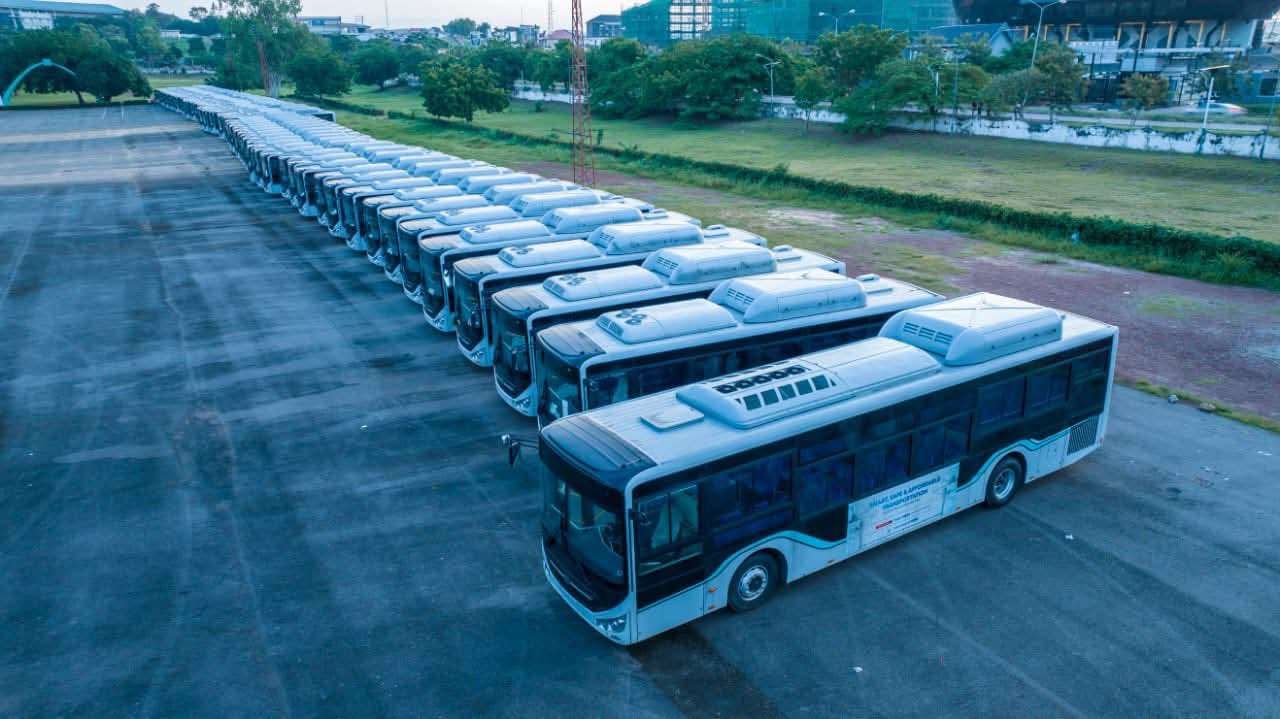
Coal City buses
“The Enugu International Hospital is no longer just a vision on paper,” the governor said recently.
“At 85 per cent completion, it stands as a bold statement of our commitment to building a healthcare system that meets global standards and restores confidence in medical care within our state.
“Every detail reflects excellence. From the architectural design to the cutting edge medical equipment being installed, this facility is being built to deliver world class healthcare, research, emergency response, and specialised treatment in an environment that places dignity, comfort, and human life first.”
The governor added: “Beyond serving Ndi Enugu, this hospital is positioned to attract patients from across Nigeria, Africa, and the world.
“You cannot have a productive state if you don’t have healthy people.”
Alongside the flagship hospital project, the government has also embarked on the construction and upgrade of hundreds of primary healthcare centres across the state, ensuring that even remote communities gain access to basic medical services.
In transportation, the administration’s ambitions are similarly expansive.
The ultra-modern bus terminals in Holy Ghost, Nsukka, Gariki, and Abakpa were conceived not merely as loading points but as integrated urban mobility hubs featuring restaurants, banks, cinemas, retail outlets, and hospitality facilities.
The Holy Ghost terminal in particular has dramatically altered the landscape of Enugu’s transport ecosystem.
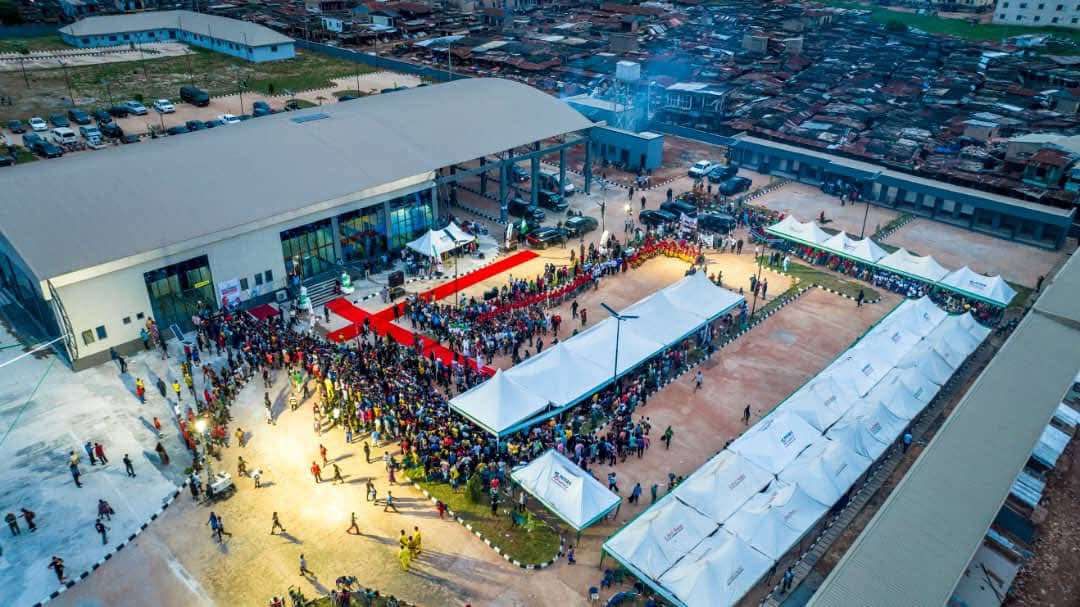
Bus Terminal
But the administration insists that difficult decisions are sometimes necessary in pursuit of long-term urban planning goals.
The same argument has been advanced regarding the aggressive revenue drive that has become one of the defining – and most controversial – features of the Mbah administration.
Eze Dubem offered a personal example. “Yesterday, I paid N36,000 to ESWAMA for waste disposal,” he said. “That’s for four by six, which is N24,000 in addition to penalty fee. The government doesn’t want to know that I just relocated to Enugu. What they know is that as long as you live in a house, the charge starts from 2023 when the administration began.
“What we paid yesterday was N157,000 because they charge per building. That’s how everyone was coming to pay because they locked people’s gates.”
He added that despite the payments, waste evacuation remained inconsistent.
“Since I relocated to Enugu last year, I had never seen ESWAMA come to evacuate waste. But when they brought bill and pasted on our gates, two weeks after, they brought their tricycle.
Nevertheless, the officials continue to argue publicly that the revenue reforms are necessary to sustain development and reduce dependence on federal allocations.
Security, too, has become central to the administration’s self-definition. In a region where insecurity, kidnappings, and the sit-at-home phenomenon once crippled economic and social life, Mbah’s government has sought to project the image of a state reclaiming control of public space.
“From day one, security has been at the core of how we approach governance in Enugu,” the governor said recently.
“We have deployed over 150 distress response squad vehicles, established a state-of-the-art Command and Control Centre with round-the-clock surveillance of hotspots across the state, and equipped our security agencies with modern communication tools to ensure seamless coordination.
“Our operatives are also fitted with body cameras to promote accountability and ensure every operation is conducted within the law.”
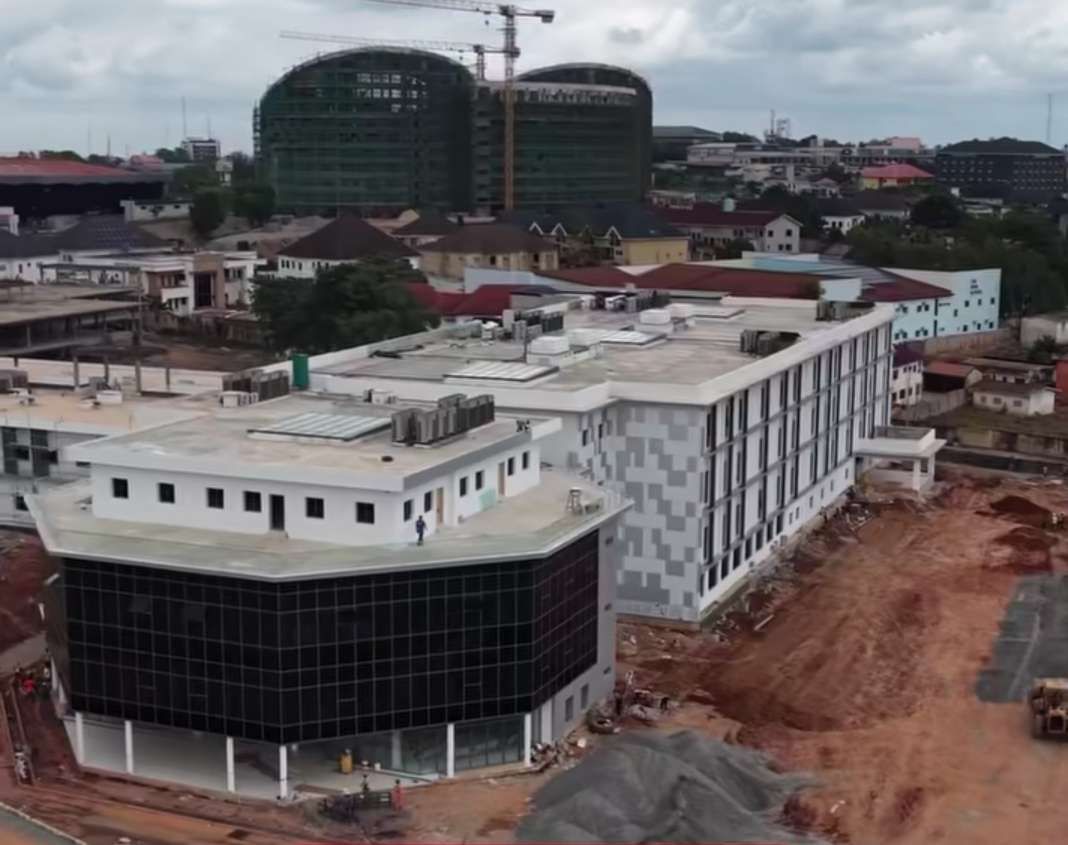
Ongoing hospital project
Indeed, many residents acknowledge that Enugu today feels calmer than it did a year or so ago. Markets now open fully on Mondays, schools operate without the old climate of fear, nightlife has gradually returned in parts of the metropolis, and the notorious Opi-Ugwogo Nike road is safe again.
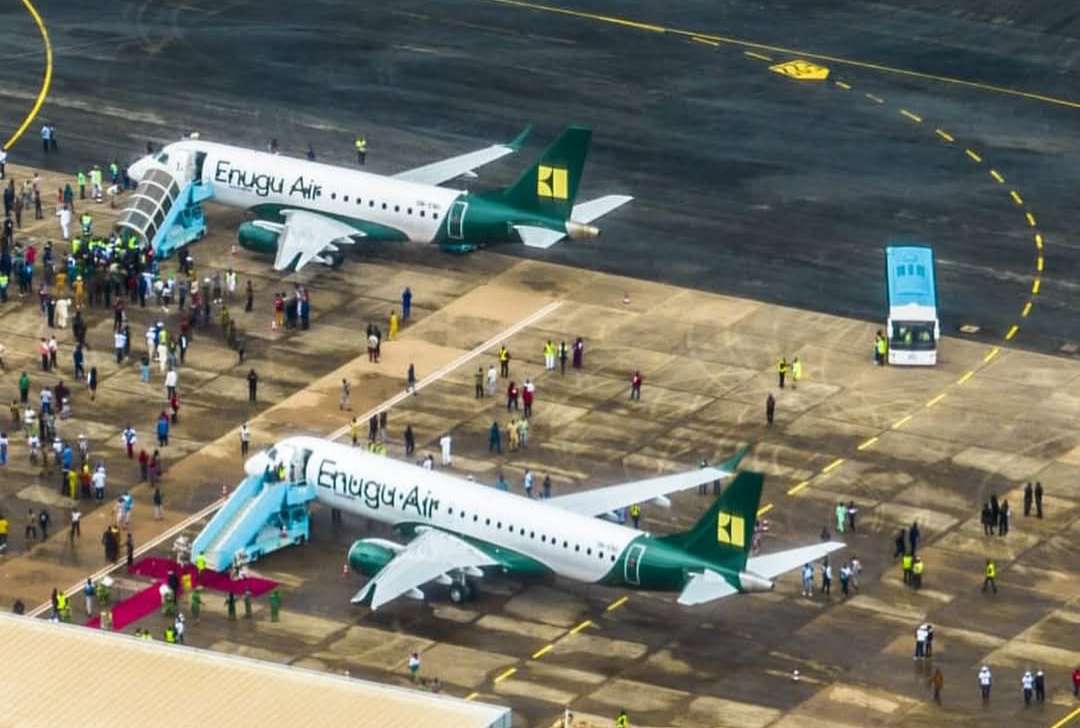
Enugu Air
Business owners particularly point to the restoration of Monday economic activity as one of the government’s most significant achievements.
The governor is now seeking a second term under the All Progressives Congress (APC), the country’s ruling party, which he joined last year, having won the contentious 2023 governorship election under the Peoples Democratic Party (PDP).
The PDP had been the dominant party in the state since 1999, but nearly lost to the Labour Party, buoyed by Peter Obi, in 2023. Mbah’s decision to join the APC did not sit well with many in a state where the ruling party remains unpopular.
Many who spoke to Business Hallmark swore they would never vote for the APC in an election.
“I like Mbah, he’s working, even if the taxation is another issue,” said Nnaji Ken, a resident of Awkunanaw, a suburb of the capital city. “But APC is a no for me. I’ll vote Obi during the presidential election and won’t bother with the governorship.”
But Mbah has no strong challenger going into 2027. Uche Nnaji, the former minister dismissed following a certificate scandal, is said to be eyeing the PDP flag. But he lacks traction. Obi’s new party, the Nigeria Democratic Congress (NDC), is expected to field a candidate, and former power minister Barth Nnaji has been touted as a potential contender, but it is unlikely that such a candidate will enjoy the level of support Chijioke Edeoga of the Labour Party enjoyed in 2023.
Nearly all the political bigwigs in Enugu are already with the governor in the APC, and in an environment where those who count the votes often decide the winner, he has all the structure needed to return for another four years in 2027.
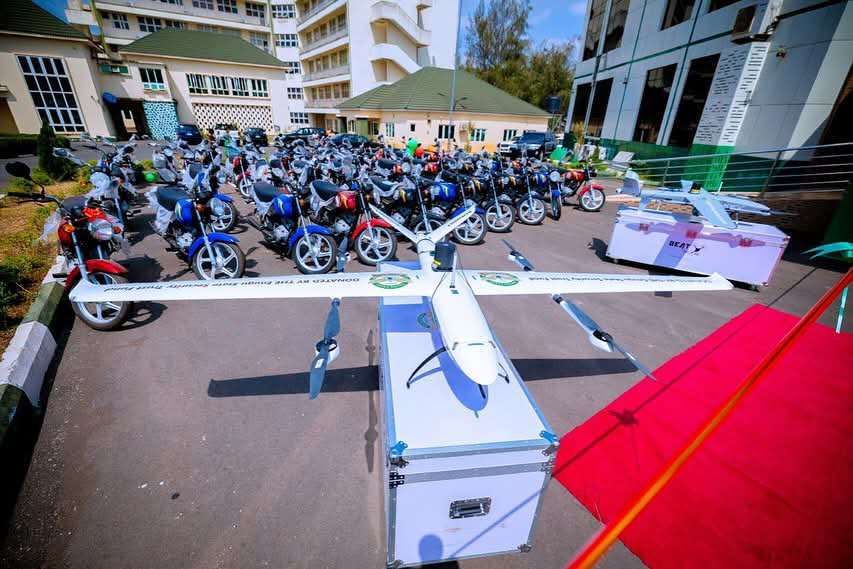
Security drone