
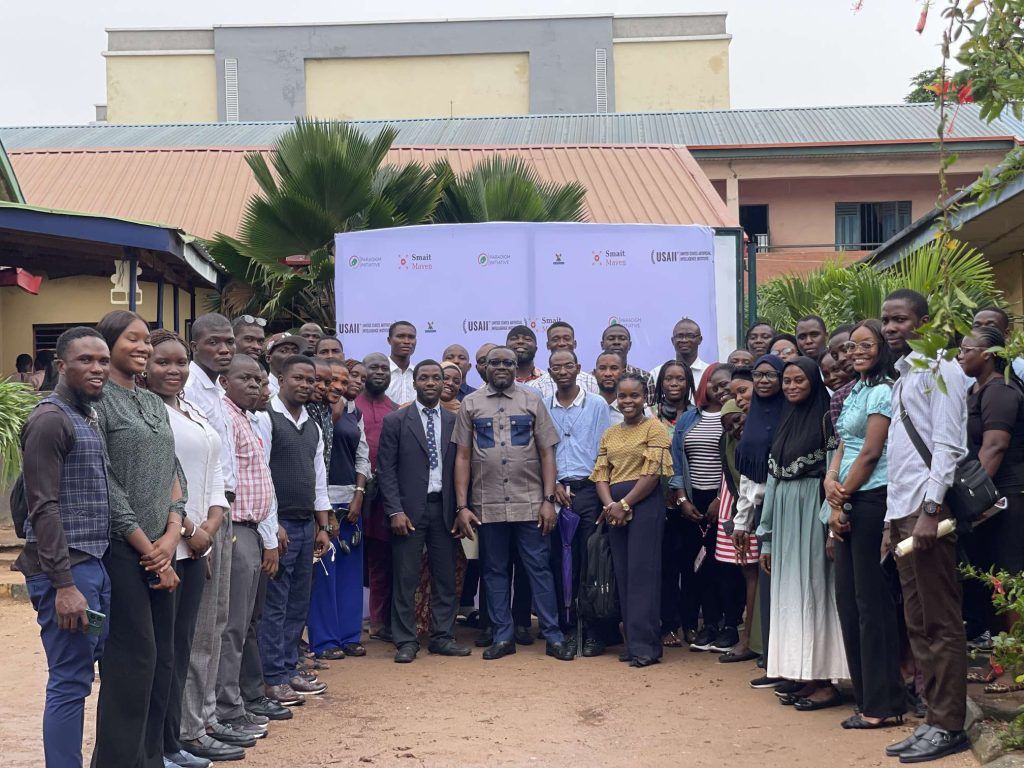
Seventy secondary school teachers drawn from 40 public schools in Lagos State have undergone specialised training in Artificial Intelligence (AI) as part of efforts to equip educators with the skills needed to prepare students for a rapidly evolving digital world.
The one-day capacity-building workshop was organised by Paradigm Initiative (PIN) in partnership with the United States Artificial Intelligence Institute (USAII) and Smait Maven, with the approval of the Lagos State Ministry of Education.
The programme focused on introducing teachers to the fundamentals of AI, the use of generative AI tools and responsible AI practices, with participants receiving practical training on how to integrate the technology into teaching and learning.
Speaking at the event, Senior Programmes Officer and Digital Inclusion Lead at Paradigm Initiative, Ihueze Nwobilor, said empowering teachers with AI knowledge was essential to preparing students for the future.
“Teachers are at the heart of every education system. By equipping educators with AI knowledge and practical skills, we are empowering them to prepare students not just to use technology, but to think critically, innovate responsibly and thrive in an increasingly AI-powered world. For digital inclusion to succeed, educators must be equipped, empowered and included,” Nwobilor said.
According to the organisers, participants were trained on AI fundamentals, ethical use of artificial intelligence, data privacy and the application of generative AI tools for lesson planning, classroom instruction, content development and improved productivity.
The workshop also exposed teachers to practical methods of teaching AI concepts in secondary schools and highlighted emerging career opportunities within the AI ecosystem.
Paradigm Initiative said the participating teachers, most of whom teach Computer Studies and Technology-related subjects, were selected to serve as knowledge multipliers in their respective schools by transferring the skills acquired during the training to colleagues and students.
One of the participants, Daniel Erondu of Ebute Elefun Junior High School, described the training as practical and transformative.
“Before this training, AI seemed like something distant and complicated. Today, I have learned practical ways to use AI to improve my lesson planning and how to teach students about responsible AI use. I am excited to share this knowledge with my colleagues and students,” he said.
Beyond technical training, the workshop encouraged collaboration among educators and the formation of a network of teachers committed to promoting responsible AI adoption and digital innovation in schools.
Paradigm Initiative said the programme is part of its broader digital inclusion agenda aimed at ensuring African educators possess the knowledge and skills required to prepare young people for an increasingly technology-driven economy.
The organisation noted that the workshop would serve as a pilot for a scalable AI literacy programme that could be expanded to schools across Nigeria and other African countries.
It also called on governments, development partners, private sector organisations, education stakeholders and civil society groups to support initiatives that promote AI literacy and equip educators and students with the competencies needed to thrive in the digital economy.