
The rescue of 39 schoolchildren and six teachers abducted from schools in Oriire Local Government Area of Oyo State after 56 harrowing days in captivity should have been a moment of collective relief and celebration.
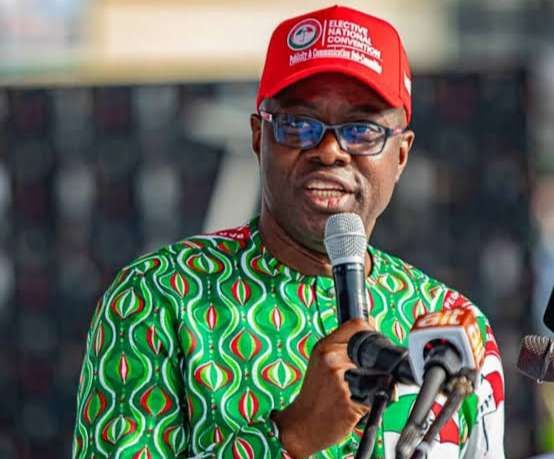
Instead, it has ignited a fresh political storm between Oyo State Governor Seyi Makinde and the Presidency, exposing deeper questions about accountability, security failures and public trust in Nigeria’s institutions.
At the heart of the controversy is Makinde’s demand for an independent international investigation into the circumstances surrounding the abduction and the eventual release of the victims. The call, which specifically invited scrutiny from the United Nations and other international human rights and accountability bodies, has drawn a sharp rebuke from the Presidency, which views the request as unnecessary, politically motivated and potentially damaging to the credibility of Nigeria’s security institutions.
What began as a security crisis has now evolved into a debate over transparency, governance and the limits of political dissent in a country still grappling with recurring kidnappings and attacks on schools.
The abduction that shocked Oyo
The incident unfolded on May 15, 2026, when armed bandits attacked three schools in the Yawota and Ahoro Esienle communities of Oriire Local Government Area.
The attackers abducted 39 pupils and six teachers, dragging them into the forests and triggering one of the most traumatic security incidents in Oyo State’s recent history.
For a state that had largely escaped the scale of school abductions witnessed in parts of northern Nigeria, the incident represented a disturbing escalation.
The victims remained in captivity for 56 days.
During that period, parents, teachers and residents endured weeks of uncertainty while security agencies launched what military authorities later described as a complex and costly rescue operation.
The Federal Government eventually announced the rescue of the victims, who were initially taken to a military medical facility in Ibadan for treatment and psychological evaluation before being formally handed over to the Oyo State Government.
Yet rather than ending the controversy, the rescue opened a new chapter of questions.
Why Makinde wants answers
Speaking after the victims were returned, Makinde acknowledged the efforts of security agencies and thanked President Bola Tinubu for supporting the rescue mission.
However, he argued that the circumstances surrounding the abduction and its resolution required deeper examination.
According to him, Nigerians deserve to know exactly what happened, whether there were security lapses and whether any form of negligence or collusion contributed to the incident.
“The circumstances surrounding this incident are sufficiently grave and unusual to warrant independent scrutiny beyond our domestic institutions,” the governor said.
Makinde insisted that his request was not intended to discredit Nigeria’s institutions but rather to strengthen public confidence through transparency.
He argued that an independent review would help establish the truth and ensure accountability if failures occurred at any level.
For the governor, the issue transcends politics.
“This is not about politics. It is about justice for the victims, reassurance for our people, and restoring public confidence that every Nigerian child can go to school without fear,” he said.
His position appears to be rooted in a broader concern about school safety and the need to prevent future occurrences.
After all, school abductions have become one of Nigeria’s most troubling security challenges over the past decade, with incidents in Chibok, Dapchi, Kankara, Jangebe and Kuriga exposing vulnerabilities in the country’s educational system.
Makinde’s argument is that understanding precisely how the Oriire incident occurred is essential to preventing a recurrence.
Presidency pushes back
The Presidency, however, sees the matter differently.
Reacting to Makinde’s demand, Presidential spokesman Bayo Onanuga accused the governor of displaying a lack of confidence in Nigeria’s institutions and attempting to politicise a sensitive national security issue.
According to Onanuga, the military, intelligence services and other security agencies have already provided sufficient explanations regarding the rescue operation.
“The Governor has just expressed his opinion that the UN should probe this incident. Our doors are open. Let the UN come if he thinks there is more to it than what our military has explained,” Onanuga said.
But he questioned the rationale behind the request.
For the Presidency, the sacrifices made by security personnel during the operation should not be overshadowed by what it regards as speculative allegations or conspiracy theories.
Onanuga noted that soldiers and members of the Amotekun Corps lost their lives while pursuing the abductors.
He described it as inconceivable that security agencies would deliberately allow children and teachers to remain in captivity for nearly two months.
“Look at those kids. Some of them are just about four or six years old. Will anyone want to deliberately subject them to the trauma they went through for 56 days?” he asked.
The presidential aide went further, linking Makinde’s demand to his political ambitions.
The Oyo governor has emerged as a prominent opposition figure and is widely regarded as a potential contender in the 2027 presidential race.
To the Presidency, that context cannot be ignored.
“It is just unfortunate that Mr Makinde, maybe because of politics, because he is a presidential candidate now, doesn’t have any trust in our own institutions,” Onanuga said.
A rescue operation at a cost
Military authorities have provided details of the operation that led to the victims’ release.
According to the General Officer Commanding 2 Division of the Nigerian Army, Major General Chinedu Nnebeife, the rescue mission involved an extensive collaboration among the military, police, Department of State Services, Amotekun Corps, local vigilantes and other security agencies.
The operation reportedly extended across multiple states as security forces tracked the abductors’ networks and supply chains.
Nnebeife said aerial surveillance initially failed to locate the victims because of the dense forests where they were held, necessitating prolonged ground operations.
The military eventually identified and disrupted the kidnappers’ logistics network, particularly around Ashamu and the Old Oyo National Park area.
The pressure, according to security officials, forced the abductors to release the victims unconditionally.
But the operation came at a heavy price.
Two soldiers were killed and several others injured during the mission.
The military says those sacrifices underscore the commitment of security personnel to securing the release of the captives.
Inside the kidnappers’ camp
Perhaps the most haunting aspect of the story is the testimony of the victims themselves.
For Principal Rachael Alamu of Community High School, Ahoro-Esienle, the experience remains difficult to process.
She recalled how the abductees were forced to trek through forests and transported on motorcycles along unfamiliar routes deep into the wilderness.
According to her, the kidnappers deliberately murdered one of the teachers, mathematics instructor Michael Oyedokun, as a warning to both the government and security agencies.
“The reason the kidnappers killed one of the teachers was to scare away the security agencies and send a message that they meant business,” she said.
The children suffered even more.
Many endured hunger, fear and physical abuse while their families anxiously awaited news of their fate.
For teachers like Alamu, returning to work in remote rural communities may now be psychologically difficult.
The trauma of captivity has altered perceptions of safety in areas once regarded as relatively secure.
Beyond politics
The dispute between Makinde and the Presidency highlights a larger dilemma confronting Nigeria.
Can the country address persistent security failures solely through internal mechanisms, or does it require independent scrutiny to restore public confidence?
Supporters of Makinde argue that demanding accountability should not be viewed as an attack on national institutions.
In their view, transparency is necessary to understand how heavily armed criminals succeeded in abducting dozens of children and teachers and held them for nearly two months.
Critics, however, warn that involving international bodies could undermine confidence in local institutions and unfairly discredit security agencies that risked their lives to secure the victims’ release.
Whatever position one takes, the larger issue remains unresolved.
The real challenge is not the political exchange between Ibadan and Abuja but ensuring that no school, teacher or child experiences a similar ordeal again.
For the families who spent 56 agonising days waiting for their loved ones to return, the debate over investigations is secondary.
Their relief is undeniable.
But so too are the questions raised by one of the most disturbing school abductions ever recorded in Oyo State.
Whether through domestic inquiries or international scrutiny, many Nigerians believe those questions deserve answers.