
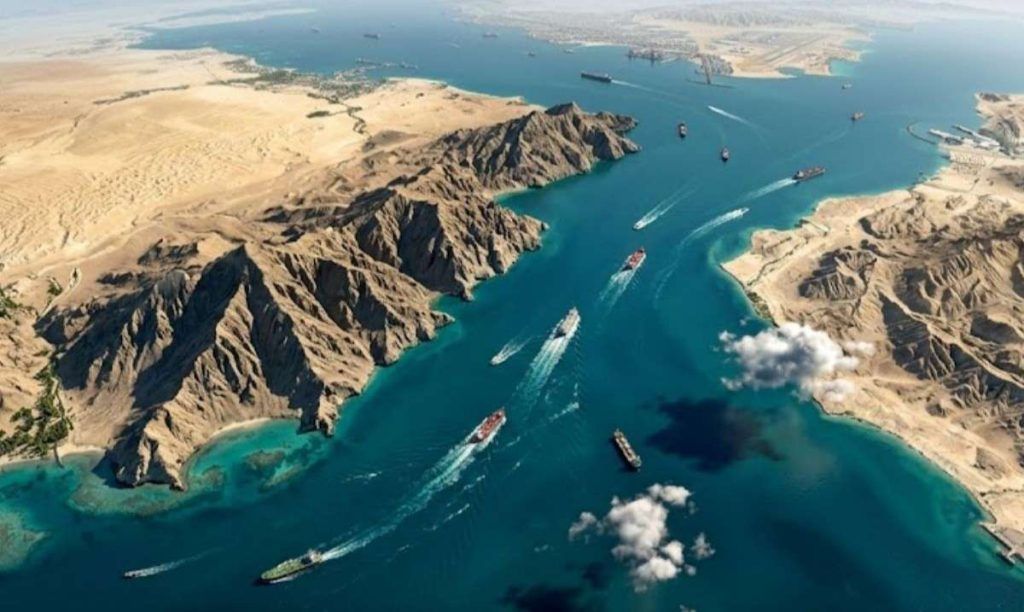
Shipping traffic through the Strait of Hormuz has slowed to a near standstill for the seventh consecutive day, with vessels linked to Iran the only commercial ships observed transiting the strategic waterway in the past 24 hours, according to vessel-tracking data compiled by Bloomberg.
Data from maritime monitoring systems show that during the latest observation period, one Iran-linked bulk carrier exited the Persian Gulf, while no commercial ships were recorded entering the Gulf from the opposite direction.
The last commercial vessel without any apparent connection to Iran to pass through the strait was the Chinese-owned bulk carrier Sino Ocean, which completed the transit on Saturday morning.
The Strait of Hormuz, one of the world’s most critical energy chokepoints, has witnessed an unprecedented slowdown in maritime traffic following escalating hostilities involving the United States, Israel and Iran.
Multiple attacks on merchant vessels in the region, combined with ongoing missile and drone activity, have heightened security concerns and significantly raised the risk level for commercial shipping companies operating in the area.
The disruption has effectively halted tanker movements into and out of the Persian Gulf, creating mounting pressure on oil-export logistics across the region.
With shipments stalled, storage tanks at major oil facilities are rapidly approaching capacity, forcing some refineries to reduce processing rates.
Iraq has already scaled back crude oil production, while Kuwait and the United Arab Emirates have also implemented output reductions in response to the logistical bottleneck.
Saudi Arabia, however, has attempted to mitigate the disruption by increasing shipments from its Red Sea export terminals, pushing exports through that route to record levels in an effort to sustain supply to global markets.
Ship-tracking data further revealed that as of last Friday, only nine empty supertankers remained in the Persian Gulf, highlighting the growing strain on the region’s export infrastructure as the shipping disruption persists.
Maritime analysts warn that the situation could worsen if the standoff continues, as oil producers in the Gulf rely heavily on the narrow waterway for global exports.
The Strait of Hormuz, located between Iran and Oman, handles a significant portion of the world’s seaborne oil trade, making any disruption to traffic through the passage a major concern for global energy markets.
Complicating monitoring efforts, widespread signal interference has been reported in the region, with some vessels also switching off their Automatic Identification System (AIS) transponders.
AIS devices are typically used by ships to broadcast their positions and movements for safety and tracking purposes.
Analysts say the disabling of these systems makes it more difficult to accurately determine the number of vessels operating in the area, suggesting that some tankers may still be transiting the strait without broadcasting their positions.
As a result, the confirmed traffic levels may not fully reflect the actual number of ships navigating the waterway under the current high-risk conditions.
Shipping companies and maritime insurers are closely monitoring the evolving security environment as tensions in the region continue to threaten one of the world’s most vital energy corridors.