
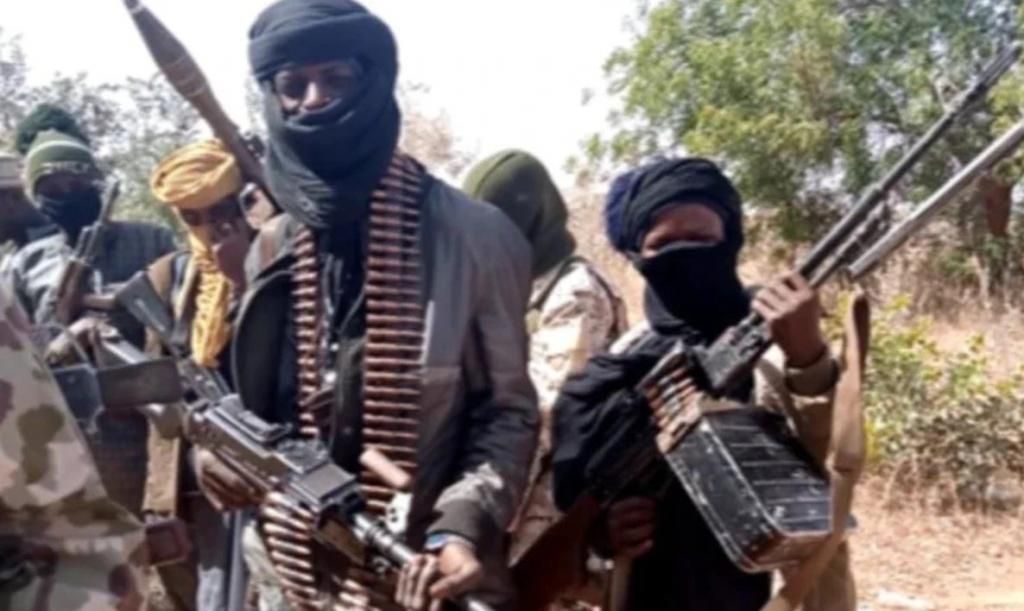
The worsening security situation across Nigeria has come under renewed scrutiny following the abduction of a traditional ruler in Ondo State, amid reports that the Federal Government spent N57.78 billion on security-related projects and operations within the first four months of 2026.
Data obtained from the Open Treasury Portal showed that the government expended N57.78 billion on defence equipment procurement, security infrastructure, military barracks, police facilities, and other security-related projects between January and April 2026. The figure represents a 127.97 per cent increase from the N25.35 billion spent during the corresponding period in 2025.
The spending comes as insecurity continues to spread across several parts of the country, with a police security report indicating that no fewer than 98 criminal incidents, including 51 attacks and abductions, were recorded nationwide within a single week.
The incidents comprised 37 homicide cases, 27 banditry attacks, 24 kidnappings, eight armed robbery incidents, and two terrorism-related attacks reported across states including Kaduna, Katsina, Kebbi, Zamfara, and others.
In the latest attack, suspected terrorists abducted the traditional head of Ode-Oriya Village in Owo Local Government Area of Ondo State, Baale Adeniyi Adelana, during a late-night raid on his palace.
According to reports, about six armed men stormed the community on Saturday night and forcefully entered the monarch’s residence, which also serves as his palace, before whisking him away through a nearby bush path to an unknown destination.
During the attack, the monarch’s wife sustained a gunshot wound to her right hand. She was rescued and rushed to a medical facility, where she is reportedly responding to treatment.
Confirming the incident, the spokesperson of the Ondo State Police Command, Abayomi Jimoh, said security operatives had launched a coordinated operation to rescue the abducted monarch.
He explained that the Divisional Police Officer in Owo immediately mobilised personnel to the scene after receiving a distress call, while tactical units and intelligence teams had been deployed to nearby forests and suspected escape routes to track down the kidnappers.
Jimoh added that the Commissioner of Police had ordered intensified security operations across the area and neighbouring communities to ensure the safe rescue of the victim and the arrest of those responsible.
The police also appealed to residents to remain calm and cooperate with security agencies by providing useful information that could assist ongoing investigations and rescue efforts.
The abduction in Ondo is the latest in a series of violent incidents that have continued to plague the country despite increased government spending on security.
Analysis of the Treasury Portal data showed that only 1.24 per cent of the N4.66 trillion security budget approved for 2026 had been utilised as of April.
The largest share of the expenditure, N21.39 billion, was spent on defence equipment procurement, accounting for about 37 per cent of total security spending during the period. Another N14.16 billion was spent on security equipment, while N5.84 billion went into military barracks construction.
The government also spent N5.17 billion on police stations and barracks, N3.26 billion on rehabilitation of defence equipment, N2.39 billion on defence facilities, and N2.16 billion on repairs of military barracks.
For routine operations, N3 billion was spent on security services, while N320.94 million was disbursed as security votes.
However, no expenditure was recorded under the military operations budget line tagged “Operation Lafiya Dole and Other Operations of the Armed Forces,” despite a N500 million allocation in the 2026 budget. Similarly, no funds had been released for the kitting of Armed Forces personnel, although N2.53 billion was earmarked for the programme.
Among the most notable incidents recorded within the review period was the abduction of 39 residents in Zamfara State after they reportedly entered the Fadama Forest to negotiate peace with a notorious bandit leader, Jimo Smally.
In Katsina State, bandits blocked the Katsina-Kankara highway and intercepted a commercial vehicle carrying 11 passengers. Police later rescued nine of the victims, while the driver and another passenger remained missing.
Reacting to the security situation, security analyst Lekan Jackson-Ojo described the current state of insecurity as one of the worst in Nigeria’s history.
“This is the highest level of insecurity in the military and political history of the Federal Republic of Nigeria,” he said.
According to him, insecurity continues to undermine economic growth and national stability, warning that no economy can thrive in an atmosphere of fear and violence.
Jackson-Ojo also criticised the government’s policy of reintegrating repentant terrorists into society, arguing that it sends the wrong signal and reflects a lack of political will to decisively tackle insecurity.
He further lamented what he described as the political elite’s preoccupation with electoral campaigns rather than addressing pressing security challenges confronting the nation.
Another security analyst, Chidi Omeje, argued that the military remains overstretched despite increased government expenditure on security.
“The military, on their own, are completely overstretched. You can count over 30 different operations where military personnel are currently deployed across the country,” he said.
Omeje maintained that military action alone would not resolve Nigeria’s security challenges, insisting that government must address the root causes of insecurity, including poverty, bad governance, corruption, unemployment, and weak border controls.
He also blamed the instability across the Sahel region and Nigeria’s porous borders for the increasing flow of armed groups and criminal elements into the country.
“The government seems almost clueless about how to go about this matter. They are paid to find solutions, so they must find solutions,” he added.
The latest figures and incidents highlight the growing concerns over the effectiveness of Nigeria’s security strategy, as violent attacks, kidnappings, and banditry continue to spread across the country despite increased government spending on defence and security infrastructure.