
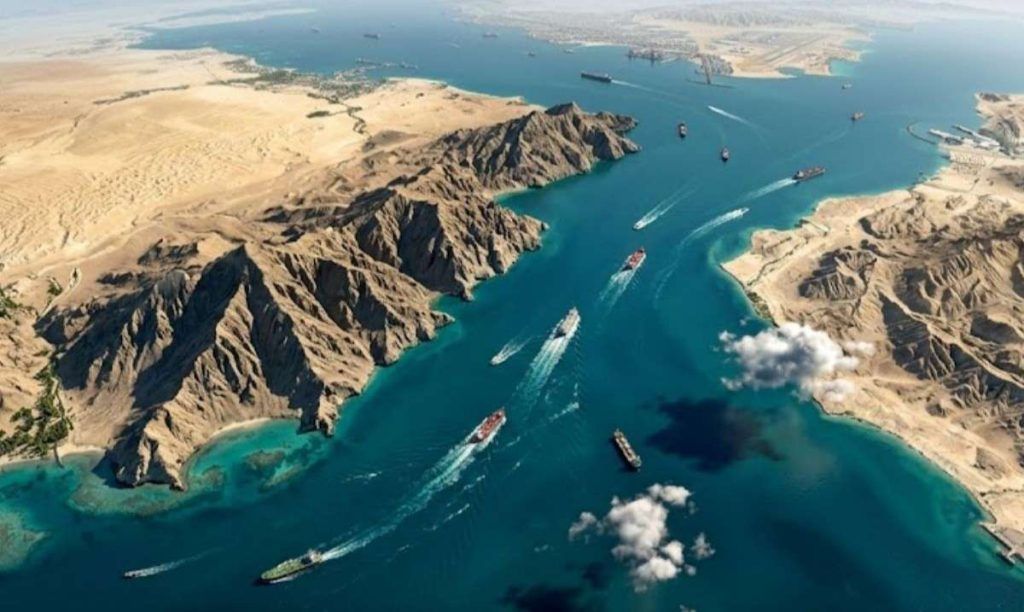
Global oil prices fell sharply on Thursday, extending losses recorded earlier in the week after the United States and Iran formally signed an agreement ending their 107-day conflict and paving the way for the reopening of the strategic Strait of Hormuz.
The breakthrough deal, signed by US President Donald Trump and Iranian President Masoud Pezeshkian following negotiations mediated by Pakistan, eased fears of prolonged disruptions to global energy supplies and boosted confidence in international markets.
Speaking after signing the memorandum of understanding at Versailles, France, Trump confirmed the agreement had been concluded, while Iran’s Foreign Ministry spokesman, Esmaeil Baqaei, announced that both leaders had formally endorsed the document.
The accord provides for the immediate reopening of the Strait of Hormuz, a critical maritime route through which roughly one-fifth of the world’s oil supply passes. The waterway had effectively been shut since the outbreak of hostilities in late February, triggering sharp increases in crude prices and raising concerns about global inflation.
Pakistan’s Prime Minister, Shehbaz Sharif, whose government played a central role in brokering the deal, said the reopening of the strait would be accompanied by the lifting of the US naval blockade around Iranian waters.
Under the agreement, Washington is expected to ease oil-related sanctions and support a proposed $300 billion reconstruction fund for Iran, while Tehran has committed to diluting its stockpile of enriched uranium as negotiations continue toward a comprehensive long-term settlement.
The easing of geopolitical tensions sent crude prices lower. West Texas Intermediate crude dropped 2.4 per cent to $74.98 per barrel, while Brent crude fell 2.2 per cent to $77.83 per barrel. Both benchmark contracts have now shed more than 15 per cent since reports of a possible agreement first emerged last week.
Market analysts said the deal had removed a significant risk premium that had been built into oil prices during the conflict.
Stephen Innes of SPI Asset Management said the agreement and the anticipated restoration of normal shipping through the Strait of Hormuz had eased concerns over potential supply shortages.
“The market had been pricing in not only war risks but also the possibility of major disruptions to Gulf oil flows,” he noted.
Despite the positive impact on energy markets, global equities delivered mixed performances as investors assessed signals from the US Federal Reserve regarding future interest rate policy.
The Federal Reserve left benchmark rates unchanged at its latest meeting but suggested further tightening could be considered later in the year if inflationary pressures persist.
In his first policy meeting as Fed Chair, Kevin Warsh acknowledged that inflation remained above the central bank’s target and pledged to restore price stability.
“Persistently high prices remain a burden on American households,” Warsh said, adding that the central bank remained committed to its inflation-fighting mandate.
Investors interpreted the Fed’s statement as placing greater emphasis on inflation than employment, particularly as recent data showed consumer prices continuing to rise while the labour market remained resilient.
National Australia Bank analyst Gavin Friend said the Fed’s latest communication signalled a stronger focus on price stability, reducing expectations of near-term interest rate cuts.
Asian stock markets responded unevenly. South Korea’s Kospi surged more than two per cent to a record high above 9,000 points, driven by strong gains in semiconductor giants Samsung Electronics and SK Hynix amid continued demand linked to artificial intelligence technologies.
Japan’s Nikkei 225 also closed at a fresh record above 71,000 points, while markets in Singapore, Taiwan, India and the Philippines posted gains.
However, stocks in Hong Kong, mainland China, Australia, New Zealand, Thailand and Indonesia retreated, while London’s FTSE 100 traded lower. European markets in Paris and Frankfurt recorded modest gains.
Currency markets were relatively stable, with the euro and pound strengthening slightly against the US dollar.
Investors will continue monitoring developments surrounding implementation of the US-Iran agreement, as well as upcoming economic data and signals from major central banks, for further direction on global markets.