
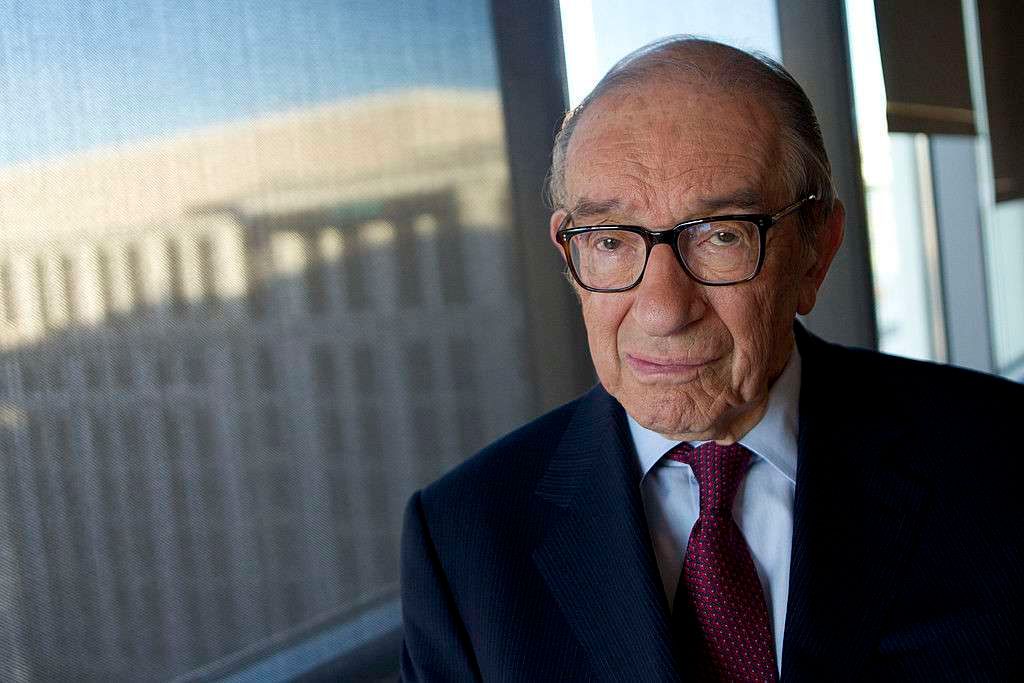
Alan Greenspan, one of the most influential and controversial economic policymakers of the modern era, has died at age 100.
As chairman of the US Federal Reserve from 1987 to 2006, he presided over nearly two decades of economic expansion, low inflation and rising prosperity, earning a reputation as the world’s most powerful central banker. Yet the global financial crisis that erupted shortly after his departure from office cast a long shadow over his legacy, prompting fierce debate about whether the policies and beliefs that made him a celebrated economic oracle also helped sow the seeds of catastrophe.
For much of his tenure, Greenspan occupied an almost mythical place in American public life. Financial markets scrutinised his every word, investors searched his speeches for hidden meanings, and political leaders deferred to his judgement. By the time he stepped down in January 2006, after serving under four US presidents, he had acquired nicknames such as “The Maestro” and “The Oracle”, reflecting the extraordinary influence he wielded over the direction of the world’s largest economy.
Born on 6 March 1926 in the Washington Heights neighbourhood of Manhattan, New York City, Greenspan displayed an early aptitude for mathematics. Raised largely by his mother, he developed a fascination with numbers that would shape the course of his life. Yet economics was not his first passion.
As a young man, he attended the Juilliard School and performed professionally as a clarinettist and saxophonist, playing in dance bands during the post-war years. Among his contemporaries was the future jazz legend Stan Getz. Greenspan later recalled that his experiences as a musician convinced him that his talents lay elsewhere, prompting a shift toward economics and public policy.
He studied economics at New York University, where he earned undergraduate and postgraduate degrees and eventually completed a doctorate. During the 1950s, he became associated with the novelist and philosopher Ayn Rand, whose advocacy of free markets and individual liberty profoundly influenced his worldview. Within Rand’s intellectual circle, Greenspan was known as “The Undertaker” because of his sombre attire and reserved demeanour.
For nearly three decades he ran a successful economic consulting firm, advising corporations and government agencies. His growing reputation brought him into Republican political circles, and in 1974 President Gerald Ford appointed him chairman of the Council of Economic Advisers.
Greenspan’s defining public role began in August 1987 when President Ronald Reagan selected him to succeed Paul Volcker as chairman of the Federal Reserve. Barely two months into the job, he faced his first major test.
On 19 October 1987, a day that became known as Black Monday, the Dow Jones Industrial Average suffered the largest one-day percentage decline in its history. Greenspan responded swiftly, assuring markets that the Federal Reserve would provide whatever liquidity was necessary to stabilise the financial system. The intervention helped calm investors and established his reputation as a steady hand in times of crisis.
Over the next 18 and a half years, Greenspan oversaw a remarkable period of economic growth. Inflation remained subdued, unemployment fell to levels not seen for decades and technological innovation fuelled a prolonged expansion that transformed the American economy.
His stewardship coincided with the rise of the internet age, surging stock markets and growing confidence in the power of market-driven prosperity. Although his communication style was famously opaque, markets reacted instantly to his comments. A single phrase could move billions of dollars.
Perhaps no remark became more famous than his warning in December 1996 about “irrational exuberance” in financial markets. The phrase entered the economic lexicon and remains one of the most frequently cited observations in modern financial history.
Greenspan often appeared amused by his reputation for ambiguity. Summoned before Congress, he once joked: “I know you believe you understand what you think I said, but I am not sure you realise that what you heard is not what I meant.”
Behind the humour lay a deep belief in the efficiency of markets and the capacity of financial institutions to manage risk without excessive government intervention. That conviction, which shaped much of his policymaking, would later become the focal point of criticism.
During the late 1990s, Greenspan opposed efforts to impose tighter regulation on the rapidly expanding derivatives market. Alongside senior officials in the Clinton administration, he resisted calls for stronger oversight from regulators concerned about the risks accumulating within the financial system.
After leaving office in 2006, Greenspan initially enjoyed the status of a respected elder statesman. However, the collapse of the US housing market and the onset of the global financial crisis fundamentally altered public perceptions of his tenure.
Critics argued that the prolonged period of low interest rates championed by the Federal Reserve had encouraged excessive borrowing and fuelled a dangerous housing bubble. Others pointed to decades of financial deregulation, much of it supported by Greenspan, as a key factor behind the crisis.
As banks failed, markets collapsed and millions lost homes and jobs, attention increasingly turned to the assumptions that had underpinned economic policymaking during his years at the Fed.
Greenspan later conceded that he had underestimated the risks posed by self-regulating financial institutions. In testimony before Congress in 2008, he famously acknowledged a flaw in the model he had trusted for decades, admitting that he had found “a flaw” in the belief that financial firms would act in their own long-term interests to protect shareholders and the wider economy.
The admission represented a striking moment of self-reflection from a man whose confidence in market mechanisms had once seemed unshakeable.
Yet Greenspan remained an influential voice in economic debates long after the crisis. Through his consultancy, public speaking engagements and a series of books, he continued to analyse economic trends and offer commentary on fiscal and monetary policy.
Even into his nineties, he remained engaged with public affairs. In his final years, he joined other former senior economic officials in defending the independence of the Federal Reserve against political pressure, arguing that central banks must remain free from partisan interference if they are to maintain credibility and control inflation.
Outside economics, Greenspan attracted occasional media attention for his personal life. He dated the broadcaster Barbara Walters before marrying the journalist Andrea Mitchell in 1997 after a lengthy courtship. The marriage endured for nearly three decades.
Mitchell announced his death, describing him as a man whose intellectual brilliance was matched by personal kindness. She recalled his enthusiasm for sport, particularly baseball, tennis and golf, and his enduring love of jazz music.
Greenspan’s place in economic history remains complex. To admirers, he was the architect of an era of prosperity who guided the American economy through stock market crashes, international financial crises and profound technological change. To critics, he embodied an age of excessive faith in deregulation and market self-correction that culminated in one of the worst financial disasters in modern history.
Few public officials have exercised greater influence over the global economy. Fewer still have inspired such admiration and controversy in equal measure.
Alan Greenspan is survived by his wife, Andrea Mitchell.