
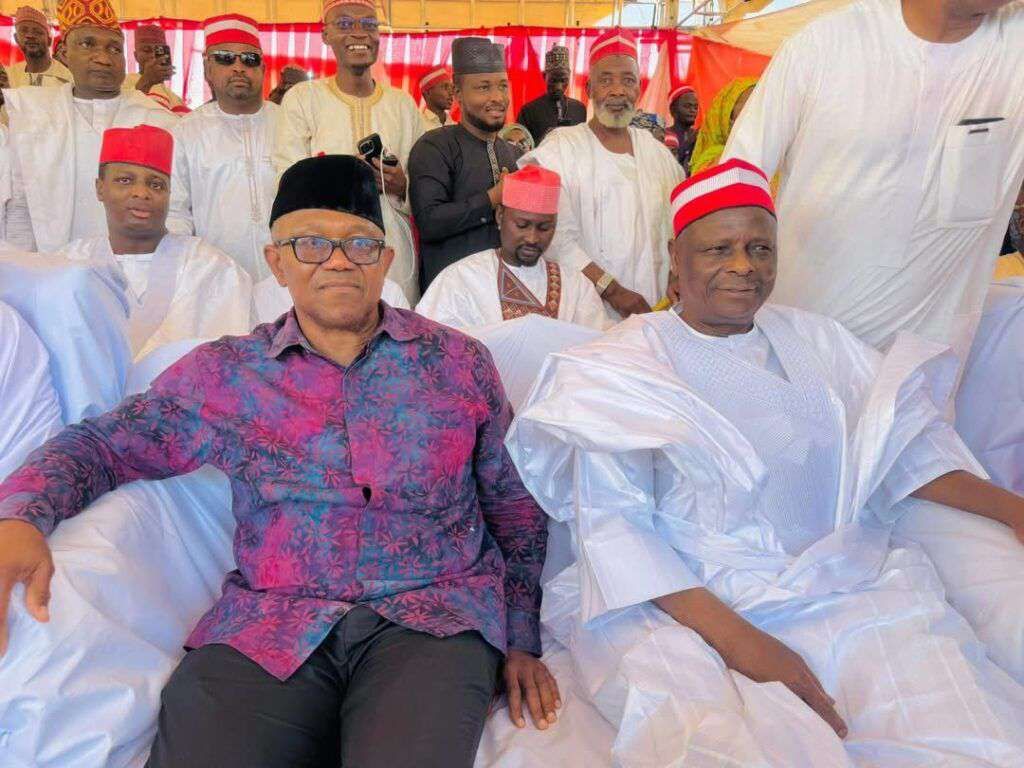
Nigeria’s opposition landscape is set for a major shake-up on Monday as Peter Obi and Rabiu Musa Kwankwaso prepare to formally exit the African Democratic Congress (ADC), according to Buba Galadima.
Galadima, a leading figure in the New Nigeria People’s Party (NNPP), disclosed this at a stakeholders’ meeting of the Obi–Kwankwaso Movement in Abuja on Saturday, signalling what could become one of the most consequential political realignments ahead of the 2027 general elections.
He told supporters that both leaders would publicly announce the platform on which they intend to contest, urging them to remain alert and organised in anticipation of political pushback.
Though Galadima stopped short of naming the party, multiple sources within the opposition confirmed that the duo have concluded advanced talks with the Nigeria Democratic Congress (NDC), a relatively new platform associated with former Bayelsa State governor Seriake Dickson.
A senior figure familiar with the discussions said documentation had already been signed, describing the move as a strategic exit from what insiders view as a troubled coalition within the ADC.
“Everything has been concluded. What remains is the public declaration,” the source said. “There were lessons from the ADC experience, especially concerns about internal balance and fairness.”
The source further alleged that lingering tensions within the ADC—particularly around the presidential ambition of former Vice President Atiku Abubakar—contributed to the decision to leave.
According to him, some stakeholders believed the party’s internal processes were tilted, making it difficult to build a broad-based consensus ahead of the next election.
Galadima, in his address, warned that the anticipated announcement could trigger coordinated criticism from rival camps, including negative media narratives and online campaigns.
He urged supporters to remain disciplined, advising against inflammatory rhetoric while encouraging strategic responses to any attacks.
“We expect reactions, but we must respond intelligently and not emotionally,” he said, adding that the movement must demonstrate cohesion and maturity.
The NNPP chieftain also raised concerns about what he described as sustained pressure on opposition figures, alleging that various political platforms have been weakened over time through internal crises and external interference.
He listed several parties he claimed had been affected, warning that the political environment could become more volatile as 2027 approaches.
At the meeting, businessman Isaac Fayose voiced support for the emerging Obi–Kwankwaso alliance, arguing that it represents a viable national alternative. He expressed confidence that the partnership could mobilise widespread voter support if properly organised.
“There is momentum building across the country,” he said, adding that voter frustration over economic conditions could play a decisive role in the next election.
Fayose also emphasised the need for vigilance during the electoral process, urging supporters to remain engaged beyond voting day.
In a separate intervention, activist Aisha Yesufu called on Nigerians to rise above ethnic and regional divisions, stressing that national unity would be critical to achieving meaningful political change.
“We must begin to see ourselves first as Nigerians,” she said. “Division has not taken us anywhere. It is time to build a country that works for everyone.”
She added that civic responsibility extends beyond political elites, urging citizens to use their voices and participation to demand accountability.
The planned exit of Obi and Kwankwaso from the ADC is expected to deepen existing fractures within the opposition while opening a new front in the race to build a formidable challenge to the ruling party.