
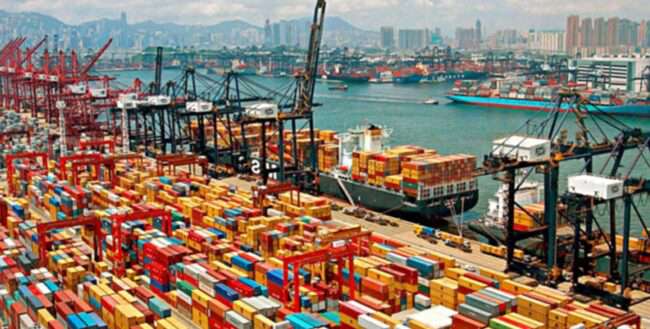
Nigeria recorded a significant increase in cargo throughput in the first quarter of 2026, with total cargo handled across the nation’s ports rising to 32.38 million metric tonnes, according to the Nigerian Ports Authority (NPA).
The figure represents an 11.6 per cent increase compared to the corresponding period of 2025, reflecting stronger import and export activities, improved operational efficiency, and increasing demand for port and terminal services.
Cargo throughput refers to the total quantity of goods loaded, unloaded, or processed through ports and other transportation hubs within a specific timeframe.
In its Q1 2026 operational performance report, the NPA also disclosed that the gross registered tonnage (GRT) of ocean-going vessels increased by 19.5 per cent year-on-year to 46.75 million, a development attributed to the arrival of larger vessels and growing confidence in Nigerian ports.
The authority noted that operational improvements at major terminals, especially the Lekki Deep Sea Port, contributed significantly to the growth in vessel traffic and cargo handling capacity.
According to the report, outward cargo traffic rose by 23.7 per cent to 14.13 million metric tonnes, while outward laden container traffic jumped by 67.6 per cent to 102,803 twenty-foot equivalent units (TEUs), compared to 61,332 TEUs recorded in the same period of 2025.
Vehicle throughput also recorded strong growth, rising by 67 per cent to 58,870 units, while transshipment container activities increased by 83.1 per cent, reinforcing Nigeria’s growing relevance in regional trade and logistics under the African Continental Free Trade Area (AfCFTA).
Commenting on the performance, the Managing Director of the Nigerian Ports Authority, Abubakar Dantsoho, said the maritime sector was entering a new era driven by reforms and infrastructure modernisation.
He stressed the need for Nigeria to maximise the economic potential of its marine resources, noting that an efficient port system could become a major driver of national economic growth.
Dantsoho added that speed, innovation, and efficient service delivery would determine Nigeria’s competitiveness in the evolving African trade environment, particularly under the AfCFTA framework.
Also speaking, the Minister of Marine and Blue Economy, Adegboyega Oyetola, said the federal government was implementing reforms aimed at positioning Nigerian ports as leading regional trade gateways.
According to him, the government remains focused on infrastructure renewal, digital transformation, and operational optimisation across the maritime sector to ensure Nigerian ports meet global standards.
The NPA further noted that improved maritime security has strengthened investor confidence, adding that Nigeria has now gone more than four years without recording piracy incidents in its territorial waters.