
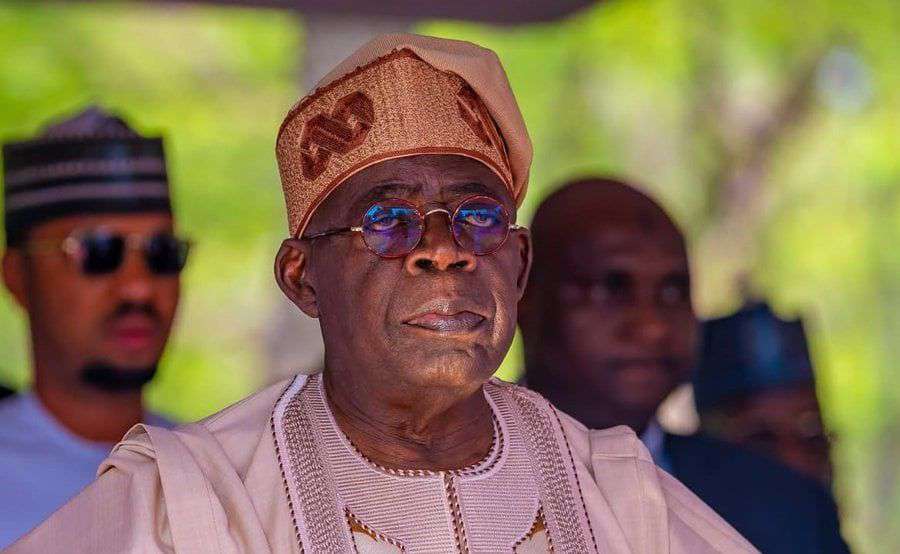
– Tinubu dares critics, set up committee on its implementation as Senate mulls further amendment
By Olusesan Laoye
Despite the mixed feelings, which greeted the establishment of the state police, which was argued in some quarters, as part of the agenda by the government of President Bola Ahmed Tinubu to restructure Nigeria, the presidency has brushed aside the arguments of its critics and has gone ahead to set up a committee to show that it is ready to make the state policing a reality.
The committee, which is being chaired by the Chief of Staff to the President, Hon. Femi Gbajabiamila, is an indication that the government of President Tinubu is serious and would not look back about this, especially with escalating cases of kidnapping.
Hon. Femi Gbajabiamila, with other members picked randomly from other sections and groups is saddled with the responsibilities of producing an implementation-ready draft bill for transmission to the national assembly immediately after the constitutional amendment process.
According to the chairman of the committee, who represented President Tinubu at the inauguration, the working Group would produce a technically sound, “implementation-ready draft National Policing Bill for transmission to the National Assembly,” while he pointed out that the government is not expected to wait until the constitutional process is concluded before “beginning this important assignment.”
Other members of the committee include the Attorney General of the Federation, Lateef Fagbemi,(SAN), Nuhu Ribadu, national security adviser; Afam Osigwe, president of the Nigerian Bar Association (NBA a); Dapo Abiodun, chairman of the Nigeria Governors’ Forum (NGF); Tunji Disu, Inspector-general of police, and the chairman of the NGF committee on state police.
Working To Answer
With the committee now ready to go, the tactics of President Tinubu appears to be working as the representatives of all the segments of Nigerians chosen appear to have supported the move. But there is still anxiety and concern amongst some segments of society, who argue that the governors would abuse it and used against opposition.
For instance the Ogun State governor Dapo Abiodun, who is the representative of the Nigeria’s Governors Forum (NGF) whose responsibilities on state policing falls primarily on, pledged the support of governors for the speedy implementation of the reform.
He said governors would work to ensure the bill is promptly considered by their respective state houses of assembly after the constitutional amendment process.
“This bill has answered the cries of Nigerians about cascading policing and removing it from the Exclusive Legislative List,” Abiodun said.
His statement was actually an indication that the state governors are more than ready for the implementation of the State Police Force, saying “If each state deploys about 6,000 personnel, we will add nearly 200,000 officers to complement the existing federal police, of about 400000 officers with over a quarter in personal protection assignment” .
Also, the Attorney General, Fagbemi who in essence would serve as the legal adviser to the committee, described the initiative as timely, as a result of the heavy security challenges.
“There is no denying the fact that we are in a critical moment security-wise, and all hands must be on deck,” he said.
“I appeal to the governors to do their utmost to ensure the early passage of the constitutional amendment because this is a shared responsibility.”
Osigwe, who represents the NBA, reiterated the association’s support for the state police initiative but stressed the need for legal safeguards against abuse.
“Nigeria can hardly be effectively policed by one national police. We fully support the constitutional amendment providing for state police,” he argued.
“We must ensure we do not create a monster. The right legal framework must guarantee accountability and prevent oppression.”
For over 20 years, the attempt has been made to see it but opposition from certain parts of the country especially the North and the governors stalled it.
Since 2000, every nation Assembly had tried to amend the Constitution to set up to no avail. The last attempt under late Muhammadu Buhari was tied to local government autonomy by the president which governors rejected.
Previous Northern Opposition
Despite the legal framework to be produced by the Federal government’s committee on State police, Nigerians are still fearing its implementation. Though many Nigerians were of the views that this is necessary the arguement is the abuse which is, part of what would be looked into by the presidential committee.
The committee would also looked at the proper funding structures, how the state police forces will be adequately equipped, and not be relegated to using rudimentary “cock and shoot” weapons while facing heavily armed bandits.
What is, however, found commendable by many Nigerians is the bold steps being taken by President Tinubu to hold the bull by the horns to actually dared those, who believed this would not be possible.
Right from the second Republic when the likes of Dr. Nnamdi Azikuwe, Chief Obafemi Awolowo, Mallam.Aminu kano, Waziri Ibrahim, who were the PPA leaders and their governors, Chief Bola Ige, Abubakar Rimi, Bisi Obasanjo, Micheal Adekunle Ajasin, Ambros Alli Balarabe Musa, Muhammed Goni, Abubakar Barde Jim Nwobodo, Solomon Lar, and the rest, have been clamouring for the state police, no Federal government has been bold enough to create it.
Evidently, the long military rule reduced the status and stature of the police, which made its creation even more necessary especially with the creation of states from four region to 36 states and FCT, without corresponding increase in the number of officers.
Former President Goodluck Jonathan, who was near to achieving this, with his National Conference, which recommended restructuring of Nigeria in which state police was part of the report forwarded to him for implementation, could not
achieve this as the cabals both in the North and the Southern parts of Nigeria, ganged up against him for his reelection, during which he could have restructure Nigeria, If he had won the 2019 election.
But now that the Nigerian police is overwhelmed, with insecurity challenges, now pavading the entire Nigeria, and President Bola Ahmed Tinubu is bold enough toinitiate it, some Nigerians believed that the initiateve should be over whelmingly endorsed by all Nigerians, while there were some groups and individuals who believed that the creation is dangerous for the country because it would be subject of abuse.
But Nigerians being elitists and politically inclined would not just look at issues on the surface but critically go into the analysis of its advantages and disadvantages as it affects the the people on a larger scale.
The North initially opposed to state police because they saw it as restructuring and believe it would reduce their power over the country. Their control of the power gives them leverage of national security issues.
But current insecurity, which started there and has devastated the region make imperative for its creation to give governors of security power. As it stands today, the constitution makes them Chief security officers, but they control nothing.
Separate Jurisdiction
However, the National Assembly has advanced the State Police Bill to decentralize Nigeria’s security framework, system, with the House of Representatives passing the bill on June 11, 2026, followed by the Senate on June 24, 2026.
As a result, Section 214 of the Constitution was altered to create both Federal and State Police services.
This means that State Commissioners of Police will have to be appointed by governors with the confirmation of the State House of Assembly to enable the governors to issue concrete directives that will help the safety of lives and properties in their respective States.
With the initiation of the bill and the amendment to the constitution, the Federal police will retain jurisdiction over cross-border crime, cybercrime, terrorism, and federal assets, and can only intervene in state affairs in the event of a total breakdown of law and order, or at the governor’s request.
The bill is, therefore, designed to meet the operation that would be in conformity with the national minimum standards, while the National Police Council will provide oversight to prevent political abuse.
Since the bill has ben passed by the two national houses, it has been transmitted to the 36 State House of Assembly.
To become operational, 24 states House of of Assemblies must approve it through legislation, after which the bill will be sent back to the National Assembly for final ratification, before it will be forwarded to the President for assent and part of its content, is how to prevent the governors abusing it, for their selfish interests.
As the debate, for and against the state police is going on, Ekiti State Governor Biodun Oyebanji confirmed that all 36 state governors fully supported the creation of state police.
He said in Abuja that state governors will expedite the legislative approval of required constitutional amendments to ensure quick implementation.
Also among Nigerians who have been advocating the necessity of the state police in Nigeria is the former Deputy Senate President Ike Ekweremadu, who had during lectures and and seminars pointed out that state police is a child of necessity.
It could be recalled that Ekweremadu since 2010 during the 10th convocation lecture of the Federal University of Technology, Minna, the Sixth Annual Oputa Lecture on Governance in Africa, which he delivered at the Osgoode Hall Law School, York University, Toronto, Ontario, Canada, on April 11, 2012; the Nnamdi Azikiwe University Annual Lecture entitled “Policing and National Security: the Choices Before Us,” he delivered on March 1, 2013; and his most recent lectures in 2020 as well as his various media outings, his bills and interventions at the floor of the Senate, he never stopped talking against unitary policing, and absence of fiscal federalism, which he christened “feeding bottle federalism,” as the bane of Nigerian federalism that must give way emphasising on State police for effective governance.
However one of those who opposed the bills on state police brought by Ekweremadu, then, Senator Ita Enang, in 2025 said he reflected on how he brought a bill and was vehemently opposed to the state police.
Funding Argument
One of the basic reasons also being given for objecting to Tinubu’s move on state police is funding as they believed that the states couldn’t be able to fund it.
But security expert Dr. Ben Alozie, believed that should not pose a threat to its establishment because funding could be provided from the federation account, while the states should be expected to provide for other logistics.
It is also funny that the former Inspector Generalof Police, Kayode Egbetokun too, was amongst those who opposed the state police, saying that it could be abused and taken over by politicians, especially the governors for their personal interest and used against opponents.
Human rights lawyer, Barrister Niyi Aborisade [BANA], in his own submission, called for a thorough scrutiny of the proposed legal framework for the establishment of state police, and argued that the benefits to be derived from decentralised policing are more than the potential risks being talked about by thise against it.
He further pointed out that though he agreed that some state governors could capitalise on it to witch hunt their enemies since they are the one to control the state police, he, however, said that such notion was not enough to derail the initiative
“I don’t think those raising concerns are opposed to state police. The position that its implementation should be delayed until after the elections is reasonable, considering that some over-ambitious governors may attempt to use state police as an instrument of oppression against political opponents or perceived enemies,” .
Also a public affairs commentator, Elder Moses Olorode believed that the state police is good now that Nigeria is experiencing security issues, such as kidnapping and banditry, saying that if there is state police it would be very easy to track down criminals in the local areas, where the crimes are being perpetuated.
He said those to be recruited into the state police would be locals, who can easily identify the criminals among the people in their communities”
In his own argumemt a political analyst and commentator, Dr. Thomas Olayode said, President Tinubu has done the best thing to initiate the state police, which is part of his agenda to restructure Nigeria.
He said that his tax reform policy is another step of restructuring Nigeria and advised that he should go full blast to properly and formally restructure Nigeria when he comes back in his second term
“The indigenes who serve in the state police will know the terrain very well and will be better connected to their communities, thereby making policing more effective,” he said.
Meanwhile the only lawmaker, Bashir Usman, who opposed the police bill in the House of Representatives, said he opposed the bill not because of the reform it stands for, but due to what he described as the rushed consideration of the constitutional review report and the limited time available for lawmakers to study its contents before voting.
The lawmakers , who represents the Birnin-Gwari/Giwa Federal Constituency of Kaduna State, however, was the only dessenting voice in the legislative chamber with his point of order to challenge the consideration of the report of the House Committee on Constitution Review..
Meanwhile, the Social Democratic Party on Thursday criticised President Bola Tinubu’s decision to appoint his Chief of Staff, Femi Gbajabiamila, to chair the Presidential Working Group on the National Policing Bill amid allegations linking him to the purported Presidential Foreign Intervention Promotion Council.
The party argued that Gbajabiamila should step aside pending the outcome of investigations into the allegations, saying his continued occupancy of public office could undermine public confidence in the administration.