
…as EU Parliament warns an end or face serious consequences
Adebayo Obajemu
Nigeria has again come under foreign countries’ scrutiny and censure over the issue of Christian genocide, which had dominated diplomatic engagement in recent leading to hiring lobbyist to burnish the country’s image. President Donald Trump had first warned that over 70 percent of Christians killed in the world in 2025 came from Nigeria, insisting that something be done or there would be dire consequences.
Recently the European Parliament on July 9, 2026 unleashed its most acerbic reprimand yet, of Nigeria’s handling of what it called anti-Christian violence, with record 501 lawmakers voting to demand the Federal Government end impunity in the Middle Belt part of the country or face sanctions.
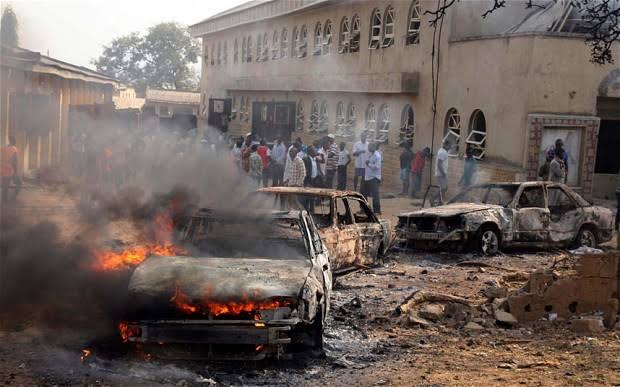
The rebuke comes on the heels of massacre of largely Christians in Kawel village, Bokkos Local Government Area of Plateau State a few weeks ago.
The European Union Parliament denounced what it dubbed “ongoing persecution” of Christians in Nigeria, referencing Kawel village incident .
The EU resolution also calls on federal government to arrest and prosecute those responsible for attacks, and to “strengthen both counterterrorism operations against armed militants, especially in the Middle Belt area, and make spirited efforts to counter Boko Haram and the Islamic State West Africa Province”, and to improve early-warning systems and adequately address the situation of internally displaced persons.
During debate, MEP Miriam Lexmann, Co-Chair of the European Parliament’s Intergroup on Freedom of Religion, Belief and Conscience, said, “Across the country, Christians face repeated attacks by Fulani militants, Boko Haram and other organized groups. Violence is part of a broader and deeply worrying pattern of persecution.”
The U.S Battle
Nigeria was previously under intense pressure from the U.S on the problem that it had to spend $9 million to fight the perception which has been created by Senate Ted Cruz and Rep. Riley Moore concerning the fate of Christians in Nigeria especially the Middle Belt, forcing Trump to redesignate a “Country of Concern.” The government was so jolted by the action it had to send the first lady Senator Remi Tinubu to the National Prayer Day, where she was recognized by the President.
The “urgency resolution,” unanimously adopted in Strasbourg, also addressed human rights abuses in Sudan and Pakistan. But Nigeria got the harshest criticism with Members of the European Parliament (MEPs) citing repeated attacks by a horde of armed groups on Christian farming communities and demanding concrete action from President Bola Tinubu’s administration.
ADF (Alliance for the Defense of Freedom) International, which vigorously and persistently campaigned for the vote, noted that the Parliament “strongly condemns the ongoing persecution of Christians in Nigeria following a village massacre” and pressed for urgent EU diplomatic and humanitarian intervention.
– European Parliament Urgency Resolution, 9 July 2026
According to experts, the vote came at a pivotal moment. Professor Adebayo Aiyegbajeje, international relations scholar told Business Hallmark that “The EU vote and the harsh language in which it was conveyed to the Nigerian authorities could not have come at any other time than now. Recall that Washington signaled in early July that the bulk of American military personnel and intelligence support in Nigeria and the wider Sahel would be withdrawn, transferring greater responsibility to European and regional partners.
According to him, “the Nigerian authorities should get the message that it’s no longer going to be business as usual, aids will now be tied to protection of Christian population. Besides, the decision of the Americans to withdraw and the timing has unsettled Brussels.
MEPs sounded the alarm during debate that a security vacuum could prove dangerous as it could not only embolden, but entrench the armed groups already operating freely in Plateau, Benue, Southern Kaduna, Taraba and parts of the Northwest.
“With the United States stepping back, the EU faces pressure to take a direct role in pushing Abuja on civilian protection and accountability”, Aiyegbajeje said.
“The EU cannot afford to watch from the sidelines while communities are wiped out,” one MEP said. The resolution asks the European Commission to deploy every available tool, including aid conditionality and targeted sanctions, to compel the Nigerian government to protect religious minorities.
The €287 Million Question
The resolution was a capping of weeks of scrutiny over EU funding to Nigeria. It could be recalled that in April 2026, MEP Piotr Müller formally asked the Commission what conditions were attached to a new 287 million euro package of grants and loans, citing “persistent reports of violence against Christians, impunity for perpetrators, and wider violations of human rights and religious freedom.”
“EU financial support must not give the impression that the Union is prepared to turn a blind eye to persecution and poor citizen protection for the sake of maintaining political and migratory cooperation,” Müller declared.
At the debate, Parliament demanded to know whether Nigerian authorities were assessed on prosecution of terrorists and attackers before the package was disbursed, and whether future cooperation would depend on measurable improvement.
The 501 lawmakers specifically warned the Nigerian authorities to end impunity in the Middle Belt, where villages have been repeatedly raided, burned and emptied.
Jarring Statistics
One could recall that in November 2025, a parliamentary question recorded that “more than 17,000 Christians were murdered” between 2019 and 2023, with “over 7,000 new killings and thousands of kidnappings” in the first seven months of 2025 alone.
In October 2025, 20 ECR MEPs declared that “Nigeria is currently the country most affected in the world by violence against Christians,” blaming “radicalised militias and groups operating with terrorist methods” and urging stronger EU diplomatic protection mechanisms.
The Commission of the Bishops’ Conferences of the European Union (COMECE) described the attacks as defined by “ferocity” and “coordinated and systematic patterns committed by Fulani Islamist terrorists.”
International reporting corroborates the pattern. Rights monitors note that Middle Belt Christians face violence from “Boko Haram, the Islamic State in the West African Province, and Muslim Fulani herders,” with whole villages razed and tens of thousands displaced.
In Plateau, mass burials have become routine affair after coordinated raids. Many of the survivors insist government’s response is slow and perpetrators rarely face trial.
Abuja faces pressure from both sides of the Atlantic
The resolution has heightened pressure already building in Washington. Recall that in late 2025, the Trump administration declared it was considering sanctions and possible security engagement over the killing of Christians in Nigeria, citing religious freedom violations in its review of bilateral cooperation.
The demand for Shariah implementation by the keepers of school children and their teachers at orire in Ogbomosho, Oyo State, has confirmed the perception of the violence as ant Christian, which government had denied.
Nigeria’s federal lawmakers are begining to shift too. On July 7, 2026, the Senate rejected the rehabilitation of “repentant” terrorists, calling the policy “rewarding violence,” demanding prosecutions and seeking a meeting with President Bola Tinubu over worsening insecurity.
That stance pits lawmakers demanding justice against religious leaders urging dialogue, and reflects mounting anger in Middle Belt communities that say they have been abandoned to defend themselves.
What does the future hold?
With its strongest signal from Brussels the resolution calls for deeper EU diplomatic engagement, expanded support for victims and civil society, and monitoring of EU aid to ensure it does not underwrite impunity. It also tasks the EU Special Envoy for Freedom of Religion or Belief and the EU Special Representative for Human Rights with prioritizing Nigeria in upcoming missions.
“For Middle Belt communities, the vote is symbolic support; what they want is action. As American forces withdraw and European attention sharpens, Abuja must choose between confronting impunity and deepening international isolation. The Parliament’s message was unambiguous: the persecution of Christians in Nigeria is no longer an internal matter alone”, Dr. Samuel Abisoye, a retired diplomat told this medium.
Background
The EU resolution follows a series of European Parliament interventions on Nigeria. In April 2023, MEPs voted 550 to 7 in an “Urgency resolution” calling for the release of Yahaya Sharif-Aminu, a Sufi musician facing the death penalty under Kano State’s Sharia blasphemy law over song lyrics shared on WhatsApp.
Sharif-Aminu’s case, supported by Alliance Defending Freedom, remains delayed before the Supreme Court of Nigeria and could overturn blasphemy laws across the country’s northern states. In a rare move, the European Parliament adopted a second “Urgency resolution” in February 2025 on Sharif-Aminu’s case, again calling for his immediate release and to bring an end to the country’s blasphemy laws.
“Over the past several years, Parliament has repeatedly debated and adopted resolutions condemning the persecution of Christians and religious minorities in Nigeria. The fact that it must keep returning to this issue speaks to the sheer scale and severity of the violence and fear these communities face daily,” said Adina Portaru, Senior Counsel for Europe at Alliance Defending Freedom. “As long as these attacks continue and Nigeria fails to uphold its religious freedom commitments, international institutions will have no choice but to keep addressing the crisis.”
In February 2024, Parliament again passed an “Urgency resolution” after Fulani militants killed at least 195 Christians across more than 20 communities in Plateau State over the 2023 Christmas period. Alliance Defending Freedom has also supported the defense of Rhoda Jatau, a Christian woman prosecuted after allegedly condemning on social media the 2022 mob killing of student Deborah Yakubu, who was beaten and burned to death by classmates over a blasphemy accusation.
In December 2025, the body called on Nigeria to strengthen protections for Christians, particularly in schools, following a mass kidnapping of over 300 students and 12 teachers from St. Mary’s Catholic School in Papiri, Niger State.
Persecution in Nigeria
Nigeria remains one of the most dangerous countries in the world for Christians. According to reports , at least 3,490 Christians were killed for their faith in 2025 alone, adding to the estimated 50,000 to 100,000 Christian deaths since Boko Haram’s insurgency began in 2009. Thousands of churches have been attacked or destroyed. Alliance Defending Freedom works with allied lawyers in Nigeria to defend Christians and other religious minorities facing severe violations of religious freedom, including blasphemy charges, and works globally to advance religious freedom protections in the country.