
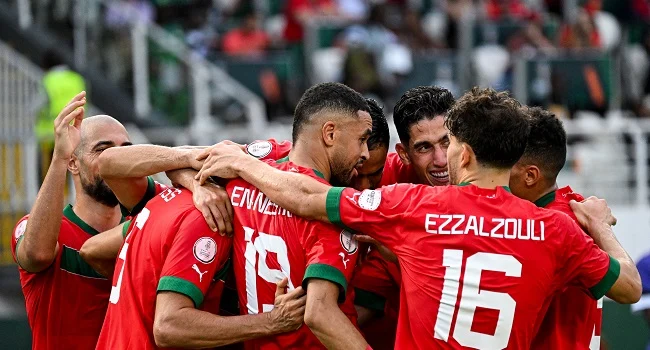
Tensions are mounting between Morocco and Senegal following a disputed ruling by the Confederation of African Football (CAF) Appeals Board over the 2025 Africa Cup of Nations (AFCON) final.
The CAF Appeals Committee overturned an earlier disciplinary decision, declaring that Senegal had forfeited the final after their players walked off the pitch during the closing minutes in Rabat. Consequently, Morocco was awarded a 3–0 victory, igniting widespread debate across the continent.
In response, the Fédération Royale Marocaine de Football (FRMF) issued a statement recognizing the CAF decision. The Moroccan federation stressed that its appeal aimed to ensure the proper enforcement of competition rules, rather than question the sporting performance of any team.
“The Federation reiterates that its approach has always been grounded in respect for the rules and the stability of African competitions,” the statement said. Morocco also commended all participating nations, describing the tournament as a key milestone for African football development, and promised further clarification regarding any legal or administrative steps if necessary.
On the other hand, the Senegalese Football Federation (FSF) strongly criticized the ruling, labeling it “unfair, unprecedented, and unacceptable” and warning that it undermines the credibility of African football.
“The Senegalese Football Federation denounces this unfair, unprecedented, and unacceptable decision, which discredits African football.”
Senegal confirmed plans to appeal the decision at the Court of Arbitration for Sport (CAS) in Lausanne to defend its rights and protect the interests of its football program.
“To defend its rights and the interests of Senegalese football, the Federation will initiate an appeal as soon as possible before the Court of Arbitration for Sport (CAS) in Lausanne.
“The Senegalese Football Federation reaffirms its unwavering commitment to integrity and sporting justice and will keep the public informed of developments in this matter,” the FSF said, emphasizing its determination to pursue legal recourse.
The controversy has sparked broader discussions about governance, transparency, and regulatory consistency in CAF competitions. Analysts and stakeholders have criticized the ruling, calling it an embarrassment for African football, and are urging CAF to implement clearer rules and more transparent decision-making processes to avoid similar disputes in the future.