
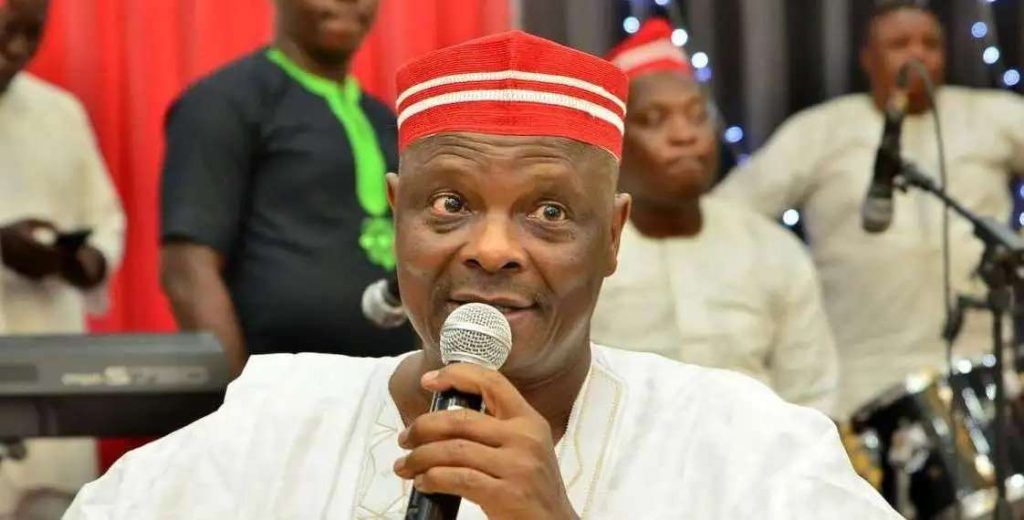
The vice-presidential candidate of the Nigeria Democratic Congress (NDC), Rabiu Musa Kwankwaso, has called for stronger political cooperation between Northern Nigeria and the South-East, saying both regions have a long-standing history of partnership that should be revived in the interest of national unity.
Kwankwaso made the remarks during an interview with BBC Igbo, where he urged Nigerians to embrace reconciliation, forgiveness and inclusiveness as the country prepares for the 2027 general elections.
According to the former Kano State governor, political leaders in the years following the Civil War demonstrated statesmanship by fostering unity and ensuring that the South-East remained an integral part of Nigeria’s political development.
“We must learn to forgive one another and work together as one family. The South-East has been a trusted ally of the North for many years,” he said.
Reflecting on Nigeria’s political history, Kwankwaso pointed to the alliance between the Northern People’s Congress (NPC) and the National Council of Nigerian Citizens (NCNC) during the First Republic, noting that prominent leaders from both regions collaborated closely in nation-building efforts.
He also referenced the Second Republic, when leaders of the National Party of Nigeria (NPN), including former President Shehu Shagari, worked alongside political figures from the South-East, including the late Dr Nnamdi Azikiwe.
According to him, the willingness of political leaders to rebuild relationships after the Civil War helped strengthen national cohesion and paved the way for greater inclusion of the South-East in governance.
Kwankwaso cited the emergence of the late Dr Alex Ekwueme as Nigeria’s Vice President in 1979 as evidence of the commitment of political leaders at the time to national reconciliation.
“The war ended in 1970, and when democratic rule returned in 1979, our leaders made it clear that the Igbo people were not enemies. They reached out, worked together and ensured that people from the South-East were fully involved in government,” he said.
He described Ekwueme as a respected figure who maintained strong relationships across the country and recalled attending the late statesman’s burial in Anambra State.
Kwankwaso also referenced the return of former Biafran leader, the late Chukwuemeka Odumegwu Ojukwu, from exile, noting that political leaders at the time demonstrated a spirit of reconciliation by facilitating his reintegration into national politics.
According to him, Ojukwu was able to return to Nigeria and participate in democratic activities despite his role during the Civil War, reflecting the willingness of political leaders to move beyond past divisions.
He stressed that rebuilding ties with the South-East should not be viewed as an attempt to isolate or oppose other regions of the country.
“We are happy to strengthen our relationship with the South-East, but that does not mean we are against the South-West or any other part of Nigeria. We are all partners in the Nigerian project,” he said.
Kwankwaso argued that no region, religious group or political bloc could successfully navigate Nigeria’s complex political landscape alone, adding that cooperation and inclusiveness remained essential for national progress.
His comments come as political parties and major contenders intensify consultations and alliance-building ahead of the 2027 elections, in which he is expected to contest as the running mate to NDC presidential candidate and former Anambra State governor, Peter Obi.