
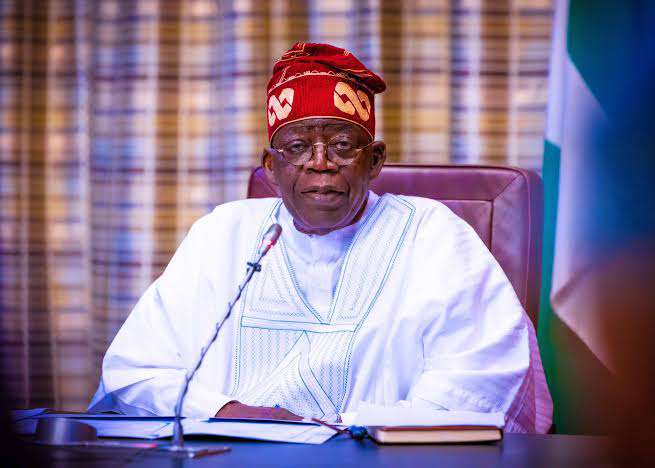
A fresh claim by the Presidency that President Bola Tinubu has approved a plan to settle N3.3 trillion in outstanding power sector debts has sparked widespread controversy, with many Nigerians questioning why the same approval is being announced nearly two years after it was first disclosed by the Minister of Power, Adebayo Adelabu.
The Presidency, through Bayo Onanuga, Special Adviser to the President on Information and Strategy, said in a statement on Sunday that Tinubu had approved a payment plan to resolve the N3.3 trillion legacy debt in the power sector under the Presidential Power Sector Financial Reforms Programme.
According to Onanuga, the repayment plan followed a final review of debts accumulated across the power sector between February 2015 and March 2025.
“The long-standing debts accumulated between February 2015 and March 2025. Following verification, ₦3.3 trillion has been agreed as a full and final settlement, ensuring a fair and transparent resolution,” he said.
He added that implementation of the plan had already begun, with 15 power plants signing settlement agreements worth ₦2.3 trillion, while the Federal Government had raised ₦501 billion to begin the payments.
“Out of the amount, N223 billion has been disbursed, with further payments underway,” Onanuga said, noting that settling the debts would stabilise electricity generation, improve reliability in the power value chain, and attract more investment into the sector.
Also speaking on the initiative, the President’s Special Adviser on Energy, Olu Arowolo-Verheijen, said the programme was aimed at restoring confidence in the sector and ensuring gas suppliers are paid.
“It will ensure gas suppliers are paid, power plants keep running, and the system begins to work more reliably,” she said.
However, the announcement quickly stirred controversy online after Nigerians recalled that the same N3.3 trillion debt settlement had already been announced in May 2024.
At the time, Minister of Power Adebayo Adelabu had disclosed at the 8th Africa Energy Marketplace in Abuja that President Tinubu had approved the payment of about N3.3 trillion owed across the power sector.
Adelabu had explained then that the government’s N1.3 trillion debt to power generation companies would be paid through cash injections and promissory notes, while about $1.3 billion owed to gas suppliers would be settled through a combination of cash payments and future royalties.
The Presidency’s latest announcement has therefore triggered scepticism and criticism on social media, with many Nigerians questioning whether the policy is being implemented or merely repeatedly announced.
Reacting on Facebook, Anagbogu Valentine Chigbogu accused the government of misleading the public, writing: “Tinubu is just not human… A 419… I knew it was all to deceive the ignorant masses.”
Another user, Michael Abah, responded with sarcasm, saying: “It’s called renewed hope.”
Anisiobi Elozona also mocked the repeated announcement, suggesting it could become a recurring narrative. “The N3.3trn hope has been renewed for 2026. Expect another renewal of the same amount in January 2027,” he wrote.
Echoing the scepticism, Chimnyeremugo Diala criticised what he described as a pattern of announcements without concrete outcomes, stating: “Always planning and no implementation.”
Similarly, Talabi Ayomide Oluwafemi questioned the transparency of the programme, asking: “So where the 3.3 trillion naira dey go?”
Another commenter, Anyabuike Anthony Munachi, described the situation as a cycle of political messaging rather than genuine reform. “Propaganda prescription… give them now, wait, change the narrative, conjure another abracadabra,” he wrote, adding that citizens often move on without demanding accountability.
Larry Luther King, however, blamed the public for not paying closer attention to such developments, commenting: “Hunger don affect citizens’ thinking ability.”
The debate comes amid continuing concerns about the financial health of Nigeria’s power sector. In February, the Association of Power Generation Companies warned that gas suppliers were considering halting supply to thermal power plants over debts estimated at about N3.3 trillion.
Earlier, the association had also stated that the Federal Government owed power generation companies a total of about N6.5 trillion.