
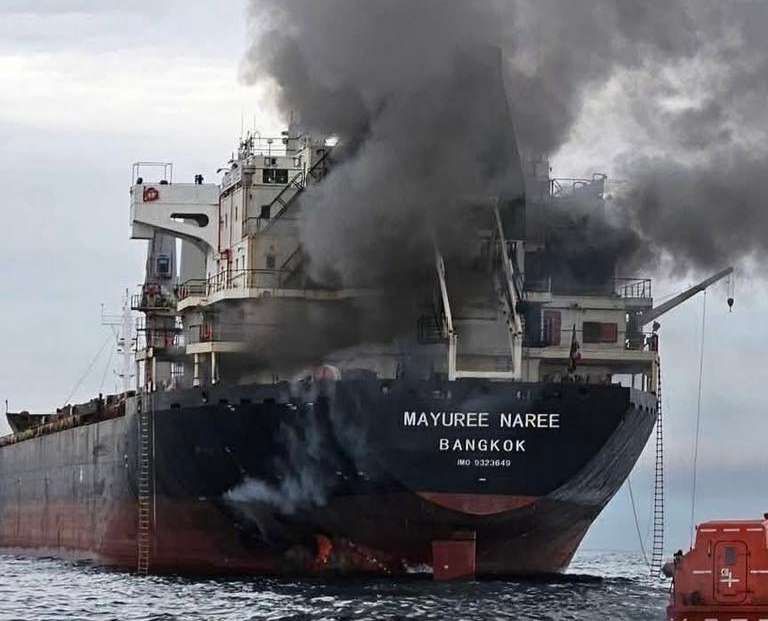
At least three ships were struck by unidentified projectiles in the Strait of Hormuz on Wednesday, as tensions between Iran, the United States, and Israel intensified across the Middle East, maritime security agencies reported.
Thailand’s Transport Ministry confirmed that rescue teams were searching for three crew members after a Thailand-flagged ship was hit. Brics News attributed the strike to Iranian forces.
In addition, the United Kingdom Maritime Trade Operations reported that another vessel sustained damage from an unknown projectile off the coast of the United Arab Emirates, while a third ship was reportedly damaged northwest of Dubai.
The attacks came in the wake of a U.S. military operation targeting over a dozen Iranian mine-laying vessels in the Gulf. President Donald Trump had previously warned of serious repercussions should Iran attempt to block shipping through the strait, a key maritime route through which nearly 20 percent of the world’s oil and liquefied natural gas passes. Earlier, Iran’s Islamic Revolutionary Guard Corps had declared it would prevent “one liter of oil” from leaving the region for the U.S. or its allies.
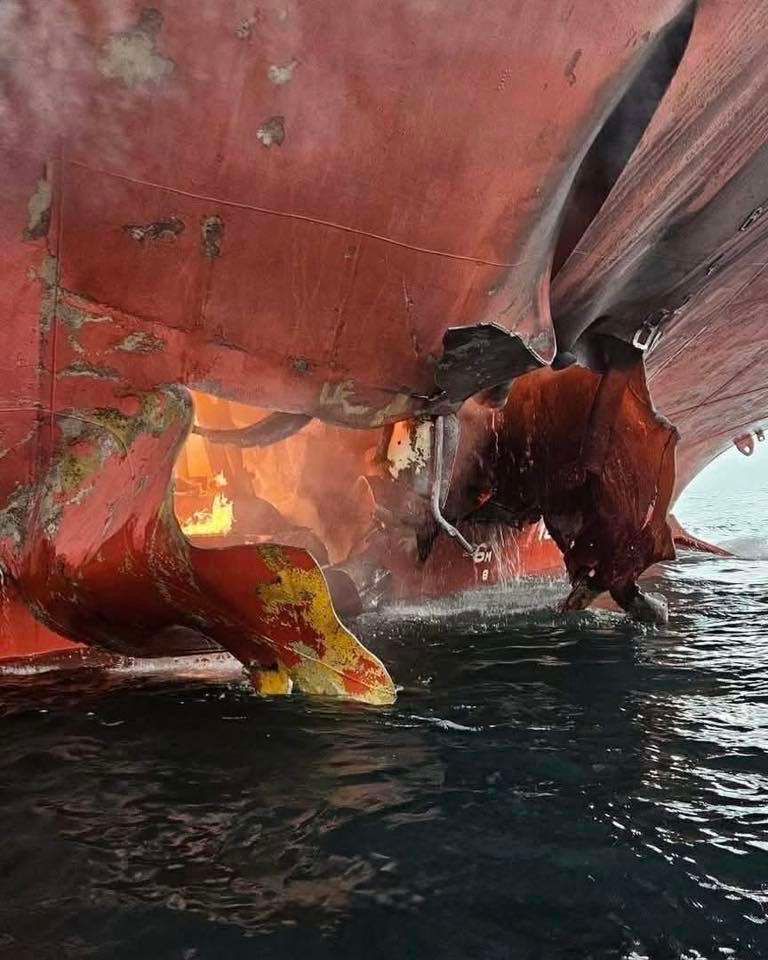
Photo credit: Brics News
Meanwhile, Israel launched additional strikes on Lebanon and Iran on Wednesday, with reports indicating that an apartment building in southern Beirut was hit. The UAE confirmed it intercepted missiles launched from Iran, while Saudi Arabia and Qatar also reported attacks involving drones and missiles.
The intensifying hostilities have already caused heavy casualties across the region. In less than two weeks of fighting, more than a thousand people have reportedly died in Iran, with hundreds killed in neighboring countries. Among the victims are seven U.S. soldiers in a retaliatory attack and numerous students from an Iranian girls’ school affected by a strike linked to U.S. operations.
The situation has raised serious concerns about the safety of international shipping in the Strait of Hormuz, a strategic artery for global energy supplies, as well as the broader escalation of the Middle East conflict.