
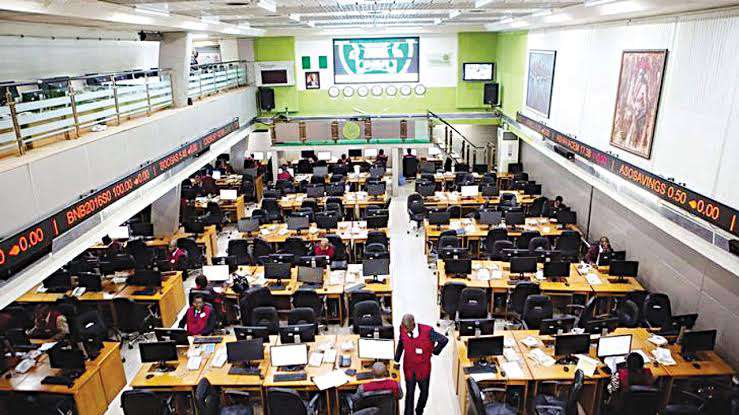
.• Equities extend bullish run on renewed investor confidence
Investors on the Nigerian Exchange (NGX) recorded a windfall of N2.53 trillion as the stock market extended its bullish momentum in the week ended July 24th, 2026, driven by sustained buying interest in blue-chip stocks and renewed confidence in the country’s economic outlook.
According to market data released by the NGX, the All-Share Index (ASI) rose by 1.60 per cent to 247,357.40 points from 243,462.13 recorded in the previous week.
Similarly, the market capitalisation advanced by 1.61 per cent to N159.588 trillion from N157.057 trillion, translating to a gain of N2.532 trillion for investors.
The NGX said all sectoral indices closed in positive territory except the Consumer Goods, Lotus II, Growth, Sovereign Bond and Commodity indices, which declined by 3.76 per cent, 1.55 per cent, 20.24 per cent, 0.14 per cent and 1.25 per cent, respectively.
A total of 4.433 billion shares valued at N306.143 billion were traded in 255,589 deals during the week, compared with 2.819 billion shares worth N182.499 billion exchanged in 226,729 deals in the preceding week.
The Financial Services Industry dominated market activity, accounting for 3.422 billion shares valued at N207.206 billion in 117,545 deals.
The sector contributed 77.18 per cent and 67.68 per cent to the total equity turnover volume and value, respectively.
The Consumer Goods Industry followed with 201.978 million shares worth N17.171 billion traded in 28,666 deals, while the ICT Industry recorded 169.481 million shares valued at N21.194 billion in 23,107 deals.
The top three traded equities, First HoldCo Plc, Access Holdings Plc and Guaranty Trust Holding Company Plc, accounted for 2.151 billion shares worth N170.793 billion in 44,768 deals.
The three stocks contributed 48.51 per cent and 55.79 per cent to the total equity turnover volume and value, respectively.
Market breadth remained positive as 57 equities appreciated in price during the week, up from 44 recorded in the previous week.
However, 38 equities declined, compared with 35 in the preceding week, while 51 equities closed flat, lower than 67 recorded previously.
UPDC Real Estate Investment Trust, First HoldCo Plc, Unilever Nigeria Plc, Cadbury Nigeria Plc and AXA Mansard Insurance Plc emerged as the week’s top gainers, appreciating by N3.55, N24.55, N23.95, N10.50 and N2, respectively.
On the losers’ chart were Mecure Industries Plc, Royal Exchange Plc, Tripple Gee and Company Plc, SUNU Assurances Nigeria Plc and BUA Foods Plc, which shed N23.05, 19k, 48k, 40k and N93.90, respectively.
Meanwhile, the NGX suspended trading in the shares of Aluminium Extrusion Plc with effect from Wednesday, July 22, over the company’s failure to file its audited financial statements for the year ended Dec. 31, 2025.
The Exchange also announced the listing of an additional 12.32 billion ordinary shares of 50 kobo each of Linkage Assurance Plc on its Daily Official List on July 23.
The latest rally reinforces the equities market’s position as one of the best-performing investment destinations this year.
The bullish sentiment also underscores renewed confidence in Nigeria’s capital market despite lingering economic headwinds.
Improved corporate profitability, ongoing economic reforms and expectations of stronger foreign portfolio inflows have continued to support positive investor sentiment, encouraging both domestic and foreign investors to increase their exposure to equities.
However, market analysts who spoke on the latest surge attributed it to increased institutional participation and sustained interest in banking, consumer goods and industrial stocks, which have continued to attract investors seeking higher returns amid easing inflationary pressures and declining yields in parts of the fixed-income market.
The analysts, however, cautioned that while market fundamentals remain positive, investors should continue to focus on quality stocks with strong earnings potential and sound corporate governance.
They noted that sustained policy consistency, exchange rate stability and improved macroeconomic indicators will be critical to maintaining the current momentum and attracting even greater investment into the nation’s capital market.
Sterling Bank beats industry odds with decade of low bad loans
• NPL ratio remains below CBN benchmark
• Analysts hail prudent lending strategy
Sterling Bank has emerged as one of Nigeria’s strongest performers in credit risk management after sustaining its non-performing loan (NPL) ratio below the Central Bank of Nigeria’s prudential threshold for a decade.
The milestone comes against the backdrop of a challenging operating environment characterized by high inflation, foreign exchange volatility, elevated interest rates and pressure on businesses across key sectors of the economy.
Despite these headwinds, Sterling Bank has consistently maintained the quality of its loan portfolio, limiting the build-up of bad loans while continuing to support customers and productive sectors of the economy.
According to the bank, it’s non-performing loan ratio has remained largely stable over the past decade, rising marginally from 4.80 per cent in the first quarter (Q1) of 2016 to 4.93 per cent in Q1 2026, while staying below the Central Bank of Nigeria’s five per cent prudential threshold.
The bank’s ratio remained far lower than the industry’s performance of eight per cent to nine per cent in Q1.
Bad loans in Nigeria’s banking sector stood at 8.03 per cent in January 2026. The figure, contained in the CBN’s January 2026 Economic Report, showed that the industry’s non-performing loans ratio rose by 0.52 percentage point from 7.51 per cent in December 2025.
It also remained above the CBN’s prudential threshold of five per cent, indicating a further deterioration in asset quality across the banking industry despite the apex bank’s insistence that the sector remained resilient.
“Following the bank’s loan reclassification after the withdrawal of forbearance, the non-performing loans ratio rose by 0.52 percentage point to 8.03 per cent compared with the level in the preceding period and was above the 5.00 per cent prudential threshold”, the apex bank said.
The average (NPL) ratio for the Nigerian banking sector reached 9.85 per cent by February.
The CBN warned that a stubborn rise in non-performing loans could impair asset quality and weaken banks’ balance sheets, thereby posing systemic risk.
It recommended deepening the operational integration of the GSI framework across all financial institutions to enhance loan recovery efficiency and credit discipline.
The CBN also recommended strengthening credit discipline and reducing NPLs by fully integrating the Global Standing Instruction framework to boost loan recovery efficiency.
Moniepoint partners ALU to train tech leaders
Moniepoint Inc. has partnered the African Leadership University School of Business to launch an executive development programme aimed at strengthening its leadership pipeline and supporting Nigeria’s digital economy.
The financial technology company said the 13-week executive education programme would equip its managers with leadership, strategic management and data-driven decision-making skills needed to drive large-scale digital transformation.
According to the company, the initiative combines physical immersion sessions, live virtual classes and self-directed learning through two learning tracks: Strategic Management and Leadership, and Data-Driven Decision-Making.
The Group Chief Executive Officer of Moniepoint Inc., Tosin Eniolorunda, said the programme reflected the company’s commitment to developing world-class leadership talent capable of sustaining innovation and financial inclusion across Africa.
“We consider it a huge privilege, given our market leadership, to drive the empowerment of bold, transformational professionals for the financial services industry. Execution is everything in this game, and execution is a leadership problem before it’s anything else.
“If we want Nigeria’s digital economy to compete globally, we can’t outsource the people who run it; we have to build them deliberately here.
“In creating financial happiness for Africans everywhere, the leaders who come through this programme will be the ones who decide whether Moniepoint’s infrastructure actually reaches the small business owner in Onitsha or Kano the way it’s supposed to”, Eniolorunda said.
He added that sustained investment in people remained critical as the company expanded its digital financial services.
“The ecosystem’s growth is inseparable from the strength of the people who lead it. Moniepoint’s own meteoric growth stems from a dedicated focus on building critical digital infrastructure that powers millions of micro, small and medium-sized enterprises.
“In an industry where technological disruption is continuous and competition is intensifying, this investment in human capital is non-negotiable in building a resilient leadership ecosystem”, Eniolorunda said.
Moniepoint said the programme supports Nigeria’s digital economy agenda by combining technical expertise, human-centred leadership and data fluency to prepare managers for future challenges.
The curriculum will be delivered by faculty members from the African Leadership University, including Dr. Olugbenga Afolabi, Group Chief Executive Officer of Hazon Holdings and founder of the Eko Innovation Centre, and Dr. Omowale Crenshaw, co-founder of Grupo Mecca Colombia and former McKinsey consultant.
The company said the partnership would strengthen managers’ capabilities in leadership, communication and evidence-based decision-making while promoting environmental, social and governance principles across its operations.
It added that enhancing internal leadership capacity would support its efforts to expand access to financial services for micro, small and medium-sized enterprises and individuals, while advancing Nigeria’s financial inclusion agenda.
PR practitioners push for greater boardroom influence
Nigeria’s public relations professionals are pushing to redefine their role in the corporate landscape, seeking recognition not only as storytellers but as strategic advisers who influence business decisions, manage reputational risks and shape public perception.
The call came as industry leaders gathered in Lagos recently to mark World PR Day 2026 and unveil the fifth edition of the PR Power List, which recognised 50 of the country’s most influential public relations and communications professionals.
Managing Partner at GLG Communications and creator of the PR Power List, Omawumi Ogbe, said the initiative was created to spotlight professionals who often operate behind the scenes despite playing a critical role in shaping the narratives of companies, institutions and public figures.
“PR professionals are often the background. We are not the news; we make the stories”, Ogbe said.
She said the recognition was aimed at changing the perception of the industry by highlighting professionals whose work has strengthened brands, managed crises and influenced public conversations over the past year.
The event also highlighted Nigeria’s growing role in the global public relations ecosystem, with Ogbe noting that World PR Day was initiated by Nigerian PR agency BHM and has expanded into a global celebration across several countries.
According to her, the growth of the event demonstrates the increasing relevance of Nigerian communications professionals internationally.
“We want to take the narrative and tell the story of our industry people, ensuring that they get recognised for the great work they are doing”, she said.
Industry leaders at the gathering argued that the future of public relations transcends traditional publicity, with professionals expected to provide strategic counsel to businesses and governments.
Executive Director at THOP and a member of the PR Power List jury, Kwame Senou, said modern PR practitioners must move beyond tactical communication and become trusted advisers.
“PR that is tactical is no longer relevant. They have to be equipped to advise”, Senou said, adding that professionals must develop the knowledge and credibility required to influence decision-making.
He explained that the selection process for the PR Power List involved research, shortlisting and assessments by local and international jurors based on professionals’ achievements and impact within the previous 12 months.
The President and Chairman of Council of the Nigerian Institute of Public Relations (NIPR), Dr. Ike Neliaku, said the recognition was important because public relations practitioners play a key role in managing reputation, building trust and helping organisations navigate crises.
He said the industry was entering a significant period, with Nigeria preparing to host the World Public Relations Forum in November 2026, an event expected to attract about 3,000 delegates from more than 126 countries.
“This is like laying the foundation for that big event that will happen in November 2026”, Neliaku said.
He added that the profession had evolved from being focused mainly on communication delivery to providing solutions for organisations and institutions.
“Those being recognised are people who have provided solutions, people who are counsellors to those occupying offices and crisis managers who have made suggestions on how to respond better”, he said.
The recognition comes as businesses increasingly place greater emphasis on reputation management, stakeholder engagement and crisis response amid changing consumer expectations and a more connected digital environment.
Industry stakeholders said the growing influence of PR professionals reflects a shift in corporate leadership, where managing trust and public perception has become a key component of business strategy.
FG, Access Bank push AI to grow MSMEs
The Federal Government and Access Bank Plc have emphasized the strategic role of Artificial Intelligence and digital financial infrastructure in expanding small business operations, maintaining that Nigeria’s target of attaining a $1trillion economy remains tied to the rapid digitisation of Micro, Small, and Medium Enterprises.
The consensus was reached at the Access Bank MSME Digital Growth Conference, themed “AI for SMEs: Scaling Through Digital Tools”, which coincided with the official launch of the Access SME Application at the bank’s head office in Victoria Island, Lagos.
Delivering the keynote address, the Senior Special Assistant to the President on Entrepreneurship Development in Communications, Innovation and Digital Economy, Chalya Shagaya, stated that the Federal Government considers small enterprise operators critical catalysts in actualizing its macroeconomic objectives under the Renewed Hope Agenda.
Shagaya urged business owners to adopt emerging digital tools, noting that modern enterprise operations are heavily reliant on technological integration to scale from local markets to global markets.
“Everyone wants to be an entrepreneur today. You are the ones who will drive the $1 trillion economy that Mr. President has charged us with achieving under this administration of Renewed Hope. We are your partners, and you are ours”.
Addressing operational bottlenecks confronting small enterprise owners, the presidential aide highlighted that AI applications act as critical operational equalizers, enabling small firms to automate inventory tracking, customer insights and supply chain logistics without incurring massive overhead costs.
She added that digital technology serves as a platform for social inclusion, giving neurodivergent entrepreneurs the tools to build structured, independent commercial enterprises.
“AI is not coming in the future; it is here today. The sooner we embrace these tools, the faster we can scale our businesses and build a stronger economy”, Shagaya noted, revealing that President Bola Tinubu recently signed an AI Policy mandating the Ministry of Communications, Innovation, and Digital Economy to set up capacity-building hubs across the country to upskill young business operators.
In his goodwill message, the Executive Director of the University of Lagos Business School, Prof. Sunday Adebisi, presented data underlining the vital contributions of small businesses to national output and employment.
Citing recent research figures, Adebisi stated that Nigeria currently has between 39 million and 42 million registered MSMEs, which generate 84 per cent of total employment and contribute 48 per cent to the Gross Domestic Product.
“All the big companies you think about, including Access Bank, Dangote, Shell, Chevron, and others, account for only 16 per cent of jobs combined. You are responsible for the remaining 84 per cent.
“Beyond that, 96 per cent of all businesses in Nigeria are SMEs, while mega-corporates make up only four per cent”, Adebisi said.
The don, however, raised concerns over commercial mortality rates, disclosing that 50 per cent of small businesses in Nigeria fail within their first year of operation.
He advised operators to deploy AI as a digital co-pilot to optimise workflows, leverage predictive market analytics and cater to digital-first consumers.
“AI is a technology that enables machines to think, learn, and make decisions—the exact same things every SME owner does daily. You are still the pilot running your business, but AI is meant to be your co-pilot to keep you moving forward”, Adebisi added.
The conference featured two high-level panel sessions. The first panel, titled “Digital Transformation: Beyond the Buzzwords”, examined actionable strategies for small business managers to move beyond industry hype into practical digital workflows, stressing cloud integration, operational efficiency and scalable financial management.
The session featured the Executive Director of IT and Digitisation at Access Holdings Plc, Mr. Lanre Bamisebi; the Country Manager for West Africa at Mastercard, Dr. Folasade Femi-Lawal and the Country Manager for Financial Services Industry at Huawei Nigeria, Glarie Gao.
The second panel session, themed “Navigating the Business Ecosystem: Tools, Trends, and Tactics”, explored practical frameworks for surviving economic pressures and expanding trade networks.
Panelists included the Vice President of World Trade Center Lagos, Mr. David Opeyemi Oke; the Principal Consultant at Scientia Partners Innovation Hub, Dr. Helen Emore; and the Creative Director and Co-Founder of Trax Apparel, Mr. Mark Odiete.
Access Bank reaffirmed its commitment to deepening non-financial advisory support, expanding credit access and providing specialized digital solutions tailored to improve small business sustainability across the country.
Poor tech access slows Nigeria’s digital economy – Tech expert
The Managing Director and Chief Executive Officer of Blessing Computers Limited, Mr. Blessing Usinode, has said that limited access to genuine technology products and dependable technical support remains a major obstacle to digital inclusion in Nigeria despite technology’s growing role in education, business and economic activities,
Usinode disclosed this in a statement at the weekend, as the company marked more than 20 years of operations.
He said technology had become central to modern life, driving education, business operations, professional productivity and access to economic opportunities.
“Technology has quietly become the infrastructure of modern life. It powers how students learn, how businesses operate, how professionals deliver their best work, and how individuals stay connected to the opportunities around them”, he said.
According to him, while technology continues to reshape every sector of the economy, access to authentic devices and dependable after-sales support remains uneven across the country.
“But access to reliable, genuine and well-supported technology has never been evenly distributed—and for many people across Nigeria, finding a trustworthy place to start has been the first and hardest challenge”, he added.
The company said the challenge informed its decision to focus on supplying genuine technology products and providing long-term technical support rather than merely selling devices.
Established in 2003 and incorporated by the Corporate Affairs Commission, Blessing Computers said it has spent more than two decades providing ICT infrastructure, technical consultancy, repairs, maintenance and after-sales services to individuals, businesses, educational institutions, government agencies and corporate organizations across Nigeria and beyond.
Headquartered in Lagos, the company is an authorised Original Equipment Manufacturer partner for global brands, including Dell, HP and Lenovo.
Usinode said the company’s growth had been driven largely by customer referrals and a reputation for integrity, quality service and dependable support.
He reaffirmed the company’s commitment to expanding access to trusted technology products and ICT solutions to support Nigeria’s digital transformation and economic development.
Rising costs stall affordable housing projects, Afriland warns
Rising construction costs, steep financing rates, and regulatory bottlenecks are severely constraining large-scale affordable housing delivery across Nigeria, the Managing Director/Chief Executive Officer of Afriland Properties Plc, Azubike Emodi, has said.
Speaking during a high-level panel session at the 20th Africa International Housing Show on “Housing Models for the Informal Sector and the Ecosystem Changes Required to Unlock Affordable Housing” recently, Emodi called for an urgent, comprehensive overhaul of the affordable housing ecosystem to make real estate delivery commercially viable.
“Homes can only be considered truly affordable when they align with the purchasing power and aspirations of the people they are designed to serve.
“While developers are ready to do more, rising construction costs, high financing costs, infrastructure deficits, and regulatory bottlenecks continue to constrain large-scale delivery”.
The Afriland boss noted that the affordable housing conversation must evolve beyond placing expectations solely on developers, adding that sustainable housing delivery will become achievable only through coordinated action across the entire value chain involving governments, financiers, developers, and policymakers.
“The real shift starts with bringing everyone into the housing conversation because we keep hitting this problem from one end while the other stays unresolved.
“We must address it holistically, from three angles: cheaper builds, policy reform, and financing options. That’s what gives developers a fair playing field to build on”.
Emodi further reaffirmed the company’s commitment to partnering with governments, investors, and industry stakeholders to advance sustainable urban development, expand access to quality housing, and deliver real estate solutions that create lasting value for beneficiaries.
The session brought together leading housing experts and policymakers from across Africa, including the Executive Director of Housing and Development Finance Africa (Kenya), Stephen Wanjala; Jane Lumumba of UN-Habitat Kenya; Chairman of the National Cooperative Housing Union (Kenya), Kamau Kamande; and the Managing Director of the National Housing Authority (Republic of Liberia), Hon Florence Kataeka Geegbae, among others.
Now in its 20th edition, the Africa International Housing Show remains one of the continent’s foremost platforms for advancing dialogue on housing, urban development, investment, and public-private collaboration, bringing together key stakeholders committed to addressing Africa’s housing deficit.
Heirs Holdings companies shine in global, African business rankings
Heirs Holdings has strengthened its reputation as one of Africa’s leading investment companies after several of its portfolio businesses secured prestigious international and continental recognitions for outstanding performance across the power, technology and financial services sectors.
Three of the group’s portfolio companies-Transcorp Group, Abuja Electricity Distribution Company (AEDC) and Redtech, earned places in globally respected business rankings released by The Africa Report and CNBC, underscoring the investment firm’s strategy of building high-performing businesses that drive Africa’s economic transformation.
Transcorp Group, one of Nigeria’s leading conglomerates, and AEDC were named among The Africa Report’s 2026 500 Business Champions, an annual ranking that recognizes Africa’s top-performing companies for operational resilience, sustainable growth and contributions to the continent’s economic development.
In the technology sector, Redtech achieved global recognition after being listed in the Payments category of CNBC and Statista’s 2026 World’s Top Fintech Companies.
The company was selected from more than 3,500 fintech firms worldwide and emerged as one of only 11 African companies featured among the world’s top 500 fintech companies.
The recognition highlights Redtech’s growing role in expanding digital payment solutions and strengthening financial infrastructure across Africa, further cementing the continent’s increasing influence in the global fintech ecosystem.
The latest accolades add to an impressive run of achievements for Heirs Holdings in 2026. Earlier this year, Heirs Life Assurance, Heirs General Insurance—both members of the Heirs Insurance Group—and Redtech were named among the Financial Times’ Africa’s Fastest-Growing Companies 2026, reflecting the group’s consistent ability to nurture market-leading businesses across diverse industries.
The series of recognitions reinforces Heirs Holdings’ long-term investment approach, which emphasizes operational excellence, sustainable value creation and strategic investments in sectors critical to Africa’s development, including power, energy, banking, insurance, technology, hospitality, real estate and healthcare.
Operating in 24 countries, Heirs Holdings continues to pursue its Africapitalism philosophy, championed by its Founder and Group Chairman, Tony Elumelu, which promotes private sector-led investment as a key driver of Africa’s economic growth and social progress.
The latest international endorsements further affirm the group’s growing influence in shaping globally competitive African enterprises while contributing to the continent’s long-term economic development.
Experts seek financing framework for Africa’s emerging economies
The Chairman of the Africa Social Impact Network, Prof. Banji Oyelaran-Oyeyinka, has called for the development of innovative financing frameworks to empower communities, strengthen resilience and transform Africa’s emerging economies into engines of prosperity.
Oyelaran-Oyeyinka made the call at the opening of the 2026 Africa Social Impact Summit in Lagos.
The summit, organised by the Africa Social Impact Network and Sterling One Foundation in partnership with the United Nations in Nigeria, has as its theme “Financing for Development: Building Resilience and Transforming Emerging Economies”.
In his welcome address, Oyelaran-Oyeyinka described the theme as more than a conference topic, saying it reflected an urgent need for Africa to rethink how it finances development amid growing economic, environmental and social uncertainties.
He said sustainable financing remained the foundation for industrialisation, infrastructure development and innovation, warning that without adequate investment, Africa’s development ambitions would remain unattainable.
“The theme of our conference is not just timely; it is existential. Across Africa, we face the twin challenges of financing growth and safeguarding our societies against shocks, whether they are economic, environmental or social. Without sustainable financing, development remains rhetoric.
“Financing is the bloodstream of industrialisation, the enabler of infrastructure and the catalyst for innovation. It determines whether our young populations will inherit opportunity or despair”, he said.
The development economist noted that Sub-Saharan Africa was witnessing the largest and fastest demographic transition globally, with more than 620 million people expected to join the region’s labour force between 2025 and 2050.
Accounting for almost 80 per cent of the net increase across emerging markets and developing economies.
According to him, this demographic expansion is taking place amid unprecedented technological change, shifting geopolitical alliances and economic disruptions that threaten to widen the gap between developed and developing nations unless Africa deliberately strengthens its economies.
“The speed of global change is unprecedented. Technological advancement is accelerating, economic disruptions are becoming more frequent and relationships between nations are rapidly evolving.
“These changes are often unkind to the most vulnerable economies. Africa cannot afford to remain reactive. We must proactively protect our economies against future shocks and deliberately build resilience.
“Resilience is not built through speeches; it is built in factories, in schools, in hospitals and in governance systems that protect the vulnerable while creating opportunities for sustainable growth”, he said.
Oyelaran-Oyeyinka expressed concern over Africa’s slow pace of structural transformation, lamenting that many countries had bypassed manufacturing in favour of service-based economies.
While acknowledging the importance of services such as healthcare, finance, education, information technology and transportation, he argued that they could not thrive sustainably without a strong manufacturing base.
“Manufacturing remains the engine of growth and the single most important source of job creation.
“Every thriving service economy ultimately depends on manufactured products, from aircraft and telecommunications equipment to medical scanners, automobiles, trains and industrial machinery.
“Without a robust manufacturing ecosystem, including local production of components and spare parts, countries become almost entirely dependent on foreign producers.
“The COVID-19 pandemic exposed this vulnerability when poorer countries struggled to access vaccines while industrialised nations secured multiple doses for their own citizens. That experience should remind us that economic dependence carries enormous risks”.
He further argued that Africa’s persistent unemployment and poverty were consequences of a structural growth trap that required a completely new development model centred on industrialisation and value addition.
Also speaking, Lagos State Governor, Babajide Sanwo-Olu, represented by his deputy, Dr. Obafemi Hamzat, called for stronger collaboration among governments, the private sector, development finance institutions, multilateral agencies, philanthropic organisations and impact investors to bridge Africa’s development financing gap.
He said Africa already understood its development priorities but now faced the challenge of mobilizing resources required to deliver development at the scale and speed the continent deserved.
Earlier, the Chief Executive Officer of Sterling One Foundation, Olapeju Ibekwe, said the summit, now in its fifth edition, was established to catalyse partnerships, attract impact investments into scalable solutions and advocate policies that promote sustainable development across Africa.
According to her, the platform has attracted more than $1 billion in impact investments while facilitating strategic partnerships across the continent.
“This has become more than an event. It is an implementation platform, catalyzing change, not just in Nigeria but across the continent”, she said.
Nigeria, Israel strengthen research collaboration, boost startup devt
Nigeria and Israel have reaffirmed their commitment to deepening bilateral cooperation in research, technology and innovation as both countries pledged to expand partnerships that will drive entrepreneurship, commercialise research and accelerate economic development.
The commitment was made at the closing ceremony and innovation showcase of the Israel-Nigeria Innovation Fellowship for Aspiring Inventors and Researchers (I-FAIR) cohort in Abuja, where the Ambassador of Israel to Nigeria, Michael Freeman, announced that funding had been secured for the fifth edition of the programme, scheduled to begin in October 2026.
Freeman described I-FAIR as a practical demonstration of the growing partnership between both countries, saying it had enabled Nigerian innovators to develop local solutions to national challenges through Israeli mentorship and expertise.
“This programme has never been about bringing Israeli solutions to Nigeria. It’s been about helping brilliant Nigerian innovators develop Nigerian solutions to Nigerian challenges, supported by Israeli experience, mentorship and innovation”.
The envoy noted that the initiative had brought together government, academia, investors, engineers and entrepreneurs to transform innovative ideas into businesses capable of creating jobs and stimulating economic growth.
Announcing the continuation of the programme, he said: “I am so proud to stand here today and announce that we have secured, with our partners, funding for I-FAIR 5, and I-FAIR 5 will be launching in October 2026″.
Freeman said the relationship between Nigeria and Israel had grown significantly over the past four and a half years through cooperation in innovation, agriculture, healthcare, education, water management and technology.
He expressed confidence that stronger collaboration between both countries would unlock greater opportunities for startups, research institutions and businesses.
“Israel brings experience and innovation, technology, agriculture, healthcare, cyber security, security and water management.
“Nigeria brings extraordinary talent, creativity, entrepreneurship and one of the most dynamic young populations anywhere in the world.
“I have no doubt that the best chapters of the relationship between Israel and Nigeria are still ahead of us”, he said.
The Executive Secretary of the Tertiary Education Trust Fund, Architect Sonny Echono, also reaffirmed TETFund’s commitment to strengthening research and innovation through strategic partnerships with Israel and other stakeholders.
He said the I-FAIR programme aligned with Nigeria’s priorities in food security, agriculture, medicine, technology, clean energy and the circular economy, adding that TETFund would continue supporting initiatives that promote research commercialisation.
Echono stressed that collaboration between government, academia and industry remained critical to translating research findings into products and services.
“It is this critical linkage, especially between science, engineering, technology and innovation, and the productive sector, that is critical for translating R&D results and inventions into finished products for the socio-economic benefit of our people”.
He disclosed that TETFund was working with partners to establish innovation facilities in about 60 tertiary institutions and had created a student innovation fund that would provide up to N50 million to students with commercially viable ideas.
The TETFund boss also announced plans for a National Research Fair later this year, where innovators would showcase products before policymakers, financial institutions and investors to attract funding and commercial partnerships.
Paying tribute to the outgoing Israeli ambassador, Echono described Freeman as a strong bridge between Nigeria and Israel.
“Nigeria is grateful for your service. You have been a strong bridge between our two countries”.
Earlier, the Head of Programmes at Innov8 Hub, Tolulope Aina, said sustainable economic development depended on building an innovation ecosystem that transforms ideas into successful businesses.
She noted that Innov8 Hub had supported more than 3,000 innovators, researchers and entrepreneurs, helping them convert research into products, startups and investment-ready ventures.
“Nigeria does not suffer from a shortage of brilliant minds. What we need are stronger pathways that help those ideas become products, businesses and opportunities that improve life”, Aina said.
She thanked the Embassy of Israel and TETFund for their continued support in strengthening Nigeria’s innovation ecosystem.
“Building an innovation-driven economy requires collaboration, long-term commitment and shared purpose”, she said.