
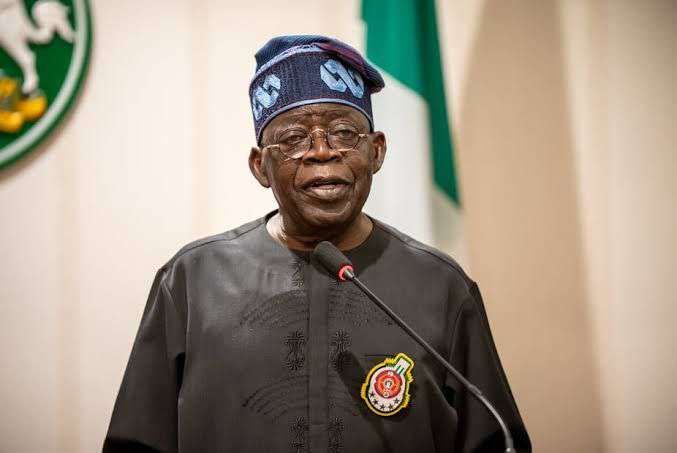
By Adebayo Obajemu
Several high profile alleged corruption cases have overshadowed the current administration despite President Bola Tinubu’s avowed zero-tolerance stance on corruptions, and the hounding of opposition figure. At different fora, he had declared that there is “no safe haven” for looters of public funds in Nigeria. He says his administration’s ongoing anti-graft strategy focuses on transparency, asset recovery, and institutional reforms.
Lately, he reaffirmed this commitment during the commissioning of the new Economic and Financial Crimes Commission (EFCC) Zonal Directorate Complex in Ado-Ekiti.
At the Ministry of Justice Asset Recovery Summit, some months ago,Tinubu stressed that recovering stolen assets is both a legal and moral obligation, aiming to redirect national wealth into public development.
He has also urged Nigerian judges to uphold integrity, emphasizing that “justice must never be for sale”.
Despite the above, realities on the ground seem to put a lie to the seriousness and sincerity of the anti corruption posture of the administration.
Dr. Betty Edu alleged complicity in a N4 billion, minister of Humanitarian and Disaster, which had trails to another, Tiunji Ojo of Internal Affairs and the Chief of Staff, Femi Gbajabiamila. The government struggled to deal but eventually sacked her, and is still walking the street.
A lot of Nigerians will still remember Gilbert Chagoury. He was a close associate of military dictator Gen. Sani Abacha, who allegedly, according to reports, helped his business interests flourish during one of Nigeria’s darkest chapters. After Abacha died in 1998, Chagoury returned an estimated $300 million to the Nigerian government to secure his indemnity from possible criminal charges.
Less that six months in office, he got the contract of the Lagos-Calbar coastal road with bidding at the whooping coalst of N11-13 trillion. This is simply executive corruption and conflict of interest given the faith they are not only friends but his son, Seyi, sits on the board of the company. It was for the same reason the Hunter Biden was charged to court in U.S.
By 2026, companies allegedly linked to Chagoury, particularly Hitech Construction, had secured infrastructure projects valued at over N13 trillion. There is also the Sokoto- Lagos Highway, again awarded to the same company without open bidding and tender.
Dr. Abayomi Falade, a sociologist told Business Hallmark that “how can a serious government, which claims to be fighting corruption awards such a contract without competitive bidding, no transparency and openness.
NNPCL “210 trillion naira” scandal
This figure refers to massive, unexplained financial discrepancies in the audited statements of the Nigerian National Petroleum Company Limited (NNPC Ltd) covering the period from 2017 to 2023. It is the centre of a major legislative probe, significant controversy, and legal action, which brought the Senate almost into fisticuffs.
The Core Controversy
The Senate Public Accounts Committee’s review of NNPC Ltd’s audited accounts flagged ₦210 trillion in discrepancies. According to reports, this amount consists of ₦103 trillion in unexplained accrued expenses and ₦107 trillion in sundry receivables.
The opacity had drawn the attention of probity organisations, such as SERAP and Actionaid Nigeria among others for explanation and transparency.
NNPC’s Defense:
NNPC officials (including current and former executives) have pushed back on the claim that ₦210 trillion is literally “missing”. The former Chief Financial Officer stated that the company’s total revenue for the period was only about ₦54.5 trillion. The company explained that the ₦210 trillion represents accrued expenses and receivables awaiting proper reconciliation, not cash generated and lost.
Senate Rejection:
But the Senate Committee rejected these written explanations. Lawmakers argued that cash-call arrangements were officially abolished in 2016, making the ₦103 trillion expenditure explanation unjustifiable.
Arrest Warrants:
The Senate Public Accounts Committee issued arrest warrants of arrest against former Group Chief Executive Officer, (GCEO) Mele Kyari, and other top officials for repeatedly failing to appear in person to defend the audit.
The full Senate later moved to nullify the committee’s arrest threat, citing that the authority to issue an arrest warrant resides exclusively with the Senate President.
Human rights lawyer, Femi Falana (SAN) filed a suit at the Federal High Court in Abuja (suit marked FHC/ABJ/CS/783/2026) to legally compel the Senate to release the full report on the ₦210 trillion discrepancies.
This apparently compelled the president to issue an Executive Order stopping first charges before sending the funds to the Federation Account.
Lawmakers, such as Senator Adams Oshiomhole, have publicly voiced deep concern, strongly criticizing the financial practices within the corporation. Consequently, lawmakers and advocacy groups are demanding total transparency and a full forensic audit to determine exactly how these figures were generated and recorded.
The 34 billion scandal
The 34 billion scandal stems from a conflated report originating from a World Bank Nigeria Development Update, which revealed that roughly ₦34 trilliion ( not 34 billion) was withheld or deducted from federation revenues at source between 2023 and 2025 before arriving at the pool shared by the Federal Government, States, and Local Governments. The Federal Account Allocations Committee, FAAC, was said to have be defrauded N800 billion for the campaign fund of Tinubu managed by Imo State governor, Hope Uzodimma under the Progressive Governors Forum, who was accused of mismanaging the fund.
This massive revelation sparked intense national controversy and spirited demands for forensic audits by groups like ActionAid Nigeria, and further claims of political fund diversion.
Opposition politicians and media and rights organizations initially claimed the ₦34 trillion was “missing,” “hidden,” or stolen.
But the Federal Ministry of Finance and the World Bank clarified that the money did not “vanish.” Out of about ₦84 trillion generated over that period, ₦34 trillion was subjected to statutory deductions before reaching the Federation Account Allocation Committee (FAAC).
According to them, these first-line charges were not diverted illegally, but rather included approved savings, costs of collection by agencies like the NCS and FIRS, and transfers to specific intervention funds. Critics, however, argue these pre-distribution mechanisms are opaque and require stricter legislative boundaries.
800 billion Progressives Governors Forum Scandal
The scandal arose from allegations that Imo State Governor Hope Uzodimma diverted ₦800 billion meant for President Bola Tinubu’s re-election campaign. The Progressive Governors Forum (PGF) and the All Progressives Congress (APC) have categorically denied both the financial diversion and reports of Uzodimma’s removal as forum chairman.
Reports surfaced claiming that ₦800 billion in campaign funds—allegedly made available by the Ministry of finance without being budgeted for – and released to finance the 2027 campaign of President Bola Ahmed Tinubu’s reelection bid.
The PGF’s Director General, Folorunso Aluko, dismissed reports of Uzodimma’s removal as “false and misleading,” asserting that no meeting was held to reach such a resolution.
The forum also dismissed the report of N800 billion as untrue.Qqqqq
Also the South-East chapter of the APC defended Uzodimma, characterizing the accusations as “spurious,” “factually incorrect,” and “logically impossible”.
But commentators like Ayo Ifeagba noted that there have been other corruption issues under the current administration.
In a chat with BH, the political scientist said “Major corruption allegations and controversies under this administration include:
” We can also recall the appointment of Abubakar Bagudu as Minister of Budget drawing heavy criticism, including from the U.S. government, due to Bagudu’s historical involvement in helping former dictator Sani Abacha loot hundreds of millions of dollars.
He stated that the 2025
controversial presidential pardons of some persons raises issue of corruption.
“The administration faced heavy backlash for granting presidential pardons to 175 convicts, including Farouk Lawan, who was jailed for bribery. There’s also the case of unremitted oil revenues and subsidy opacity.
You will recall that the Socio-Economic Rights and Accountability Project (SERAP) sued the Nigerian National Petroleum Company Limited (NNPCL) over the disappearance of ₦500 billion in oil revenues, highlighting a wider lack of accountability following the removal of the fuel subsidy.