
Situation will drive many out of school – Expert
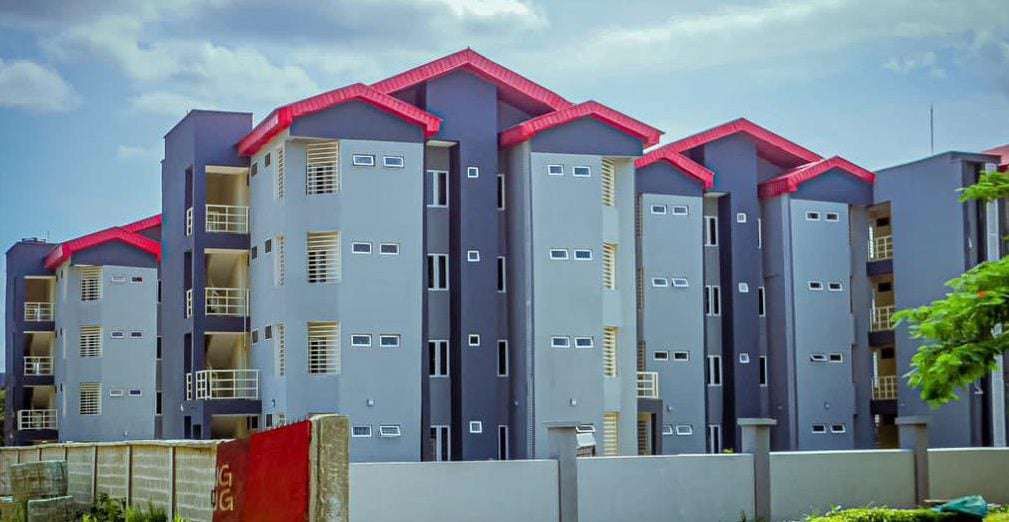
A massive surge in real estate costs is reshaping the economics of higher education in Nigeria, with student accommodation fees in many higher institutions across the country now exceeding tuition, Business Hallmark’s findings have revealed.
Checks across states with high concentration of universities, polytechnics and colleges of education —particularly in Lagos, Ogun, Rivers, Osun, Enugu, Anambra and the Federal Capital Territory (FCT) — revealed that the cost of securing hostel space, whether on-campus or off-campus, has climbed steeply amid persistent housing shortages and rising property values.
From university and college towns like Akoka, Yaba, Bariga and Ojo in Lagos State; to Agbowo, Bodija, Sango and Ijokodo in Oyo; Ekpoma, Benin City and Iyamho in Edo; Uturu, Nsugbe, Umudike and Umuahia in Abia, as well as in Galadimawa, Iddo Sarki and Gwagwalada in the FCT, the story remains the same: students and their parents are increasingly bearing the brunt of the spike in rent prices.
According to BH findings, accommodation has emerged as the single largest expense in the cost of schooling in Nigeria, with annual hostel fees outpacing relatively stable tuition charges, especially in government owned institutions.
The situation, our correspondent gathered at the weekend, has forced many parents and guardians to reconsider or defer enrollment decisions or seek cheaper, often substandard housing alternatives for their wards.
For instance, BH checks revealed that house rent in settlements around the permanent site of University of Abuja has hit the roof, with many residents priced out of decent accommodation.
Expensive Sleep
In settlements around Iddo Sarki, the new permanent site of the University of Abuja, a single room without kitchen and bathroom (popularly known as face-me-I-face you in many parts of the country) which was N20,000 per annum about 10 years years ago, has skyrocketed to between N450,000 and N500,000.
Meanwhile, a self-contained room with bathroom, toilet and kitchen now goes for between N800,000 and N1.200,000 depending on the location of the apartment.
In settlements around the more urban mini campus of the university in Gwagwalada, the situation is more dire with a decent hostel accommodation (a bed space) going for as much as N1.2million to N2million.
Meanwhile, a standard single bed-space in government owned hostels on the two university campuses in Iddo Sarki and Gwagwalada is about N100,000.
While the Gwagwalada campus has four hostels, namely the Old Boys Hostel, New Boys Hostel, Old Girls Hostel and the New Girls Hostel, the main campus at Iddo Sarki has 10 hostels.
They are the Old Boys Hostel, New Boys Hostel, Old Girls Hostel, New Girls Hostel, International Boys Hostel, International Girls Hostel, Postgraduate Boys Hostel, Postgraduate Girls Hostel, Adems Babalola Hostel (boys only) and the Middle Girls Hostel.
The cheapest bed space on the two campuses (Old Hostels) goes for N20,000 (for 8 occupants), while the price of a bed space in the most expensive hostel in the university, the Post Graduate Hostels (2 occupants per room), is N300,000.
However, students need strong connections to secure bed spaces in the school-owned halls of residence, especially the PG Hostels, owing to shortage and high demand.
Demand spikes profiteering
As a result, a major accommodation racketeering is going on in the university, with lucky students selling their bed spaces for between N500,000 to N1million, depending on the hostel.
A 200-level law student of the institution, who spoke anonymously, told our correspondent that access to hostel accommodation on campus is limited, a situation that forced him to secure alternative accommodation outside the university.
According to Turner, he decided to look for accommodation outside the school after failing to secure one on campus.
“This is the second consecutive year that I’ll be staying off-campus. It happened in my 100-level and is happening again in my second year.
“My mum was forced to get a good one-room self-contained apartment in Gwagwalada for me at the rate N2.4million per annum. My parents bore the burden alone in my first year. But I now have two of my course mates living with me sharing the accommodation cost equally between us. The sharing arrangement crashed the cost to N800,000 for each occupant”, he explained.
Meanwhile, tuition in the university, available data shows, ranges from N100,000 to N250,000 depending on the course and faculty.
BH observed that owing to the high demand and rent for hostel accommodations in Gwagwalada, Iddo, Lugbe, and settlements along the Abuja airport road, property owners have resorted to converting their properties to hostel accommodation in a bid to cash in on the rent bazaar.
Boom for Landlords
A survey commissioned by BH in Iddo
Sarki showed that students population in the town represents about 62.5 percent of the entire population of the burgeoning town as original settlers and workers continued to be priced out of accommodation.
The situation is not different in Lagos, the commercial capital of Nigeria, as students competing for hostel accommodations currently pay through their noses to secure bed spaces, BH findings showed.
In Yaba, Akoka, Bariga and other settlements around the University of Lagos (Unilag) and Yaba College of Technology (Yabatech), there is a major shift in demography as students increasingly become the dominant block.
Majority of lecturers and medical personnel in Unilag and its teaching hospital, Lagos University Teaching Hospital (LUTH), especially the junior and those in intermediate levels, have largely relocated from the neighborhoods after rents hit the sky.
In the highbrow Akoka and some parts of Yaba, a 1-room self-contained apartment currently goes for between N1.5million to N1.8million, while a 3-bedroom flat currently rent out for N3.6million to N10million per annum, depending on the landlord, location and facilities in the building.
Wealthy Nigerians with children in these institutions, our correspondent learnt, now prefer seeking accommodation for their wards in quite and serene Akoka and Yaba environments to shield them from detractions.
Unfortunately, children of the poor or average Nigerians now fight tooth and nail to secure hostel accommodation on campus, or travel as far as Bariga, Makoko, Abule-Ijesha, Ilaje, Abule-Oja and other settlements for cheaper accommodations, which are still very expensive when compared with accommodations in non-university communities.
A student of History and International Relations at Unilag, Peju Oladeji, told BH that she currently pays the sum of N750,000 for a room in a building converted to a student hostel in Bariga.
“I stayed in Abule-Oja, a suburb of Yaba in my first to third year as an electrical engineer student. But in 2025, I moved out after our rent was increased from N500,000 to N800,000. I learnt the new tenants, who are students paid N1.5million for the same room.
“Some of my colleagues, whose parents are not as buoyant as mine are resident in Ilaje and Makoko. You can imagine someone still struggling to pay a tuition of about N200,000 being forced to cough out N1million and above for a place to lay his or her head. The situation is that bad”, Oladeji said.
Official Extortion
In March 2026, controversy trailed a hostel project at UNILAG that was rented out at the rate of N1.2 million per bed space.
Built with public funds at the cost of N1.6 billion to ease Unilag’s perennial accommodation crisis, the facility is inaccessible to many of the students it was meant to serve due to its high rental rate.
“Instead of solving the housing shortage in the institution, the development has become part of the problem. Its (hotel) pricing structure placed it beyond the reach of average students. This raised serious concerns about affordability and policy direction of this administration”, said Mrs. Toyin Inaolaji, the parent of one of the students.
The trend, checks showed, extends beyond Lagos and the FCT to host university states of Oyo, Osun, Ogun, Rivers Abia, Enugu, Kano and others where students now struggle to stay in school.
However, education experts, who spoke on the matter attributed it to a combination of factors, including rapid urbanization, limited investment in purpose-built student housing, and broader inflationary pressures in the property market.
According to Dr. Ade Johnson, the founder and proprietor of EduConsult DLI, university authorities, already constrained by funding gaps, have struggled to expand hostel capacity, leaving private landlords to dominate supply and dictate pricing.
“The growing imbalance threatens access to tertiary education, particularly for low- and middle-income households. Without targeted intervention—ranging from incentives for student housing development to stronger regulatory oversight—the rising cost of accommodation could deepen inequality and undermine gains in enrollment across the country”, Dr. Johnson warned.