

Abia State joined the rest of the country and the global community to commemorate the 2026 World Glaucoma Week, with medical experts calling for early detection and prompt treatment to prevent irreversible blindness caused by the disease.
Activities marking the week included a symposium, essay, arts and drama competitions among secondary school students drawn from the 17 local government areas of the state. Other events were free eye screening for residents, lectures, awards and presentation of prizes to winners of the various competitions.
Participants at the event included students from secondary schools across the state, traditional rulers, students from the Department of Optometry at Abia State University, Uturu, representatives of Abia State University Teaching Hospital, Aba, members of the Christian Association of Nigeria (CAN) in the state, and students from schools of nursing, among others.
The theme for this year’s World Glaucoma Week is “Glaucoma-Free World: A Shared Responsibility.” The activities were organised by the Abia State Eye Health Management Bureau.
The symposium featured presentations by experts in ophthalmology and human medicine, including keynote lectures, panel discussions and interactive sessions with participants.
Speaking at the event, the Abia State Commissioner for Health, Prof. Enoch Uche, said the state government had outlawed quackery and the traditional practice of couching, urging residents to seek treatment at approved health facilities.
He advised residents to patronise primary healthcare centres across the state, noting that they have been equipped with modern facilities and essential drugs as part of the government’s healthcare policy.
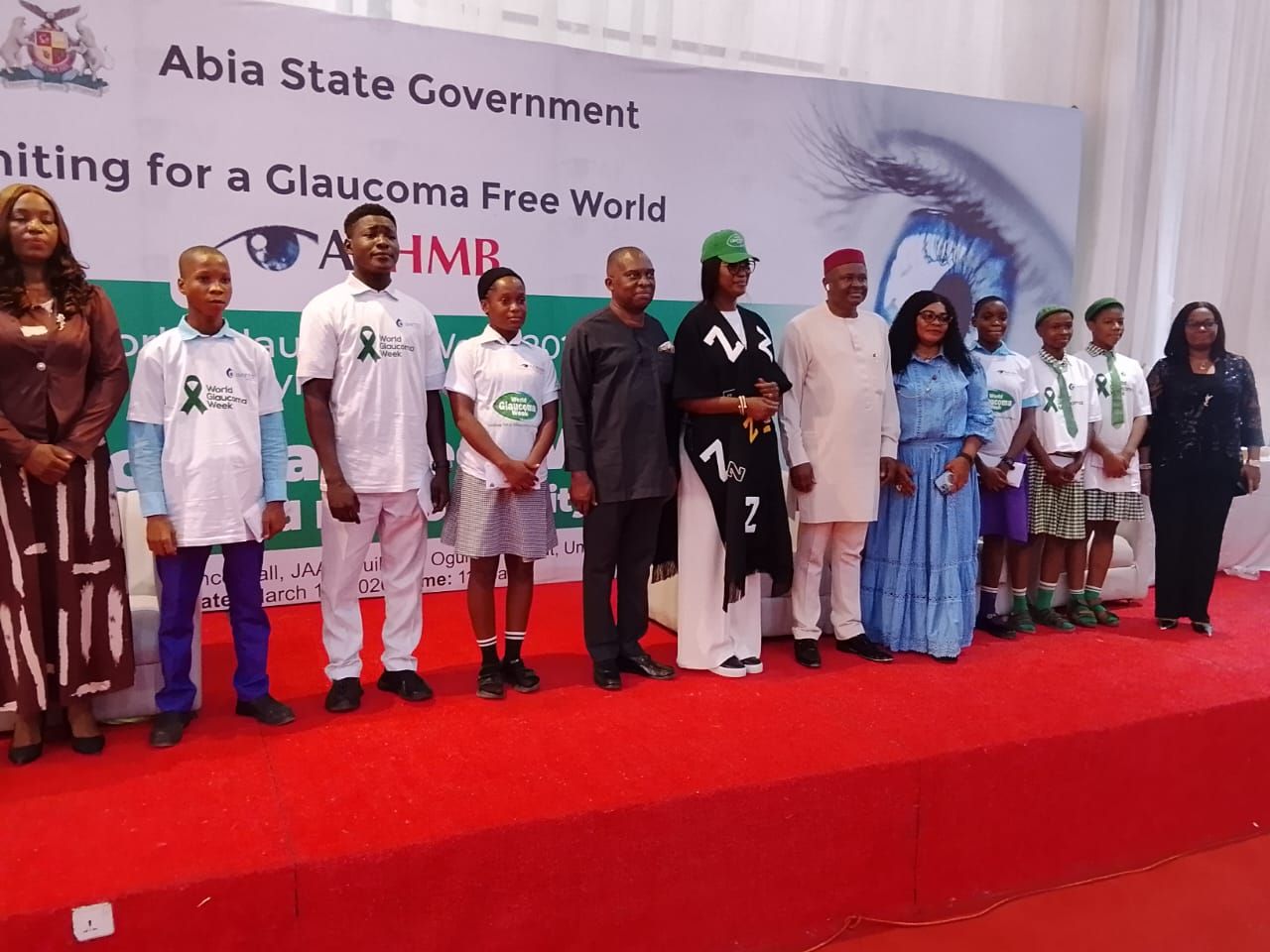
Participants at the event
Uche disclosed that eye care services have been integrated into the operations of primary healthcare centres across the state, stressing that regular eye checks should become routine for residents.
According to him, every ward in the state now has a functional health centre, while tertiary health institutions have been established across the three senatorial zones to ensure access to quality healthcare for the people.
In her welcome address, the Administrator of the Abia State Eye Health Management Bureau, Dr. Betty Emeka-Obasi, identified illiteracy, quackery and indiscriminate community medical outreaches as major challenges in the fight against blindness.
She called for greater awareness and intervention to reduce cases of vision loss caused by neglect and improper treatment.
Dr. Emeka-Obasi revealed that since September 2024, about 3,381 glaucoma cases have been confirmed in the state, while more than 20,000 patients have received treatment.
She added that the bureau has conducted about 10,000 community outreaches, performed over 2,000 eye surgeries and established 10 eye vision centres across the state.
She also commended the foresight of Governor Alex Otti, who in July 2024 signed an executive order aimed at ensuring that no resident of the state loses their sight due to preventable causes.
According to her, tackling glaucoma requires the collective efforts of government institutions, traditional rulers, medical professionals and faith-based organisations.
Also speaking, an ophthalmologist and immediate past Medical Director of the Federal Medical Centre (FMC), Umuahia, Dr. Chuku Abali, stressed the need for collective action in combating glaucoma, describing it as an irreversible cause of blindness.
Abali, who chaired the 2026 World Glaucoma Week Symposium in Umuahia, said many people living with the disease are unaware of their condition until it reaches an advanced stage.
“About 40 percent of those with glaucoma do not know they have it until the disease has significantly damaged the eye,” he said, adding that the condition often shows no early symptoms.
He urged people to undergo regular eye examinations to enable early detection and treatment.
According to him, glaucoma affects about 80 million people globally, with a prevalence rate of about 4.03 percent, lamenting that about 94 percent of victims remain unaware of their condition until it becomes severe.
In her keynote lecture, Prof. Bernardine Nsa Ekpeyong, a Professor of Public Health Epidemiology at the University of Calabar, emphasised the importance of early diagnosis and treatment in preventing blindness from glaucoma.
She described glaucoma as a “silent thief of sight” and warned residents against seeking treatment from unqualified practitioners or relying on traditional remedies.
Ekpeyong listed risk factors for glaucoma to include age, family history, diabetes and certain cultural practices, urging individuals to undertake regular eye checks and adhere to prescribed medications.
She also noted that reports indicate that Nigeria’s South-East region records some of the highest rates of glaucoma cases.
Participants during the panel discussion resolved that medical professionals must play a leading role in reporting quack practitioners to the Ministry of Health.
They also recommended stricter government oversight of community medical outreaches and called for greater collaboration among traditional rulers, religious institutions and donor agencies to discourage the use of unqualified practitioners in treating eye conditions.
The participants further urged the government to remain consistent in implementing policies aimed at strengthening the healthcare system and improving eye care services across the state.