
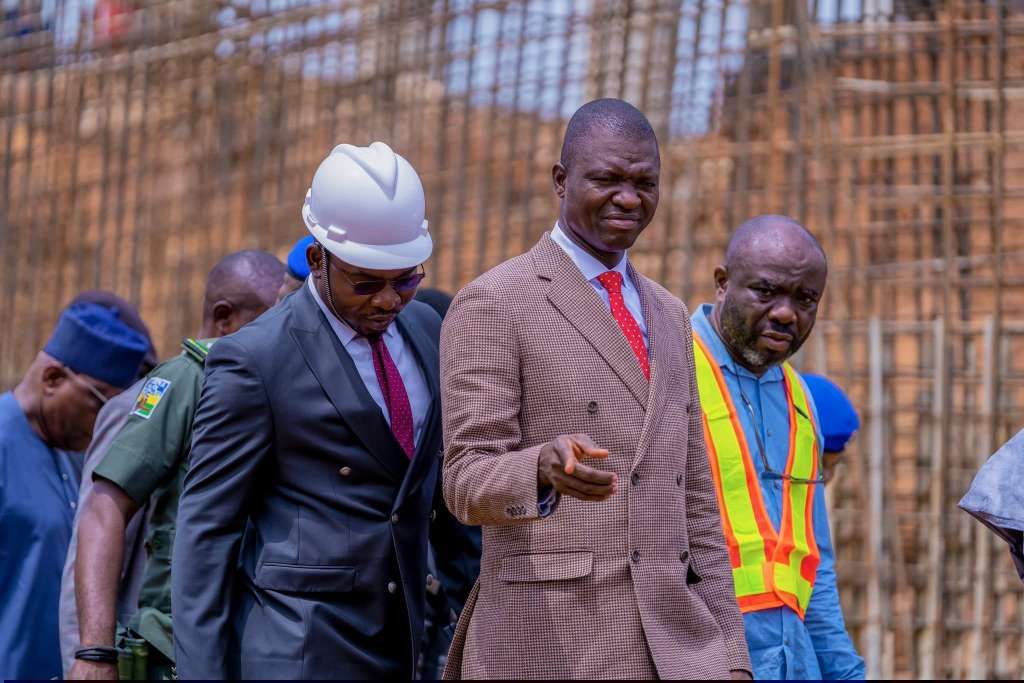
When Francis Ogbonnaya Nwifuru mounted the saddle as governor of Ebonyi State on May 29, 2023, he inherited the burden of expectations shaped by the towering, but controversial legacy of his predecessor, David Umahi.
Umahi had, beyond contestation, transformed the physical landscape of Ebonyi with an aggressive infrastructure drive that produced gleaming flyovers, expansive boulevards, an international airport, a monumental market and other signature projects that altered the skyline of Abakaliki. Yet beneath the glitter of concrete and steel lay a different reality of battered civil service, underfunded healthcare, a neglected education sector and a climate of political intolerance that left many residents weary and fearful.
Three years after taking office, Nwifuru appears to have chosen a markedly different route. Less flamboyant, more understated and deeply conciliatory in temperament, the governor has quietly sought to reposition governance around people rather than monuments. In the process, he has restored a measure of calm to the state, revived the moribund civil service and injected liquidity into the local economy through improved workers’ welfare.

Ebonyi State University of ICT, Oferekpe Agbaja in Izzi Local Government Area,
Yet the verdict on his administration remains mixed. While many residents praise the return of peace and the revival of public institutions, others argue that the pace of infrastructure development has slowed considerably, leaving the state without the ambitious developmental momentum.
Still, in the bustling streets of Abakaliki, there is little doubt that the mood has changed. At the International Market and along the crowded corridors of the state capital, commerce hums with renewed vitality. Traders display their wares without the anxiety that once accompanied routine enforcement raids. Civil servants, whose purchasing power had withered for years, now constitute the backbone of a reviving urban economy.
“Generally, I’ll say he’s doing okay,” said Onyinye Ugwu, a businesswoman in Abakaliki. “Civil servants are paid better now, and there’s peace and tranquility in Abakaliki. No more harassment here and there. But in terms of infrastructure in Abakaliki, I haven’t seen much.”
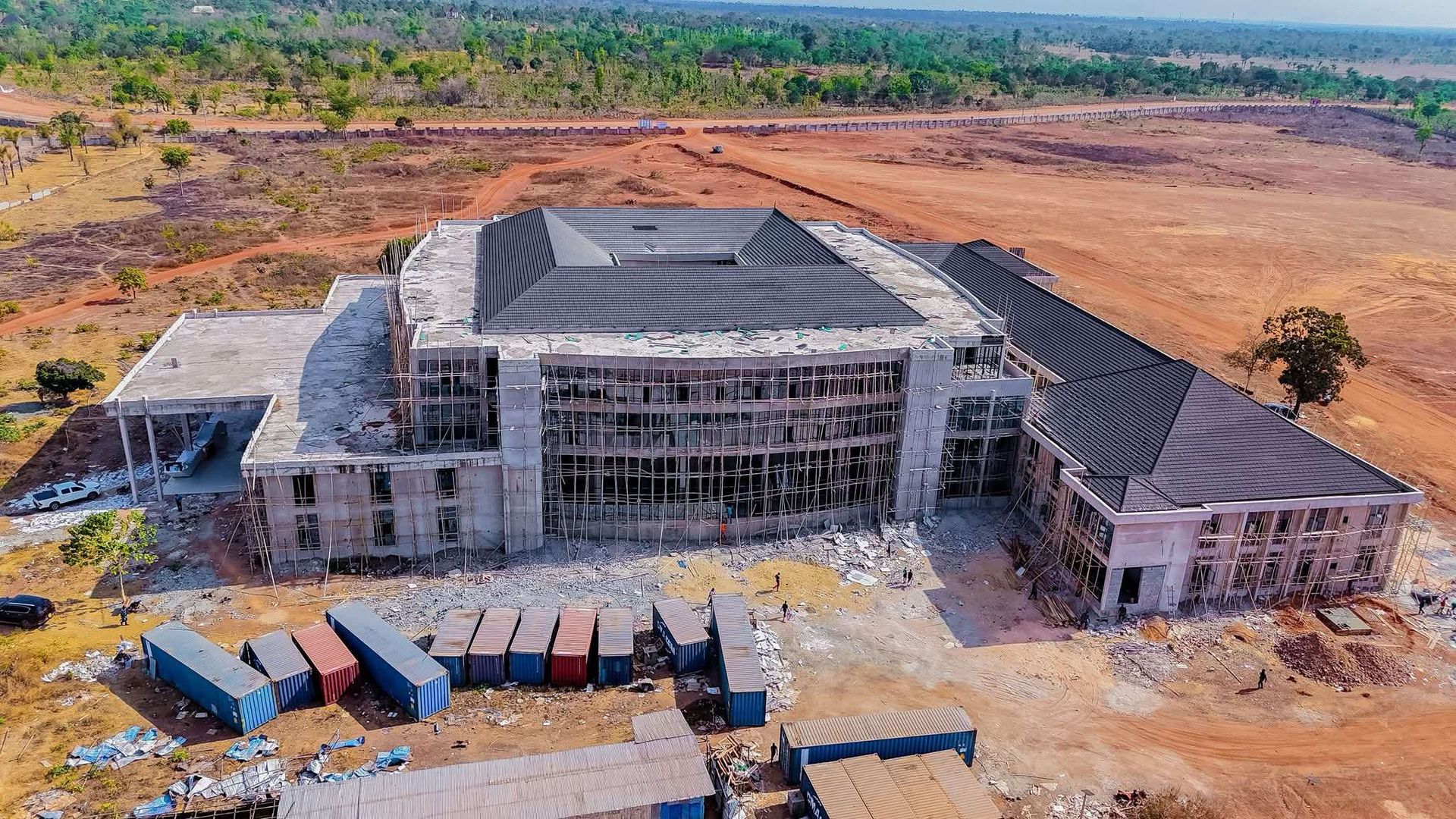
Ebonyi State University of ICT, Oferekpe Agbaja in Izzi Local Government Area,
Her observation perhaps captures the essence of the Nwifuru administration, one that is praised for restoring humanity to governance, but criticised for lacking the muscular infrastructural ambition of the Umahi years.
For many workers, however, the difference is night and day. Under the previous administration, gratuities and pensions accumulated into a crushing burden estimated at over N20 billion. Thousands of retired civil servants, teachers and local government workers languished in despair, abandoned by a system to which they had devoted decades of service.
Nwifuru made the clearance of those arrears one of his earliest priorities.
Chief Abia Onyike, former commissioner for information and now a chieftain of the APC, argued that this decision fundamentally altered the social atmosphere in the state.
“First and foremost, he had to clear the backlog of gratuities owed to retired civil servants,” Onyike said. “The money was not less than N20 billion. He cleared it for teachers, civil servants and local government staff because the previous administration had neglected these responsibilities for eight years.”
The intervention reverberated through Ebonyi’s economy almost immediately. Pensioners returned to markets. Families burdened by years of deprivation found some respite. Small businesses that had struggled under declining purchasing power began to witness increased patronage.
Beyond settling gratuities, the administration lifted a long-standing embargo on employment within the state public service. During Umahi’s eight-year tenure, recruitment into the civil service had virtually frozen, creating severe manpower shortages across ministries and agencies.
Nwifuru reversed the trend. According to Onyike, the administration recruited about 1,500 workers into the mainstream civil service, alongside roughly 2,000 teachers and hundreds of healthcare professionals.
“He also tackled unemployment in the state,” Onyike explained. “For eight years, the previous administration never employed anybody in the public service. Nwifuru lifted the ban and brought people into the system again.”
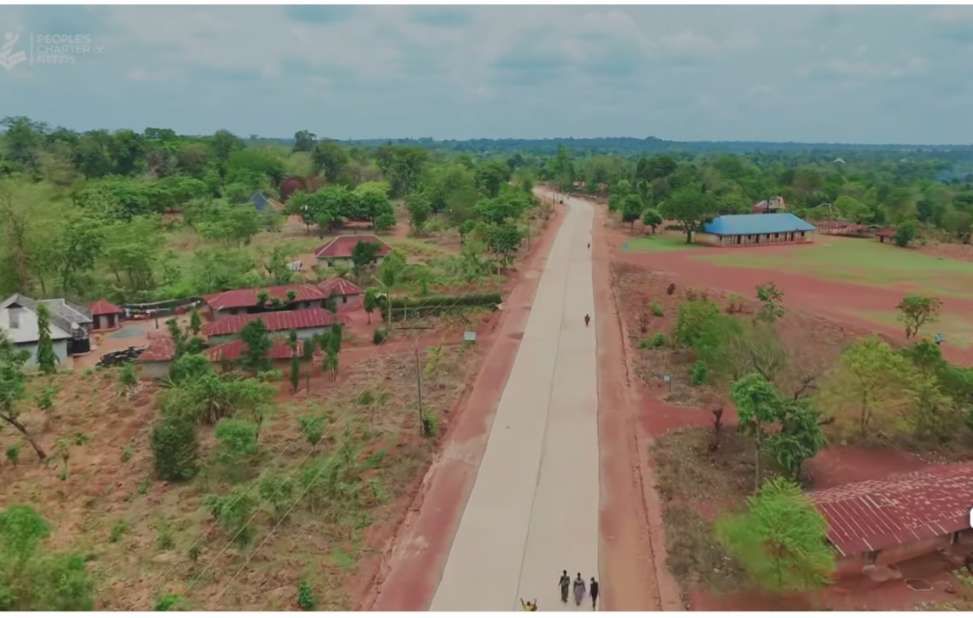
Rural road
That policy shift has had profound implications for Ebonyi’s urban economy. In a state where government remains the largest employer of labour, salary payments inevitably shape commercial activity. Restaurants, transport operators, traders and artisans all benefit when workers are paid promptly and regularly.
Indeed, several residents told Business Hallmark that the renewed purchasing power of workers has helped stabilise economic life.
One trader at Kpirikpiri Market, who identified himself simply as Chinedu, noted that “things became easier because workers now have money to buy things again.” But there’s now renewed worry over what many traders consider excessive taxation, with provisions store owners allegedly charged as much as N75,000 per annum in taxes, and owners of Point of Sale (PoS) kiosk as much as N25,000. Business Hallmark could not confirm these claims.
The revival of the civil service has also extended to institutional morale. Ministries and agencies that once operated like hollow bureaucratic shells are gradually regaining functionality. Onyike argued that Nwifuru deliberately restored the relevance of ministries and parastatals after years in which governance had become heavily centralised.
“The civil service has gone back to normal shape,” he said. “Civil servants whose entitlements and allowances were denied have had them restored. Ministries and parastatals are now functioning again because the governor believes institutions should work.”

Ongoing 10-storey building at Presco Junction, Abakaliki.
Nowhere is this policy shift more visible than in the healthcare sector. When Nwifuru assumed office, Ebonyi’s 14 general hospitals reportedly had barely seven doctors collectively. Some hospitals operated without a single medical doctor, leaving rural communities at the mercy of poorly equipped facilities.
The governor responded with aggressive recruitment. Medical doctors, pharmacists, physiotherapists and laboratory scientists were employed across the state’s health institutions. Salaries were also dramatically reviewed upward to stem the exodus of professionals from public hospitals.
Last year, the administration increased the monthly salaries of newly recruited doctors from N150,000 to N500,000, a decision widely applauded within the medical community.
“What the governor did was to ensure that each general hospital had at least three doctors,” Onyike noted. “He increased their salaries and made the hospitals functional again.”
The government has also invested in healthcare infrastructure and logistics. Ambulances have been distributed to hospitals, while motorcycles were provided for rural health workers to improve access to remote communities.
In addition, the administration recruited hundreds of community health practitioners and announced plans to establish specialist hospitals across Ebonyi’s three senatorial zones.
At a handover ceremony organised by Médecins Sans Frontières in Abakaliki, Nwifuru reiterated his commitment to strengthening healthcare delivery through improved facilities and manpower development. Observers say the healthcare reforms have begun to ease pressure on tertiary facilities by improving services at the grassroots level.
The education sector has similarly witnessed renewed government attention. Under the current administration, teachers have been recruited into public schools while scholarship schemes abandoned by the previous government have been revived.
According to Onyike, more than 2,000 Ebonyi indigenes are currently pursuing postgraduate studies in universities within Nigeria and abroad under state-sponsored scholarship programmes.
“Under the previous administration, no single person had access to scholarship,” he said. “Nwifuru restored the scheme and many Ebonyians are now studying in the United Kingdom and Nigerian universities.”
The government has also embarked on the construction of modern classroom blocks in selected secondary schools across the 13 local government areas of the state.
Beyond infrastructure, analysts say the administration’s educational investments signal an attempt to reposition Ebonyi for long-term human capital development rather than merely pursuing politically visible projects.
Yet while many acknowledge progress in education and healthcare, criticisms remain loud in the area of physical infrastructure.
For all his people-centred policies, Nwifuru continues to face comparisons with Umahi, whose expansive construction projects still dominate public memory.
The governor has undertaken road projects across the state, including rehabilitation and reconstruction works in Abakaliki and rural communities. Roads such as the Ezillo–Ezzagu corridor, Ovudechi–Iziogo Road and several urban renewal projects are ongoing.
Nonetheless, critics argue that the scale and speed of infrastructure delivery pale beside what Ebonyi witnessed between 2015 and 2023.
Ugwu pointed specifically to delays surrounding the reconstruction of roads linked to ongoing flyover projects.
“The road before Sperando was demolished for the building of a flyover, but for two years now, the flyover hasn’t been built,” she lamented.
Such frustrations are increasingly common among residents who fear that the state may be losing developmental momentum. Another resident, Emma Nwede, argued that while the governor has brought calm and better welfare policies, infrastructure execution remains sluggish.
“People appreciate the peace and improved welfare,” he said. “But many projects move too slowly. Ebonyi people became used to seeing projects completed quickly.”
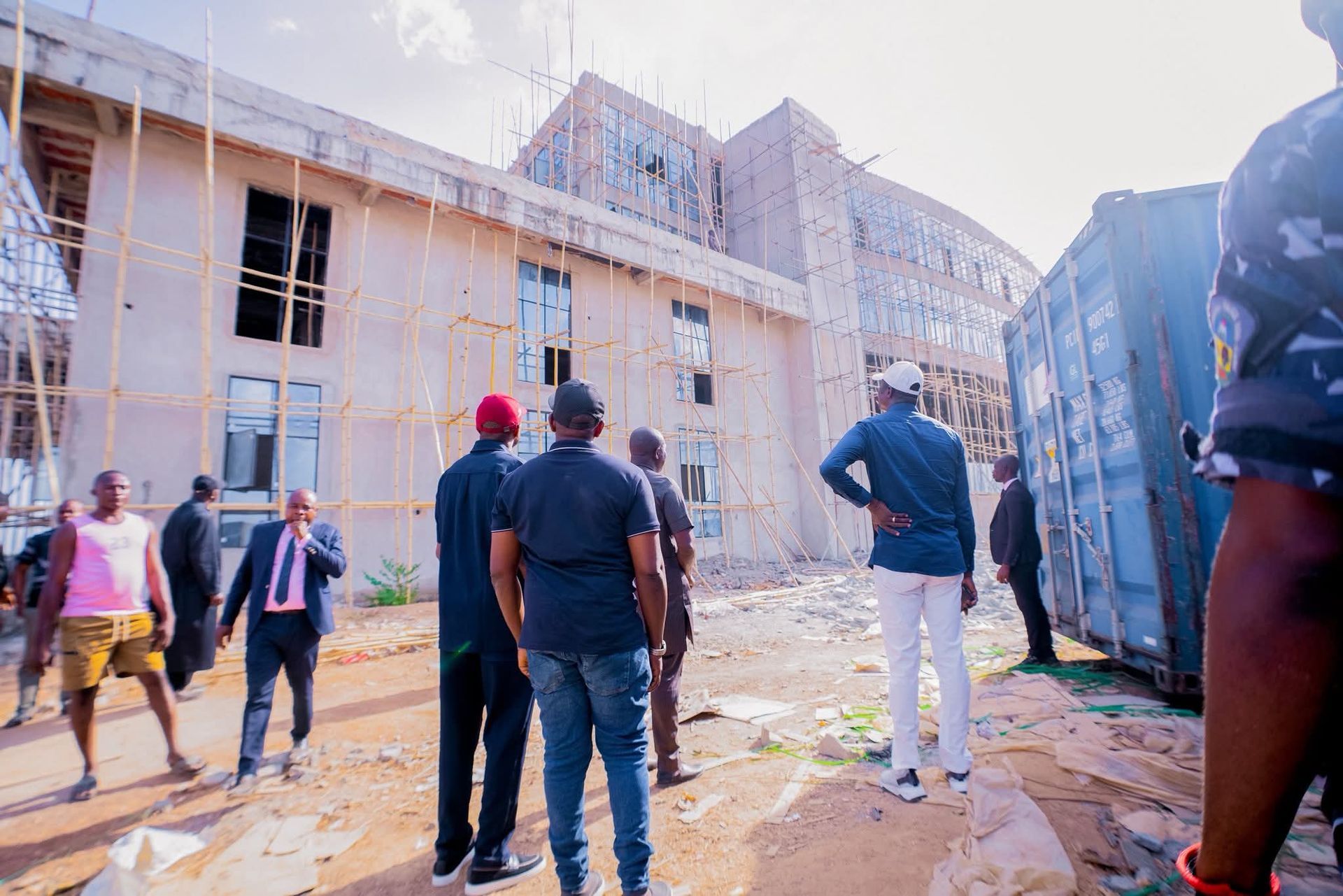
Project inspection
Even so, supporters of the administration insist the criticism ignores the different philosophies underpinning both governments.
To them, Umahi prioritised monumental infrastructure, often at the expense of human welfare, whereas Nwifuru has sought to rebuild institutions and restore dignity to governance.
“This government is more people-oriented,” Onyike argued. “It is not about intimidating people or building white elephant projects while workers suffer.”
Part of that people centred approach has manifested in the administration’s handling of security and political tensions.
Under Umahi, Ebonyi was frequently engulfed in violent political disputes and communal crises. Critics alleged that dissent was routinely suppressed and opposition voices harassed.
Today, the atmosphere is noticeably calmer. Political tensions have eased considerably, while the government has adopted a less interventionist approach in community matters.
“There is now a policy of non-interference in community leadership issues,” Onyike explained. “The government no longer dictates who leads development unions. That was one major source of crisis before.”
The calmer political climate has translated into improved perceptions of security across much of the state.
Residents who spoke with Business Hallmark repeatedly emphasised the absence of the fear and hostility that once characterised political interactions.
For traders and small business owners, this psychological shift matters almost as much as economic reforms.
“There’s peace now,” said a transport operator near Presco Junction. “People are no longer afraid of harassment every day.”
The administration has also launched youth empowerment programmes designed to stimulate entrepreneurship and reduce unemployment. According to Onyike, thousands of youths received financial support to establish small-scale businesses and stabilise existing ventures.
Supporters argue that these interventions have helped deepen grassroots support for the governor, especially among young people and civil servants.
Yet despite these gains, questions linger about the broader direction of Ebonyi’s development model under Nwifuru, whether the state can sustain economic revival without the kind of bold infrastructure expansion that previously defined its growth narrative. The answer may ultimately determine how history judges the governor’s first term.
Beyond the debates over infrastructure and welfare, another defining feature of the Nwifuru administration has been its attempt to soften the harsh edges of governance in Ebonyi State. In many respects, the government has consciously projected itself as humane, accessible and less combative than its predecessor.
This disposition has earned the governor goodwill among ordinary residents who say the atmosphere in the state is less tense and politically charged.
“Political wars are no longer being fought the way they used to be,” said Nwibo Abel, a shop owner in Abakaliki. “Before, there was fear everywhere and traders were constantly harassed. Now people feel freer.”
That perception has strengthened Nwifuru’s standing across the state, especially among workers, pensioners and small business owners who form the backbone of Ebonyi’s local economy.
Yet governance, particularly in a state as politically layered as Ebonyi, is rarely insulated from internal power struggles.
Beneath the calm surface lies a simmering political contest over the control of the ruling APC structure between Nwifuru and his predecessor, Umahi. Though both men continue to maintain public civility, political observers insist that subtle tensions remain.
Nwifuru has emerged APC governorship candidate for the next election. His favoured candidates also reportedly emerged as APC candidates for the state assembly elections, but Umahi is believed to have influenced the alleged disqualification Iduma Igariwey, member representing Afikpo/Edda constituency in the House of Representatives, but he subsequently denied being disqualified, affirming that he won his primary election.
The governor will potentially face his 2023 opponent, Ifeanyi Chukwuma Odi, the Lagos bases industrialist who has declared his intention to contest under the PDP. The major factor that worked against Odi in 2023 was zoning, and next year may not be very different. Many who are dissatisfied with Nwifuru are rallying behind, but APC has the structure to withstand the PDP challenge. Although there are concerns within the ruling party that the former governor may sabotage his predecessor’s reelection.
The disagreement over the state APC chairmanship and the governor’s gradual consolidation of authority are widely viewed as signs of an administration eager to emerge from the shadow of its benefactor.
Indeed, one of Nwifuru’s biggest political achievements may well be that he has steadily cultivated an independent identity despite the overwhelming influence Umahi once wielded in Ebonyi politics. Yet, concerns persist regarding governance communication and public engagement.
Repeated attempts by Business Hallmark to obtain official comments from government spokespersons proved unsuccessful. Calls to the commissioner for information, Barrister Ikeuwa Omebeh, as well as the Chief Press Secretary, Dr Monday Uzor, were either unanswered or postponed indefinitely.
For critics, this reflects a broader weakness in the administration’s public communication strategy. Nevertheless, as Nwifuru marks three years in office, the broad consensus among many residents is that Ebonyi has become calmer, more inclusive and more humane under his leadership.