
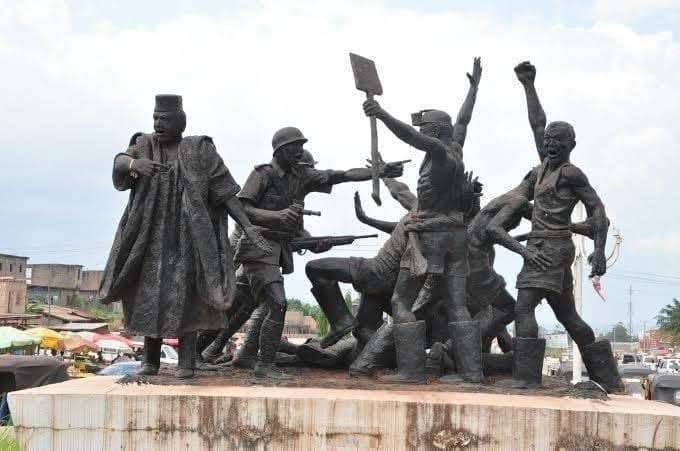
In a landmark ruling, Justice A.O. Onovo of the Enugu High Court has ordered the British Government to pay £20 million each to the families of 21 coal miners killed during the 1949 Iva Valley massacre in Enugu, bringing total compensation to £420 million.
The massacre occurred on November 18, 1949, when miners protesting harsh working conditions, racial pay disparities, and unpaid wages were met with lethal force by the British colonial authorities. Twenty-one miners were shot dead, and 51 others injured after the British superintendent of police opened fire on the peaceful protest.
The victims included Sunday Anyasodo, Ani Oha, Andrew J. Obiekwe Okonkwo, Augustine Chiwefalu, Onoh Ugwu, Ngwu Offor, Ndunguba Eze, Okafor Agu, Livinus Ukachunwa, Jonathan Agu Ozani, Moses Ikegbu Okoloha, Chukwu Ugwu, Thomas Chukwu, Simon Nwachukwu, Agu Alo, Ogbonnia Ani Chima, Nnaji Nwachukwu, William Nwaku, James Onoh Ekeowa, Felix Nnaji, and Ani Nwaekwo.
The case, Suit No: E/909/2024, was filed by human rights activist Mazi Greg N. Onoh, seeking acknowledgment of liability, formal apology, and comprehensive compensation from the British Government. The respondents included the Secretary of State for Foreign, Commonwealth and Development Affairs, the British Government, and the Federal Government of Nigeria, among others.
Delivering judgment, Justice Onovo condemned the killings as an “unlawful and extrajudicial violation of the right to life,” holding the British colonial administration fully liable. The court also ordered unreserved written apologies to be published in major Nigerian and UK newspapers within 60 days and instructed the Federal Government to initiate diplomatic engagement with Britain to secure reparations.
The judge rejected claims of sovereign immunity, affirming that grave historical injustices remain justiciable under Nigerian law, and struck out arguments citing Nigeria’s colonial status at the time.
Counsel to the applicant, Prof. Yemi Akinseye-George, SAN, described the ruling as historic, signaling that governments worldwide cannot ignore human rights abuses, torture, or the taking of innocent lives without consequence. He likened it to international precedents such as the UK’s Mau Mau settlement, underscoring the obligation to provide redress for serious historical violations.
“This judgment represents a major milestone in holding colonial powers accountable, affirming that the right to life transcends time, borders, and changes in sovereignty,” Akinseye-George said.