
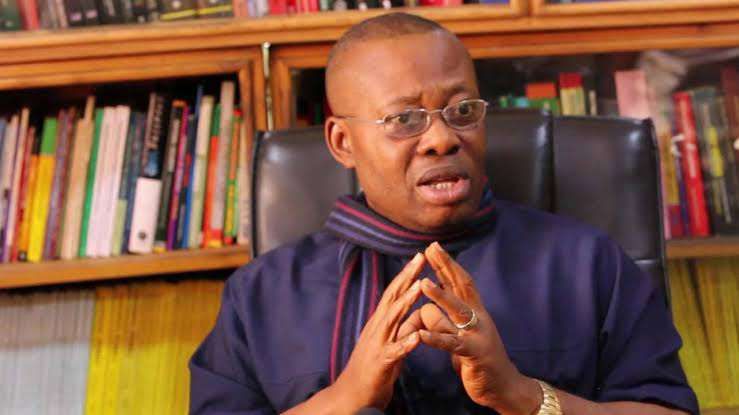
Human rights lawyer, Dr. Monday Ubani, SAN, has said the credibility of elections is critical to ensuring accountability among elected officials.
Ubani, former Second Vice-President of the Nigerian Bar Association (NBA), ex-Chairman of the NBA Ikeja Branch, and founder of the Onyekachi Ubani Foundation, stressed the need for the 2027 general elections to be credible and reflect the will of the people, noting that this would encourage greater voter participation in future electoral cycles across Nigeria.
He spoke on Thursday at the Business Hallmark Virtual Lecture Series, March 2026 edition, themed “Nigeria 2027: The New Electoral Act, Electoral Integrity and the Future of Governance.”
Ubani cited the electoral process that produced the current Governor of Abia State, Dr. Alex Otti, as an example of how credible elections can promote accountability. According to him, the transparency of the process has kept the governor responsive to the electorate.
The legal practitioner said a major challenge ahead of future elections is the need for the Independent National Electoral Commission (INEC) to rebuild public trust and demonstrate its capacity to conduct free, fair and credible polls.
He observed that confidence in the electoral body has declined over the years but commended the Abia State Returning Officer in the 2023 governorship election, Prof. Nnenna Oti, for resisting inducements and ensuring that the results announced reflected the votes cast.
Ubani described her conduct as a turning point in Abia’s electoral history and questioned how many electoral officials would show similar integrity under pressure.
On electoral reforms, he argued that the Senate should have made electronic transmission of results to the INEC Results Viewing (IReV) portal mandatory in the Electoral Act 2022 (as amended). According to him, full adoption of technology would improve transparency and credibility in Nigeria’s electoral system.
He also expressed concern about the growing role of the judiciary in determining election outcomes, noting that Nigeria records a high number of post-election litigations. He called for stronger electoral processes that would reduce reliance on the courts.
Ubani further criticised delays in resolving election disputes, stating that prolonged court proceedings and the summoning of numerous witnesses often complicate cases even when the evidence is clear.
He added that political parties must field candidates who genuinely enjoy public support if the 2027 elections are to be credible. He also urged the government to equip INEC adequately while avoiding interference in its operations.
Ubani called on policymakers, stakeholders and the media to play active roles in strengthening the country’s electoral system, warning that democracy is threatened when citizens lose confidence in elections.
In his contribution, a public governance and leadership specialist and former member of the House of Representatives, Hon (Dr) Abdul Oroh, expressed concern over the low voter turnout recorded in the 2023 general elections. He noted that out of about 84 million registered voters, fewer than 30 million participated in the polls.
Oroh urged Nigerians to rebuild confidence in the electoral process and called on political parties to nominate credible candidates with proven records of accountability.
He suggested that states such as Abia could witness higher voter turnout in 2027 if public confidence in leadership is sustained.
Oroh also called for stricter penalties for electoral offences, particularly vote buying, which he described as a widespread challenge across political parties.
He criticised the National Assembly for not making electronic transmission of results compulsory, describing it as a missed opportunity to enhance electoral transparency.
While emphasising the need to consolidate Nigeria’s democracy, Oroh urged INEC and other stakeholders to ensure that election outcomes are determined at the polling units rather than in the courts.
Offering a different perspective, Pro-Chancellor and Chairman of the Governing Council of Obafemi Awolowo University (OAU) and former Speaker of the Osun State House of Assembly, Adejare Bello, supported the National Assembly’s decision to allow both manual and electronic transmission of results.
According to him, relying solely on electronic transmission could pose challenges due to network limitations in some areas.
Bello commended the 10th National Assembly for introducing provisions in the amended Electoral Act, including digital voter registration, and urged Nigerians to participate actively in the 2027 elections.
He added that ongoing reforms under President Bola Tinubu could further strengthen the credibility of future elections.