
The United States has significantly escalated diplomatic and legislative pressure on President Bola Tinubu over what American lawmakers described as persistent and systemic religious persecution in Nigeria, unveiling a sweeping bill that proposes visa bans, asset freezes, and possible terrorist designation for groups accused of orchestrating violence against Christians.
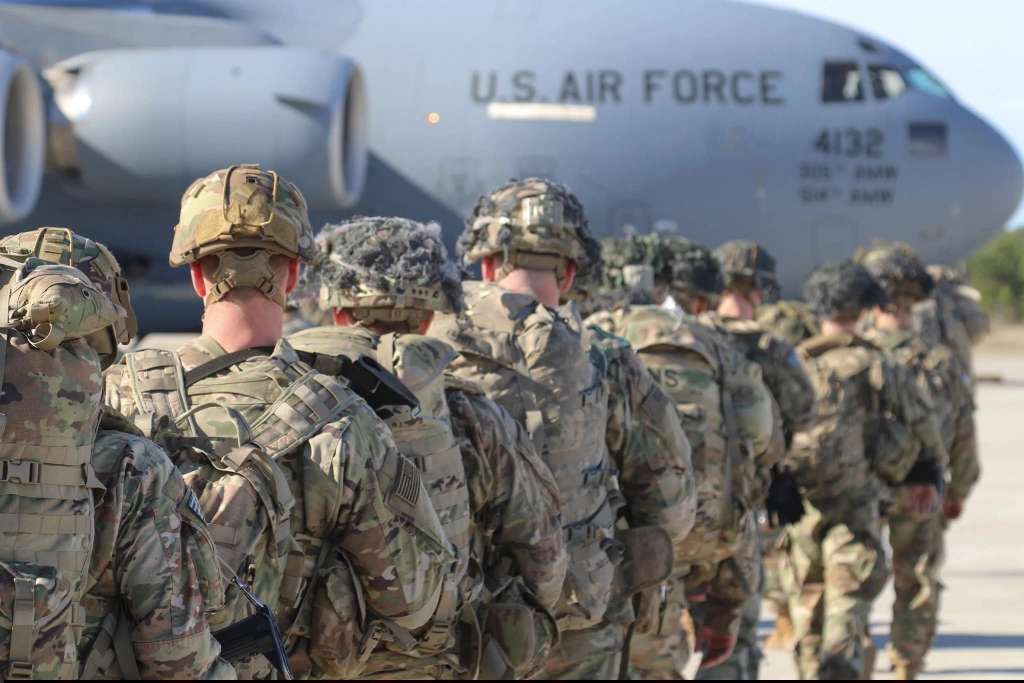
The country has meanwhile, began sending troops and ammunition to Nigeria, as part of its effort against terrorist groups.
Earlier last, a U.S Federal Court had given the Federal Bureau of Investigation, FBI, and the Drug Enforcement Administration agency, DEA, February and March Deadlines to release all documents relating to President Tinubu’s drug investigations after repeated delays.
At the centre of the storm is the newly introduced Nigeria Religious Freedom and Accountability Act of 2026, sponsored in the U.S House of Representatives by Republican lawmakers including Riley Moore, Chris Smith, Brian Mast, Mario Diaz-Balart and Bill Huizenga.
The bill comes on the heels of President Donald Trump’s November 2025 decision to redesignate Nigeria as a Country of Particular Concern (CPC) over religious freedom violations, a move that reopened a diplomatic rift between Washington and Abuja, and signalled a tougher U.S posture toward Africa’s most populous nation.
Drug Case File
On February 3, Judge Beryl A. Howell of the United States District Court for the District of Columbia criticized both agencies for what she described as persistent foot-dragging in a Freedom of Information (FOI) case filed in 2022 by transparency advocate Aaron Greenspan.
The request seeks documents relating to a decades-old narcotics investigation that led to Tinubu forfeiting $460,000 to U.S. authorities in the early 1990s, allegations he has consistently denied.
Judge Howell faulted the FBI for repeatedly missing self-imposed deadlines after initially indicating plans to release about 2,500 pages in monthly batches of 500 pages.
February and March Deadlines
Although Tinubu had previously secured a temporary reprieve pending the outcome of his election dispute in Nigeria, the judge noted that even after his victory was upheld, the agencies continued to seek extensions without firm completion dates. She ordered the FBI to file sworn affidavits explaining the delays and to submit a clear production timetable, including releasing a second batch of 500 pages by March 13 and completing the entire disclosure process by June 1, 2026.
The DEA was similarly directed to justify its withholding of records by providing a detailed Vaughn index explaining redactions and non-disclosures, as well as sworn statements accounting for 12 outstanding documents said to be under inter-agency consultation.
Both agencies were ordered to file joint status reports every 14 days beginning February 27 until full compliance is achieved. The development adds another layer to the scrutiny facing Tinubu in the U.S, reinforcing concerns in some diplomatic and political circles over the lingering controversy surrounding his past dealings.
From CPC to Legislative Action
Under U.S law, a CPC designation enables the executive branch to apply a range of measures, including targeted sanctions, diplomatic pressure and security cooperation. Trump’s redesignation was followed by coordinated security engagements, including Christmas Day 2025 strikes on terrorist locations in Sokoto, and a deepening of bilateral military collaboration.
Now, Congress appears poised to harden that stance. The Nigeria Religious Freedom and Accountability Act would compel the US Secretary of State to submit detailed annual reports on efforts to curb religious persecution in Nigeria, assess compliance with international religious freedom standards, and verify whether sanctions under the Global Magnitsky Human Rights Accountability Act have been appropriately applied.
Crucially, the bill directs the State Department to evaluate whether certain groups described as “Fulani-ethnic nomad militias” meet the criteria for designation as Foreign Terrorist Organisations (FTOs) under U.S law. It also proposes visa bans and asset freezes against individuals and organisations deemed complicit in severe violations of religious freedom.
Among those explicitly named for possible sanctions are former Kano State governor and NNPP leader, Rabiu Musa Kwankwaso, the Miyetti Allah Cattle Breeders Association of Nigeria (MACBAN), Miyetti Allah Kautal Hore, and groups identified as Fulani-ethnic militias.
A Foreign Policy Tool
Moore, the bill’s lead sponsor, has been one of the most vocal critics of Nigeria’s religious violence record. Announcing the legislation, he said the United States must stand with persecuted Christians.
“The U.S. is a Christian nation. As such, we must stand with persecuted Christians around the world,” Moore declared, describing the bill as building upon the momentum of Trump’s CPC redesignation and a recent U.S–Nigeria security framework agreement.
In interviews on Newsmax and Fox News, Moore painted a grim picture of the situation in Nigeria’s Middle Belt and parts of the North.
“People on ground have described what is going on in the Middle Belt and North of Nigeria in the last 10 days as a bloodbath,” he said. “Potentially as many as 300 have been killed throughout that region.”
He cited incidents in which priests were kidnapped, parishioners murdered, and churches set ablaze. “It’s just death, murder, and destruction that continues,” Moore said, adding that the bill would “put the pressure on these Islamic radical terrorists that are murdering Christians for their faith.”
According to Moore, the legislation focuses on “bad actors, especially the Fulani,” whom he described as an Islamic group terrorising Christian communities.
“This bill is going to further empower the administration, give them more tools, and really put the pressure on these Islamic radical terrorists,” he insisted.
Perkins: ‘A Really Big Deal’
The proposed legislation has also received strong backing from American conservative Christian advocacy groups. Tony Perkins, President of the Family Research Council and host of “Washington Watch,” described the bill as a critical instrument in U.S foreign policy.
“The Nigeria Religious Freedom and Accountability Act will be a helpful tool in our foreign policy toolbox as the U.S. seeks to stop the rampant persecution of Christians in that country,” Perkins said.
He argued that President Trump has been “very focused on protecting Christian populations in Nigeria that are suffering persecution at a scale that has never been seen on the continent of Africa.”
For Perkins and other advocates, the bill mandates scrutiny of U.S assistance to ensure it does not inadvertently support persecution, calls for the abolition of blasphemy laws, and emphasizes humanitarian support for displaced populations, particularly Christians and non-radical Muslims affected by extremist violence.
200 Troops for ‘Non-Combat’ Role
The legislative push coincides with enhanced military cooperation between Washington and Abuja. About 200 U.S troops have been deployed to Nigeria to support training and capacity building in counterterrorism operations. According to American officials, the personnel are expected to augment intelligence gathering and operational support, joining a small advisory team already working with Nigerian forces.
Speaking during a virtual briefing, the Commander of U.S Africa Command, Gen. Dagvin R. Anderson, confirmed that military cooperation had deepened following high-level engagements with President Tinubu.
“I was able to meet President Tinubu. We were able to share some thoughts and agree that we needed to work together on a way forward in the region,” Anderson said.
He described the deployment as part of increased collaboration, bringing “unique capabilities” to support Nigeria’s ongoing efforts against terrorism.
Nigeria’s Defence Headquarters, however, was quick to clarify that the U.S presence is strictly non-combat and focused on capacity building, intelligence sharing, logistics support, and professional military education.
In a statement, Director of Defence Information Maj. Gen. Samaila Uba emphasised that all engagements respect Nigeria’s sovereignty and fall within established bilateral agreements.
State Police as a Condition?
Beyond sanctions and military cooperation, Moore has also advocated structural reforms within Nigeria’s security architecture. “One of those actions that Tinubu needs to take,” Moore said, “is that he wanted to see a federalized police force… Each state has to have the ability to secure their own people.”
Currently, Nigeria operates a centralized national police system headquartered in Abuja. Advocates of state policing argue that decentralization would improve responsiveness to local security threats, particularly in rural communities ravaged by banditry and sectarian violence.
Moore contends that arming and empowering state-level forces is essential to protect Christians “that are being murdered throughout the country.”
The issue of state police has long been debated in Nigeria, with supporters citing improved security efficiency and critics warning of potential abuse by state governors.
Kwankwaso’s Inclusion Sparks Outrage
Perhaps, the most politically explosive element of the bill is the inclusion of Senator Rabiu Musa Kwankwaso among those listed for possible sanctions. The move has triggered outrage across Nigeria’s political spectrum, drawing criticism from both the ruling All Progressives Congress (APC) and Kwankwaso’s New Nigeria Peoples Party (NNPP).
APC Director of Publicity, Bala Ibrahim, cautioned against acting on unproven allegations. “Whatever the allegation against former Kano State governor, Rabiu Musa Kwankwaso, remains an allegation until it is proven,” he said. “It would be wrong to suggest a ban or restriction without substantiating it through due process.”
The NNPP described the proposed sanctions as blackmail and questioned why Kwankwaso was singled out when other northern governors also implemented Sharia law. The party’s National Publicity Secretary, Ladipo Johnson, noted that Kwankwaso ran his 2023 presidential campaign with a Christian running mate, and maintained cordial relations with Christian leaders.
Also Senator Ali Ndume expressed misgiving over his inclusion and alleged possible political influence by the government as Kwankwaso remains opposed to it.
“I don’t know why his name was included but I suspect that it must be political hitch-hunt from his opponents because he has not played any special role in this insecurity problem,” he told Channels television on Friday.
Kperogi’s Alternative Interpretation
Offering a different perspective, U.S-based professor of Journalism, Farooq Kperogi, suggested that Kwankwaso’s inclusion may be linked less to religious extremism and more to his public criticism of America’s CPC designation.
In an opinion piece, Kperogi recalled that Kwankwaso was initially reluctant to adopt Sharia law in Kano in 2000 and faced intense pressure from clerical establishments before eventually announcing its implementation.
He argued that Kwankwaso’s speech at the launch of Sharia included warnings against intimidation of non-Muslims and cautioned against vigilantism, and rhetoric inconsistent with religious freedom.
According to Kperogi, the turning point may have been Kwankwaso’s criticism of the CPC designation as an oversimplification of Nigeria’s complex security challenges.
He noted that Rep. Moore reacted sharply on social media at the time, accusing Kwankwaso of complicity in Christian deaths. For Kperogi, the proposed sanctions could be as much about political disagreement as documented culpability.
Broader Security Picture
The bill’s sponsors argue that Nigeria accounts for 82 per cent of Christians killed globally, citing mass killings, kidnappings, village destruction and forced displacement since 2009. They reference attacks attributed to Boko Haram, ISWAP, and Fulani militant groups, including Christmas Eve massacres in 2023 and 2024, and Easter attacks in 2024 and 2025.
The legislation also documents the killing and targeting of over 250 religious leaders in the past decade, including Father Sylvester Okechukwu in 2025. Critics within Nigeria, however, warn against framing the crisis solely through a religious lens, arguing that many conflicts in the Middle Belt involve complex intersections of land disputes, climate pressures, ethnic tensions and criminality.
Moore himself acknowledged that Muslims, who refused to submit to extremist interpretations of Sharia have also been killed, underscoring the multifaceted nature of the violence.
Diplomatic Crossroads
The Nigeria Religious Freedom and Accountability Act is still at the introductory stage and must pass several legislative hurdles before becoming law. Nevertheless, its introduction marks one of the strongest congressional condemnations yet of Nigeria’s handling of religious violence.
For the Tinubu administration, the stakes are high. On one hand, enhanced U.S security cooperation and intelligence sharing could bolster Nigeria’s fight against insurgency and banditry. On the other, sanctions targeting prominent political figures and civic organisations risk deepening diplomatic tensions and fuelling domestic political backlash.
As Washington tightens the noose through legislative tools, sanctions frameworks and military partnerships, Abuja faces mounting pressure to demonstrate measurable progress in protecting vulnerable communities, Christian and Muslim alike.
Whether the proposed law ultimately passes or not, the message from Capitol Hill in Nigeria’s internal security challenges are no longer viewed as purely domestic matters, but as issues with global human rights implications.