
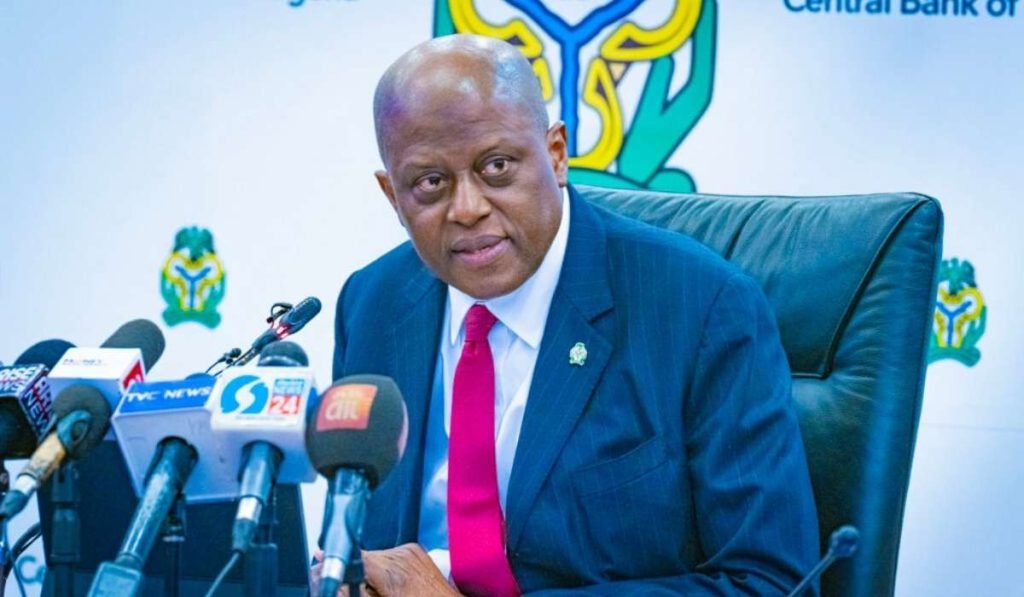
The Central Bank of Nigeria (CBN) has retained the country’s benchmark Monetary Policy Rate (MPR) at 26.5 per cent, citing growing global uncertainties despite signs of resilience in the domestic economy.
The decision was reached at the conclusion of the 306th meeting of the Monetary Policy Committee (MPC), held in Abuja on July 20 and 21, 2026.
Announcing the committee’s resolutions on Tuesday, CBN Governor Olayemi Cardoso said members unanimously agreed to leave the policy rate unchanged after assessing both domestic economic conditions and developments in the global economy.
According to him, the MPC considered the modest easing in inflation but expressed concern over renewed geopolitical tensions, particularly in the Middle East, which could trigger higher energy prices and reverse recent gains in inflation.
“The committee decided to retain the Monetary Policy Rate at 26.5 per cent,” Cardoso said, adding that the current policy stance reflects a careful evaluation of the balance of risks facing the economy.
The committee also left other key monetary policy parameters unchanged. The Standing Lending and Deposit Facilities Corridor remains at +50 and -450 basis points around the MPR, while the Cash Reserve Ratio (CRR) was retained at 45 per cent for Deposit Money Banks and 16 per cent for merchant banks. The CRR for non-Treasury Single Account (non-TSA) public sector deposits also remains at 75 per cent.
Cardoso noted that although inflation moderated slightly in June, external risks have intensified due to geopolitical developments, making it necessary to sustain the current monetary policy stance.
He, however, maintained that Nigeria’s economy has continued to demonstrate resilience in the face of external shocks, supported by the impact of ongoing structural reforms.
The latest decision marks the second consecutive MPC meeting this year in which the apex bank has opted to keep interest rates unchanged.
The decision follows the release of the National Bureau of Statistics’ latest Consumer Price Index report, which showed that headline inflation eased marginally to 15.91 per cent in June 2026 from 15.93 per cent recorded in May.
The 0.02 percentage point decline represents the first moderation in Nigeria’s inflation rate in three months, offering a modest indication that price pressures may be stabilising even as policymakers remain cautious about emerging global risks.