
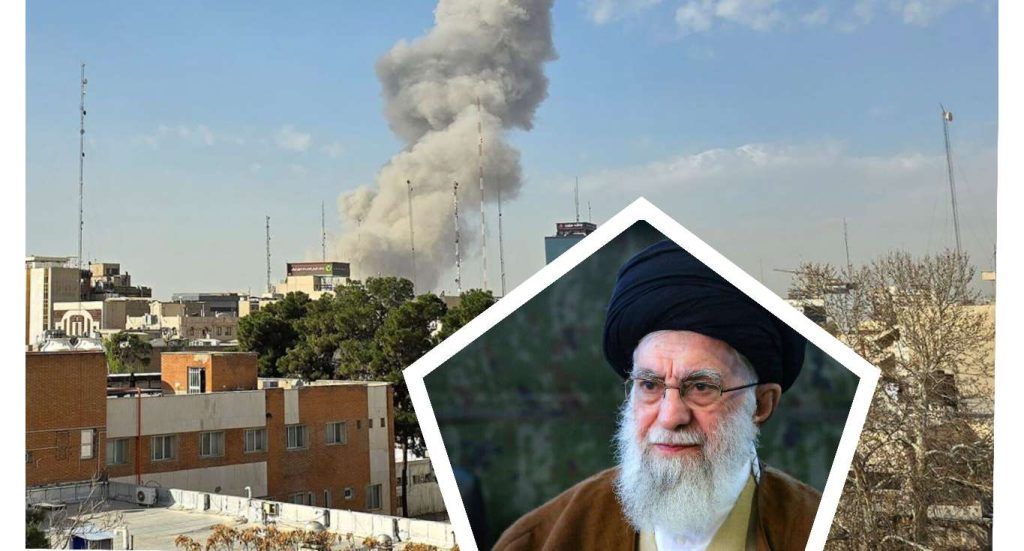
The United States and Israel launched sweeping military strikes on Iran on Saturday, marking a dramatic escalation in the standoff over Tehran’s nuclear programme and heightening fears of a full-scale regional conflict.
One of the first reported blasts occurred near the offices of Iran’s Supreme Leader, Ali Khamenei, in central Tehran. Iranian media said several sites nationwide were targeted, with plumes of smoke seen rising over the capital, according to AFP.
U.S. President Donald Trump confirmed the offensive in a video message posted on social media, declaring that American forces had begun “major combat operations in Iran.” He accused Tehran of pressing ahead with its nuclear development and pursuing long-range missile capabilities that could pose a threat to the United States and its allies.
It was not immediately known whether the 86-year-old Khamenei was inside his office at the time of the strike. The reclusive leader has not been seen publicly in recent days as tensions between Tehran and Washington intensified.
The coordinated assault follows weeks of military buildup in the region, with the United States deploying additional fighter jets and naval assets in what officials described as an effort to pressure Iran into accepting stricter limits on its nuclear activities.
An official briefed on the operation, speaking on condition of anonymity, said Israeli forces focused on military installations, intelligence facilities and high-profile government-linked sites. Israel’s Defence Minister, Israel Katz, described the action as necessary “to remove threats,” without elaborating further.
Multiple explosions rocked Tehran throughout the day, prompting authorities to cordon off roads leading to Khamenei’s compound. Iranian state television acknowledged the blasts but did not immediately provide details on casualties or the extent of the damage.
The fallout was swift across the region. Iraq closed its airspace, while Iran suspended flights and reportedly disrupted mobile phone services. In Israel, air raid sirens sounded nationwide as the military warned of the potential for retaliatory missile attacks. Hospitals activated emergency procedures, relocating patients and critical operations to fortified underground units.
Tehran had earlier warned that any attack on its territory would trigger retaliation against U.S. military personnel and installations across the Middle East. As of late Saturday, there was no immediate confirmation of a counterstrike.
The strikes come amid stalled diplomatic efforts to revive nuclear negotiations. While Washington has pushed for a broader agreement to curb Iran’s enrichment activities and missile programme, Tehran maintains its nuclear work is lawful and has rejected calls to negotiate over its ballistic capabilities or its backing of groups such as Hamas and Hezbollah.