
The Southern and Middle Belt Leaders Forum (SMBLF) has declared that the presidency of Nigeria must remain in the southern region after the 2027 general election, warning that any attempt to alter the existing zoning arrangement could destabilise the country’s fragile political balance.
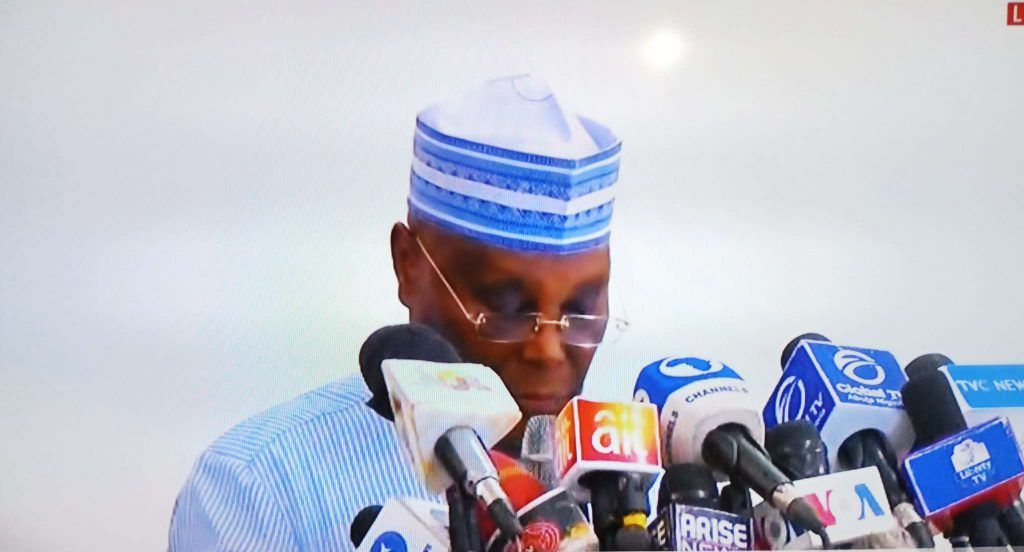
The position, which directly challenges emerging political permutations ahead of the 2027 elections, is seen as a significant obstacle to the presidential ambition of former Vice President Atiku Abubakar, who is expected to contest under the African Democratic Congress (ADC) platform.
Atiku, a northerner from the North-East, is among early contenders already positioning for the 2027 race, but the latest declaration by influential regional blocs has further intensified debates over power rotation and equity in national politics.
Leaders insist on zoning continuity
In a communiqué issued after an emergency meeting held on Saturday and released in Kaduna on Sunday, the forum maintained that the principle of rotational presidency – between North and South since 1999 – must be preserved in the interest of fairness and national stability.
“The position of the President of the Federal Republic of Nigeria shall remain in the southern region thereof in the next four years consequent on the 2027 general elections in the interest of national political stability,” the statement read.
The document was jointly signed by key regional figures including John Azuta-Mbata representing Ohanaeze Ndigbo Worldwide, Oba Oladipo Olaitan of the Afenifere faction, Bitrus Pogu of the Middle Belt Forum, and Godknows Igali of the Pan Niger Delta Forum.
The group further urged political parties to adopt zoning in their internal arrangements ahead of the next electoral cycle.
Push for reforms, security overhaul
Beyond the zoning debate, the forum called for urgent amendments to disputed sections of the Electoral Act, warning that unresolved legal ambiguities could undermine confidence in future elections.
It also advocated the immediate establishment of state police, arguing that the current security structure is overstretched and unable to effectively respond to widespread insecurity.
While acknowledging the efforts of the Federal Government and security agencies, the forum stressed that recruitment into the armed forces and police must be increased to strengthen national security capacity.
The group also expressed concern over what it described as preferential treatment for repentant insurgents, contrasting it with the conditions faced by victims still living in displacement camps.
Electoral body, judiciary under scrutiny
The SMBLF also called on the Independent National Electoral Commission (INEC) to maintain strict independence in its handling of political parties and elections, insisting that public confidence in the electoral process must be preserved.
It further urged the judiciary to uphold neutrality and interpret constitutional provisions in a manner that strengthens democracy and promotes national cohesion.
Broader calls for restructuring
On governance and economic structure, the forum reiterated its long-standing demand for restructuring and true federalism, arguing that states and ethnic nationalities should be granted greater autonomy within Nigeria’s federal system.
It also called for stronger support for local refining capacity and measures aimed at ending the importation of refined petroleum products.
In addition, the group condemned xenophobic attacks against Nigerians abroad, particularly in South Africa, urging the Federal Government to take diplomatic steps to protect citizens and facilitate voluntary repatriation for those willing to return home.