
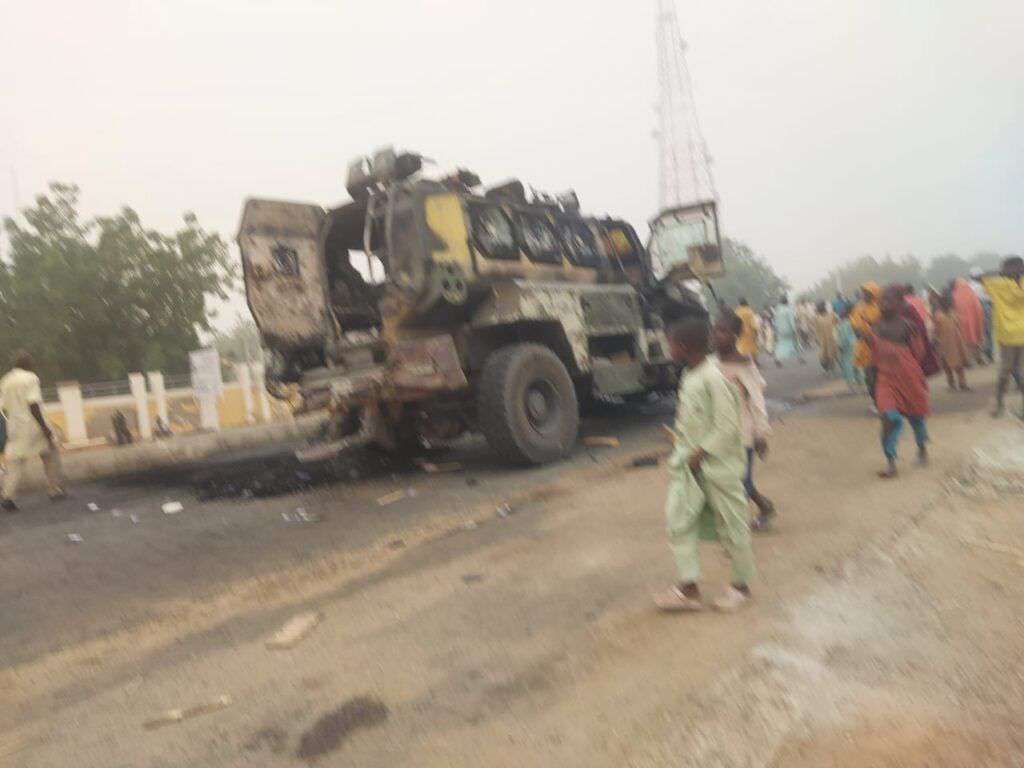
The battle against global terrorism is increasingly shifting away from the deserts of the Middle East to the fragile and conflict-ridden regions of Africa, with Nigeria and the wider Lake Chad Basin now emerging as key theatres in the fight against extremist groups.
This growing reality was underscored in the latest United States counterterrorism strategy for 2026, which warned that remnants of the Islamic State in Iraq and Syria had regrouped and relocated to Africa and Central Asia after suffering heavy military losses in the Middle East.
According to the document, extremist organisations are taking advantage of weak governance structures, porous borders and ungoverned territories across Africa to establish new operational bases capable of sustaining insurgencies and launching international attacks.
For Nigeria, the warning reinforces fears that the country remains vulnerable to evolving terror networks operating across West Africa and the Sahel.
The US specifically identified the Lake Chad Basin — covering parts of Nigeria, Niger, Chad and Cameroon — as one of the regions where ISIS-linked groups have continued to expand their influence following the collapse of the group’s former strongholds in Iraq and Syria.
The strategy document noted that while the territorial caliphate established by ISIS in the Middle East had been dismantled during the first administration of Donald Trump, the defeat merely forced surviving fighters and affiliates to seek refuge in other unstable regions.
“Subsequently, the surviving remnants of the world’s most dangerous terrorist group of the modern age were forced to relocate to Africa and Central Asia, in turn exploiting the ungoverned spaces there,” the document stated.
It added that a resurgent terror threat had now become a reality in parts of West Africa, the Sahel, Mozambique, Sudan and Somalia, where extremist factions linked to ISIS and Al-Qaeda continue to operate.
Security analysts have long warned that the spread of jihadist networks across Africa reflects a dangerous transformation in global terrorism. Rather than attempting to control large territories as they once did in Iraq and Syria, extremist groups are increasingly embedding themselves within fragile communities, exploiting poverty, weak institutions and local grievances to recruit fighters and expand influence.
In Nigeria, the insurgency that began more than a decade ago with Boko Haram has evolved into a broader security crisis involving multiple armed factions, including the Islamic State West Africa Province, which remains active around the Lake Chad region.
The US strategy suggests Washington is increasingly concerned that instability in Africa could create new safe havens for international terrorism if left unchecked.
To counter the threat, the United States said it would continue supporting African governments through intelligence sharing, counterterrorism training and security partnerships aimed at preventing extremist organisations from establishing strong operational bases.
“We will continue to work together with governments threatened by groups like ISIS and al Qaeda affiliates who threaten us as well, and assist them with actionable intelligence and CT partner-force development until our shared foes no longer pose a serious threat,” the document stated.
At the same time, the strategy indicated that Washington would maintain only a limited military presence on the continent, preferring instead to strengthen regional security partnerships and encourage African countries to take greater responsibility for counterterrorism operations.
The document also highlighted concerns over attacks targeting Christian communities in parts of Africa, particularly Nigeria, where violent attacks linked to extremist groups and armed militias have heightened religious tensions in several regions.
Referencing recent developments in Nigeria, the strategy praised actions taken by President Trump over attacks on Christians, declaring that “the slaughter of Christians will not go unchecked.”
It quoted Trump as saying on Christmas Day in 2025: “I have previously warned these terrorists that if they did not stop the slaughtering of Christians, there would be hell to pay, and tonight, there was.”
Beyond military operations, the US strategy acknowledged that Africa’s long-term stability would depend largely on governance, economic development and the ability of states to maintain effective territorial control.
According to the document, African nations possess enormous economic and human potential, but that potential can only be realised if governments are able to deny safe havens to violent extremist organisations.
For Nigeria and neighbouring countries already grappling with insecurity, poverty and humanitarian crises, the warning serves as another indication that the global war against terrorism may increasingly be fought on African soil in the years ahead.