
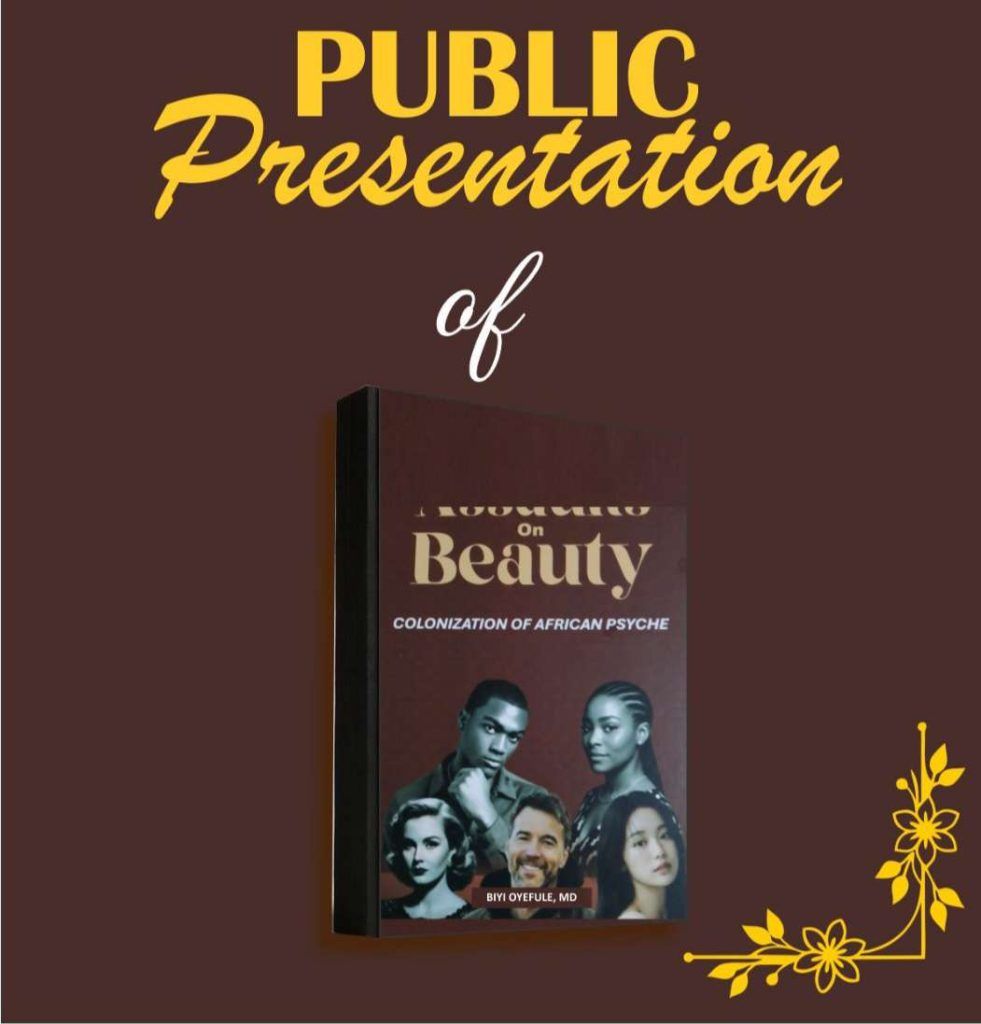
Ambassadors from several African countries, alongside academics, traditional rulers and cultural enthusiasts, are expected to attend the unveiling of Assaults on Beauty: The Colonization of African Psyche, a new book by Nigerian-American psychiatrist Dr Biyi Oyefule.
The event is scheduled to hold at the Banquet Hall of the Lagos Airport Hotel, Ikeja, on Thursday, May 14, at 10am.
According to organisers, the book presents a far-reaching examination of the psychological and cultural effects of colonialism on African identity, aesthetics and self-perception.
Drawing from more than three decades of clinical and scholarly experience, Dr Oyefule argues that colonialism extended beyond political and economic domination to include what he describes as a sustained psychological assault on African peoples’ understanding of beauty, culture and self-worth.
The book explores how colonial conditioning influenced perceptions of African identity and contributed to the adoption of foreign standards of beauty and civilisation, with lasting effects on areas such as skin bleaching, hair politics, naming practices and attitudes toward indigenous languages, spirituality and art forms.
At the centre of the work is the concept of “internalized aesthetic violence”, which the author describes as the unconscious adoption of colonial standards that diminish authentic African cultural expression.
The publication draws on psychodynamic theory, the postcolonial writings of Frantz Fanon and Yoruba philosophical concepts such as Ìwà – interpreted as character as beauty – and Ọmọlúwàbí, which reflects ideals of inner nobility and ethical conduct.
Organisers said the book arrives at a period of growing global discourse around cultural restitution, identity and the decolonisation of knowledge systems, particularly as African countries intensify calls for the return of looted artefacts and promote indigenous cultural expressions in fashion, music and philosophy.
They noted that the work seeks to provide a psychological framework for understanding the relationship between cultural identity, dignity and liberation in postcolonial societies.
The launch is expected to attract mental health professionals, authors, academics, members of the diplomatic community and pan-African leaders from Nigeria and the diaspora.
Beyond the formal unveiling, the event is also expected to serve as a platform for broader discussions on cultural healing, African identity and the restoration of indigenous values in contemporary society.
Copies of the book will be available for purchase at the venue.