
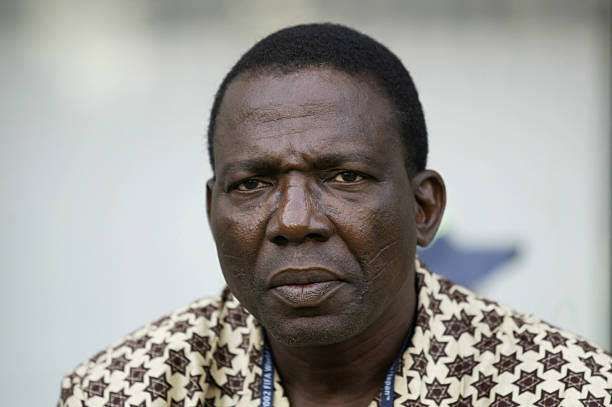
Nigerian football has bid farewell to one of its most influential figures with the passing of veteran coach and administrator, Adegboye Onigbinde, whose life’s work helped mould the direction of the game in the country for decades.
The revered tactician died on Monday night at the age of 88, drawing the curtain on a remarkable journey defined by discipline, intellect and an unwavering devotion to football. His death, confirmed by family members in a statement signed by Mrs Bolade Adesuyi, occurred at the Obafemi Awolowo University Teaching Hospitals Complex, close to his ancestral home in Modakeke, Osun State.
For many within Nigeria’s sporting community, Onigbinde’s name evokes an era when football was guided not only by passion but by thoughtful leadership and a deep commitment to nurturing the next generation.
Born on March 5, 1938, in Modakeke, a historic town in Osun State, Onigbinde’s rise to prominence was neither sudden nor flamboyant. Rather, it was the product of perseverance and a quiet determination that gradually carried him from modest beginnings to the summit of Nigerian football administration and coaching.
Before his name became synonymous with the national team and continental competitions, he was a teacher, a profession that would profoundly shape his approach to the game. The classroom instilled in him a belief in discipline, patience and intellectual preparation, qualities that later defined his coaching philosophy.
The turning point in his life came in the early 1960s during a chance encounter with the legendary Nigerian footballer Teslim Balogun, fondly remembered as “Thunder”. Balogun recognised in the young schoolteacher a keen enthusiasm for the sport and encouraged him to pursue football more seriously.
At the time, Onigbinde had travelled to Ibadan to pursue a Grade Two Teachers’ Course at St Luke’s College. While studying, he captained the school’s football team, demonstrating the leadership qualities that would later define his career.
In 1961, Balogun organised a Grade B coaching course at the iconic Liberty Stadium in Ibadan, now known as Obafemi Awolowo Stadium, under the auspices of the Nigeria Football Association. Onigbinde was among the participants, alongside several individuals who would later become influential figures in Nigerian football.
That course proved decisive. From that point onward, coaching became not merely an interest but a calling.
Armed with new knowledge and the instincts of a natural teacher, Onigbinde travelled extensively across the old Western Region, training young players and working with school teams. His philosophy emphasised tactical discipline, physical preparation and personal character – values he believed were essential for both athletes and citizens.
His early professional coaching career included a stint with the now-defunct Water Corporation FC of Ibadan, but it was at Shooting Stars Sports Club that his reputation flourished.
Under his stewardship, the Ibadan-based club enjoyed one of the most memorable campaigns in its history. In 1984, Shooting Stars reached the final of the African Cup of Champions Clubs, a feat that elevated the club’s standing on the continental stage. Although they eventually lost the final to Egypt’s Zamalek, the achievement remains one of the defining moments in the club’s history.
That same year also marked another milestone in Onigbinde’s career when he guided Nigeria’s national team, then known as the Green Eagles, to the final of the Africa Cup of Nations.
Nigeria ultimately lost 3–1 to Cameroon, but the campaign reflected the tactical organisation and fighting spirit that had become hallmarks of Onigbinde’s coaching style.
Nearly two decades later, fate once again placed him at the centre of Nigerian football.
In 2002, following Nigeria’s disappointing performance at the Africa Cup of Nations, the veteran coach was appointed to lead the Super Eagles to the FIFA World Cup in Korea and Japan. The appointment made him the first indigenous Nigerian coach to guide the national team to the global tournament.
The competition proved challenging for the youthful squad he assembled. Nigeria lost narrowly to Argentina in their opening match, suffered defeat to Sweden after briefly taking the lead, and ended their campaign with a goalless draw against England.
While the results fell short of expectations, many of the young players introduced during that era would later become key figures in Nigerian football.
Beyond the touchline, Onigbinde’s influence extended into football education and administration. He served as a technical instructor for both the Confederation of African Football and FIFA, sharing his expertise with coaches across the continent and contributing to the development of the sport at multiple levels.
Colleagues and former players often described him as a disciplinarian and a thoughtful strategist, a man who believed football was as much about intellect as it was about athletic ability.
Even his name reflected his reflective nature. In later years, he explained that he had abandoned the baptismal name “Festus” in 1960 after deciding it carried little meaning for him. He instead embraced the Yoruba name “Adegboye”, meaning a child born to reclaim a chieftaincy title.
In many ways, the symbolism mirrored his life’s work. Through decades of dedication, Onigbinde helped reclaim and elevate the pride of Nigerian football, leaving a legacy that continues to inspire coaches and players alike.
With his passing, Nigerian football loses not only a pioneer but also a living link to an era when the foundations of the country’s football culture were being patiently laid.
From the dusty playing fields of Modakeke to the grand spectacle of the World Cup, Adegboye Onigbinde’s journey stands as a lasting testament to the power of vision, discipline and an enduring love for the game.