Entertainment
Detty December: How Lagos became Africa’s holiday spending capital
By Temi Salako
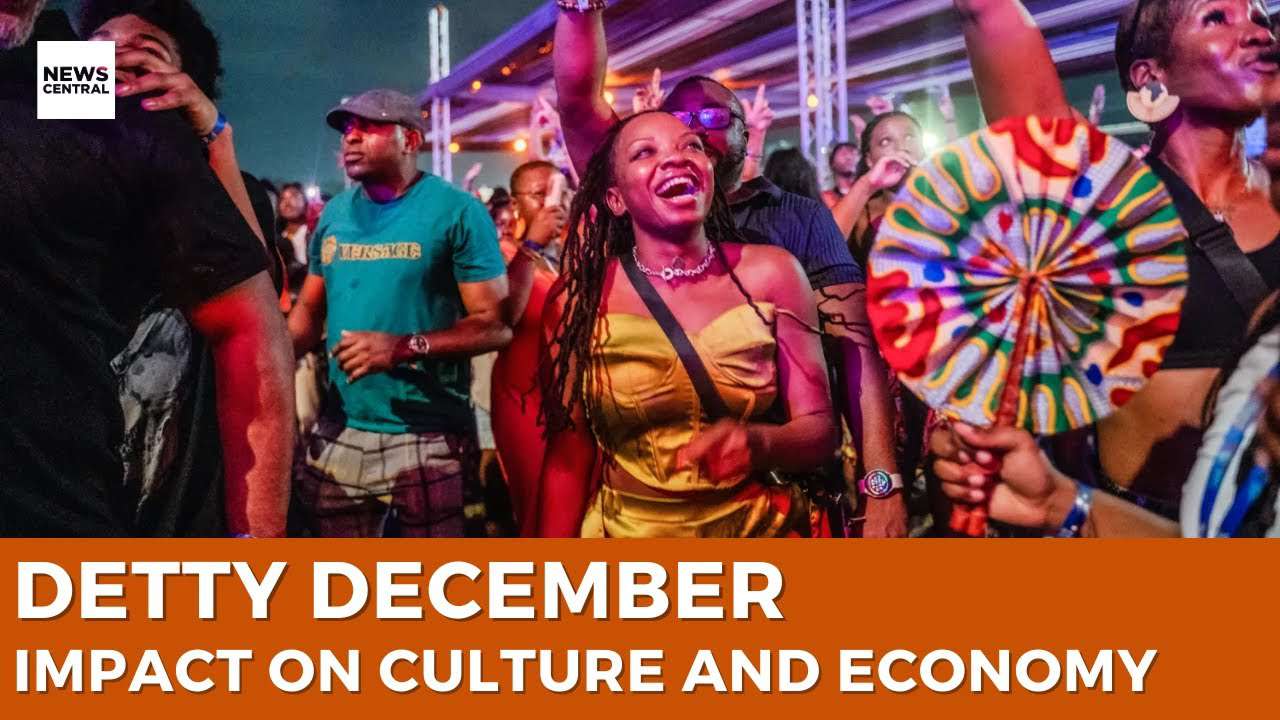
Detty December 2025 transformed Lagos into a powerhouse of consumer activity, with the city at the heart of an unprecedented spending surge. According to the Cowrywise 2025 Detty December Report, total consumer expenditure soared to ₦396.54 billion over a 55-day period spanning late November to early January—more than triple the ₦111.5 billion generated by tourism and entertainment in 2024. This dramatic leap underscores not just a festive tradition, but a rapidly expanding economic force reshaping Nigeria’s holiday season.
At current exchange rates the total equates to approximately 300 million dollars, a clear dollar infusion that reshaped local commerce.
Diaspora returnees, known locally as IJGBs, drove the bulk of this activity. They accounted for 55 percent of all consumer spending, or 218.10 billion naira. Lagos residents contributed 25 percent, or 99.13 billion naira. The two groups together controlled 80 percent of the season’s liquidity and directed spending toward premium segments. Global guests numbered 400,000, with the United States supplying 27 percent of international arrivals and overtaking the United Kingdom for the first time. Diaspora travelers alone spent an estimated 384.5 million dollars on airfares to reach Lagos.
Participation swelled to 3.6 million people, up sharply from roughly 1.2 million visitors the year before. Of these, 1.6 million arrived by road from other states, 1.2 million were Lagos residents hosting events, and 810,000 opted for paid accommodation. More than 70 percent of attendees fell into the Gen Z and millennial brackets. The influx created a segmented market where high net worth brackets, both local and foreign, set the spending tone.
Spending broke down across five main sectors, revealing clear shifts from 2024 patterns. Hospitality and accommodation led with 175.4 billion naira, or 44.23 percent of the total. This category alone exceeded the combined 75 billion naira from hotels and short lets in 2024. Classic hotels generated 94.73 billion naira by offering security and consistency. Apartment hotels added 23.67 billion naira from just 1,100 keys, proving efficient operators captured premium demand. Mass market short lets, by contrast, saw occupancy fall as guests moved away from inconsistent service. Domestic air travel within Nigeria contributed another 111.2 billion naira, a line item absent from narrower 2024 tallies.
Entertainment and nightlife followed at 129.5 billion naira, or 32.67 percent. This sector captured spontaneous walk in activity worth 109.86 billion naira alongside curated events. Ticketed concerts and live music alone pulled 35.73 billion naira, or 71.39 percent of the 50.05 billion naira curated economy. The 2024 data offered no parallel breakdown, yet the 2025 total formed part of the broader tripling in overall activity and reflected sustained demand for concerts despite higher ticket prices.
Food and dining accounted for 51.2 billion naira, or 12 percent. Fashion and retail added 36.6 billion naira, or 9.25 percent. Wellness and recovery remained small at 3.73 billion naira, or 0.94 percent. Together these foundational categories captured nearly 90 percent of consumer outlays, showing that daily needs for meals, movement and rest underpinned the season more than headline concerts.
Geography concentrated the flow. Victoria Island, Ikoyi and Lekki Phase 1 absorbed 94.58 billion naira, or 87 percent of tracked spending when combined with mainland and outer island zones. Epe and Ilashe added 32.85 billion naira. Mainland areas drew higher foot traffic while island precincts hosted the highest value transactions. Water transport proved reliable amid tripled fares on key routes from mainland to island.
Enabling services added depth. Business to business spending on logistics, security and operations reached an extra 19 billion naira. Private security costs rose 50 percent as operators supplemented state forces under a Green Zone model. Digital payments through providers such as OPay, Moniepoint, GTBank and Zenith handled routine transactions while 2.5 billion naira went to data and hardware infrastructure.
The 2025 performance answered questions about whether Detty December had lost momentum amid complaints of elevated prices and service gaps. Instead the numbers show expansion across participation, tracking scope and foreign exchange inflows. The season injected liquidity equivalent to several African nations’ monthly GDP and produced multiplier effects in retail, transport and services. Classic hotels and structured apartment operators emerged as clear winners while informal short lets faced pressure to improve standards.
Lagos authorities and investors now face the task of converting this annual surge into sustained infrastructure gains. Expanded waterways, rail links and capacity planning could spread activity beyond island bottlenecks and ease the 238 percent overload on city systems recorded during peak weeks. For Nigeria’s broader economy the dollar boom demonstrated how diaspora capital, cultural pull and targeted spending can deliver measurable foreign exchange and sector growth even in a challenging macroeconomic climate. The 2025 Detty December did not merely repeat tradition. It scaled it into a 396.54 billion naira engine that reshaped short term economic realities in Africa’s largest city.